Tanzania achieves record domestic seed production, reduces dependency, supports sustainable agriculture growth
DAR ES SALAAM: Recent statistics from Tanzania’s Ministry of Agriculture for the 2023/2024 season reveal a significant shift in seed production and utilization.
Between 78.6% and 81% of seeds, totaling approximately 71,356 tonnes, are now produced domestically. This marks a considerable increase from previous years, reflecting the country’s efforts to promote local seed systems and reduce reliance on imported seeds.
Conversely, seeds imported from outside Tanzania account for roughly 19% to 21.4%. This dependency on external sources has historically posed risks to food security, especially given the vulnerabilities associated with global supply chains. The rising domestic seed production indicates a strategic move toward self-sufficiency, empowering local farmers and fostering sustainable agricultural practices.
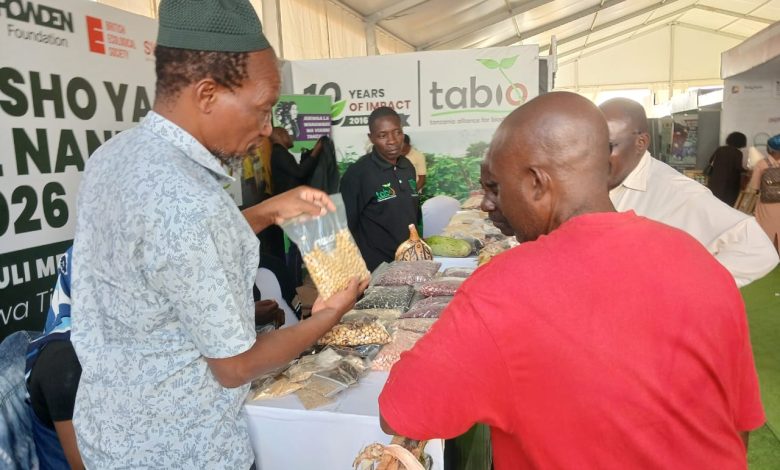
An important aspect of Tanzania’s seed landscape is the dominance of smallholder farmers in seed production. Reports show that between 60% and 95% of locally used seeds derive from small-scale farmers operating within informal systems. These seeds are typically locally adapted and passed through farmer-to-farmer exchanges or sold at local markets.
Despite this, formal adoption of improved seeds remains relatively low. The 2011 Agricultural Sector Development Program (ASDP) report indicated that only 19.5% of Tanzanian households used improved, certified seeds. The majority, roughly 78% to 90%, still rely heavily on indigenous or traditional seeds, which are often more resilient and environmentally friendly.
Promoting indigenous and farmer-generated seeds
Several stakeholders have recognized the value of indigenous seeds, emphasizing their safety for the environment, soil health, and human well-being.
Efforts are underway by various organizations to promote the use of local seeds, which are better adapted to local conditions and often more resistant to pests and climate variability.
Abdallah Mkindi, Coordinator of the Tanzania Alliance for Biodiversity (TABIO), explains that local and African stakeholders are actively advocating for indigenous seeds.
Through collaboration with the Seed Working Group (SWG) and partnerships with organizations such as the International Organisation for Peace (IDP), PELUM Tanzania, Tanzania Organic Agriculture Movement (TOAM), Tanzania Gender Networking Programme (TGNP), Tanzania Small-Scale Farmers’ Forum (SHIWAKUTA), and Sustainable Agriculture Tanzania (SAT), they are accelerating farmers’ access to and use of local seeds.
Regional and continental efforts for food sovereignty
On the continental level, Tanzania actively participates in the Alliance for Food Sovereignty in Africa (AFSA).
This network comprises 41 member organizations operating across 50 African countries, reaching an estimated 200 million people. AFSA’s primary goal is to promote food sovereignty and agroecology, empowering Africans to define their food systems using their seeds, land, and traditional knowledge.
AFSA’s mission emphasizes fighting dependence on chemical fertilizers and pesticides, promoting organic farming practices that conserve soil and enhance biodiversity.
The organization advocates for farmers’ seed rights, opposing the spread of modern seeds that restrict farmers’ ability to save and reuse seeds freely. It also champions policies that protect smallholder farmers, pastoralists, indigenous peoples, and local communities.
AFSA actively engages in policy advocacy, lobbying governments and the African Union to support agroecology and seed sovereignty initiatives.
One of its significant focuses is ensuring that climate finance reaches smallholder farmers, enabling them to adopt resilient farming practices and local solutions amid climate change challenges.
Mkindi highlights that AFSA’s rallying cry, “Our Africa, Our Agriculture,” has enabled Tanzanian organizations like TABIO to reach farmers across regions such as Mtwara, Lindi, Mbeya, Songwe, Arusha, Dodoma, Mara, and others.
Through education campaigns, farmers have learned about organic seeds, natural fertilizers, and pesticides—methods that are safer for farmers and the environment.
Numerous farmers and entrepreneurs are benefiting from the promotion of indigenous seeds and organic practices. Carren Makundi, from Flottery Bakery in Babati District, Manyara Region, emphasizes that they use ecologically produced crops in their products, such as orange-fleshed sweet potato chips, pumpkin buns, and beans. These products are safe, healthy, and suitable for consumers with non-communicable diseases.
Sebastian Msapalla, Director of Organic Moringa, reports that indigenous seed-based crops have enabled him to export products and raw materials to countries like Kenya, Uganda, Rwanda, Japan, the UK, and the USA. His success illustrates the growing demand for organic agricultural products, driven by consumer awareness of health and environmental benefits.
Farmers’ success stories and challenges
Juliana David, a farmer using organic seeds and pesticides, has experienced high yields—harvesting 15 to 20 bags of maize and five bags of beans per acre.
Her success underscores the potential of indigenous seeds coupled with organic farming practices. She advocates for increased production of organic pesticides and greater education on the importance of local seeds in agriculture.
Juliana credits organizations such as SHIWAKUTA for motivating her and emphasizes the need for continued support to expand organic farming. Similarly, Thomas Laiser, Policy and Advocacy Officer at SHIWAKUTA, reports reaching over 450,000 farmers across multiple regions. His organization promotes agroecological methods, youth involvement, and the preservation of indigenous seed heritage.
SHIWAKUTA’s strategy involves fostering unity among farmers and stakeholders, strengthening local institutions, and establishing seed banks to support agricultural transformation.
Their vision aligns with Tanzania’s goal to achieve food self-sufficiency and resilience through agroecology and indigenous seed systems.
Laiser advocates for the government to leverage platforms like SWG to promote agroecology, ensuring that smallholder farmers have space to thrive. The organization aims to continue uniting farmers, building farmers’ centers, and creating seed banks that preserve biodiversity and foster sustainable agricultural development.
Tanzania’s journey toward food sovereignty hinges on protecting indigenous seeds and promoting agroecological practices.
These seeds are not only vital for maintaining biodiversity but also for ensuring resilience against climate change and market fluctuations.
The government, civil society, and farmers must collaborate to mainstream indigenous seeds into national policies, support local seed banks, and educate farmers about ecological farming methods.
This integrated approach will help Tanzania reduce reliance on external inputs, improve soil health, and increase food security.
Tanzania’s increasing domestic seed production, combined with active advocacy for indigenous seeds and agroecology, marks a significant step toward sustainable agriculture.
By empowering smallholder farmers, protecting their seed rights, and promoting environmentally friendly farming practices, the country is building resilience and self-sufficiency.
The efforts of organizations like TABIO, AFSA, SWG, and local farmers demonstrate that indigenous seeds and ecological farming are vital for the nation’s agricultural future.
Their collective work aims to create an inclusive, resilient food system rooted in local knowledge, biodiversity, and sustainable practices.
As Tanzania continues this journey, the focus remains clear: safeguarding farmers’ seeds, promoting agroecology, and ensuring food sovereignty for current and future generations.
This holistic approach not only strengthens local food systems but also positions Tanzania as a leader in sustainable, ecological agriculture on the continent.