Tanzania raises alarm over DNA samples sent abroad
DODOMA: The Deputy Minister for Health, Dr Florence Samizi, has warned some professionals from hospitals and research institutions who have been collecting genetic samples and sending them abroad for analysis in violation of procedures and legal requirements.
She said the practice raises serious concerns about how data generated from such analyses can be protected once it is taken outside the country.
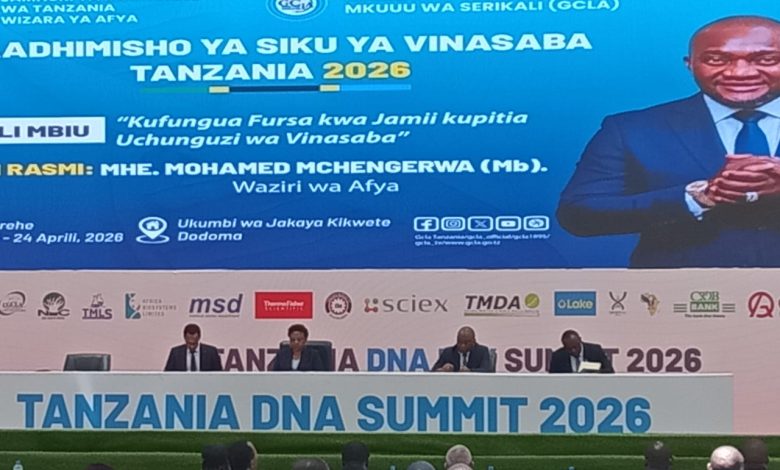
Dr Samizi made the remarks in Dodoma recently while launching the two-day Tanzania DNA Day Summit 2026, organised by the Government Chemist Laboratory Authority (GCLA), which brought together policymakers, scientists, clinicians, innovators, development partners and private sector leaders in the capital.
The delegates deliberated on how to advance the implementation of the National DNA and Genomics Roadmap aligned with Tanzania Development Vision 2050 and national priorities.
Representing the Minister for Health at the event, Dr Samizi said the government is aware that some experts have not been complying with the procedures and provisions of the Human Genetic Data Control Act, particularly in the collection and export of genetic samples for analysis.
“There are still weaknesses in the management of genetic samples. This is the right time for experts, especially through this conference, to deliberate and propose ways the government can build local capacity to ensure that all analyses involving genetic samples are conducted within the country to safeguard Tanzanians’ data,” she said.
Dr Samizi added: “Health is security, and genetic data is national security. Discuss this matter with great seriousness, in the national interest and with patriotism, to ensure that the few individuals tarnishing the image are controlled and that we develop a clear framework for conducting all genetic analyses within the country. Otherwise, we risk compromising national security.”
Hidden threat of ‘Indian’ crows to sustainable birdwatching tourism
She noted that, given the importance of genetic technology, the government has continued to strengthen the GCLA by providing equipment, infrastructure and human resources, including the procurement of machinery for human genetic analysis worth 3.5bn/-.
Elaborating, Dr Samizi said the authority has also been facilitated with reagents for conducting human analysis, with 1.1bn/- allocated annually for purchasing genetic testing reagents, alongside capacity building for experts to keep pace with technological advancements.
Delivering remarks on behalf of the Chief Medical Officer, the Director of Curative Services at the Ministry of Health, Dr Hamad Nyembea, said there is a need to reduce reliance on external support and build internal capacity, as genetic technology is also linked to national security.
On his part, the Government Chief Chemist, Dr Fidelice Mafumiko, said that for over two decades the GCLA has been using DNA technologies to address various societal challenges and contribute significantly to the economy.
He said awareness of DNA-related issues has increased, noting that between January 2025 and March 2026, a total of 8,956 samples were received and analysed in the country by researchers.
He added that the GCLA has also issued permits for the establishment of four laboratories conducting DNA research, including two by Ifakara Health Institute (IHI) in Bagamoyo, Coast Region, and Ifakara in Morogoro.
Others are owned by Kilimanjaro Clinical Research Institute (KCRI) in Moshi, Kilimanjaro Region, and Songea Regional Referral Hospital in Ruvuma Region.
Dr Mafumiko reminded stakeholders not to misuse information related to Tanzanian DNA, assuring that the GCLA will ensure such data is protected.