Hidden threat of ‘Indian’ crows to sustainable birdwatching tourism
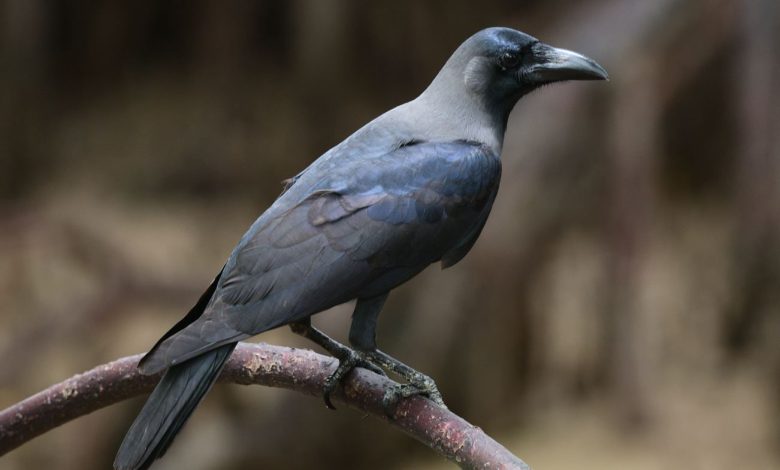
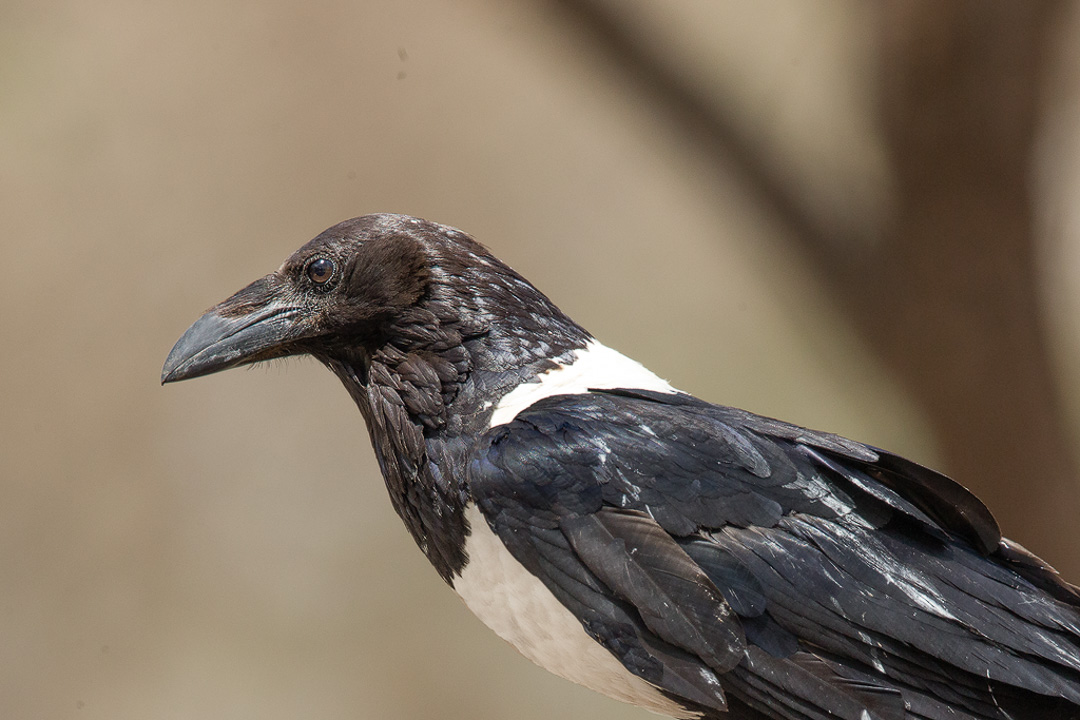
DODOMA: It is around 1:30 p.m., and the sun is scorching, forcing a native Pied Crow to gently land on a towering yellow poinciana tree at Area C in Dodoma.
While the black-and-white-plumaged bird believes it has found a safe place to rest, little does it know that the same area is also home to some of its greatest enemies.
No sooner has it settled than fighting erupts. The fierce battle pits the newly landed native crow against a group of invasive house crows, also known as the Indian crows. Applying a “solidarity is power” strategy, the house crows quickly drive the pied crow away from the tree before dispersing.
Such scenarios are increasingly common in Dodoma, the rapidly growing capital city in central Tanzania. As the population and human activities expand, the so-called “Kunguru wa Zanzibar” (Zanzibar crows) are rapidly increasing in number, threatening the survival of other bird species, including native pied crows, according to residents, researchers and tourism stakeholders.
Mr Alex Ndohani, a resident of Miyuji on the outskirts of the capital city, says that when he arrived in Dodoma in 1979, native pied crows dominated different parts of Dodoma towns.
During the day, he explains, the birds scattered across different places in search of food, but when the sun set, they gathered on large trees near Police Central and the Bomani area.
“Although they are omnivores, they were somehow friendly to human beings. Despite their large numbers during those years, they did not cause many problems compared to the invasive house crows,” says Mr Ndohani, who left his home village of Kisima cha Ndege in Bahi District to work as a security guard for various institutions in Dodoma town before elevated to Tanzania’s capital city.
According to the father of three, things began to change in the early 2010s when the invasive species slowly started appearing in densely populated areas, with their numbers increasing each year.
“Big trees that used to be permanent settlements for pied crows have now been occupied by intruders — the house crows. The natives are being forced away, which explains why their numbers are decreasing in Dodoma,” he explains.
Dr Emmanuel Temu, a lecturer in the Department of History and Archaeology at the University of Dodoma, says that when he moved to Dodoma in 2008 to begin his new job, the alien crows were still few.
However, he has since witnessed them spreading across the city, particularly around dumping sites, homes, markets, bus terminals and other business centres.
According to him, after nearly 18 years of living in Dodoma, he rarely sees native pied crows in the streets unless he travels to the outskirts of the city or rural areas.
“Their numbers are not only increasing, but they are also causing problems for people. They scatter garbage everywhere. Dodoma residents used to raise chickens freely in open spaces, but with this species dominating the city it has become difficult. We have to protect them because house crows eat both eggs and small chicks,” he says.
How they arrived
Referencing various studies, Mr Ezra Mremi in his review titled “The Invasive House Crow (Corvus splendens) and Its Interactions with the Native Pied Crow (Corvus albus) in Tanzania,” says historical records indicate that the species first appeared in Zanzibar in the 1890s, likely introduced accidentally through ships arriving from India.
The academician and researcher with the Morogoro-based Sokoine University of Agriculture (SUA) says other historical accounts suggest that in the 1880s the British colonial administration deliberately introduced the alien House Crow to Unguja and Pemba Island to help manage urban waste.

The birds were intended to clear street litter and animal carcasses in the rapidly growing port town of Stone Town.
“The species rapidly established breeding populations in coastal towns such as Dar es Salaam, Tanga and Mtwara before expanding inland along major roads and railway lines,” he notes, citing John & Kagembe (2022).
The Tanzania National Parks (TANAPA)’s Guidelines for Invasive Alien Species Management in Tanzania National Parks of 2017 describes invasive alien species as those species that increase their population rapidly displacing or eliminating other species. According to the document, not all alien species become invasive species.
Explaining how they might be introduced in a certain or new areas, the dossier explains that the alien species can be spread either deliberately as source of forage, fiber medicine, ornamentals, erosion control and timber plants or accidentally through vehicles, impure crop seeds, adhesion to domestic animals and soil surrounding roots of nursery crops.
Although there are different narratives for how the species was introduced, the reality today is that house crows dominate many coastal areas — including Zanzibar, Dar es Salaam, Tanga, Coast Region and Mtwara — and are now spreading inland, threatening other bird species.
Mr Mremi explains that the birds thrive in urban areas because they are highly social, intelligent and aggressive, often displacing other species at feeding and nesting sites.
“These traits allow them to exploit ecological niches unavailable to many native birds, making them dominant competitors in urban Tanzania,” he says.
He also agrees that birdwatching tourism is an important component of Tanzania’s biodiversity-based economy. However, the rapid spread of house crows could negatively affect the ecological and aesthetic value of tourist destinations.
“The aggressive behaviour of house crows towards visitors, increased litter scavenging and their association with poor sanitation may damage the image of tourist sites and undermine ecotourism experiences,” he warns.
Ecological concern
While the capital city residents confirm the spread of Indian house crows in their neighbourhoods as they related their presence with the sharp decline of the native pied crow in Dodoma city centre, the invasive birds are also spotted in Arusha, a key tourism hub in East Africa.
The city, located within the Northern Tourism Circuit, is surrounded by world-renowned attractions such as the Serengeti, Ngorongoro and Mount Kilimanjaro, which host diverse species of birds and wildlife.
Ms Vannessa Clemence, who works as a reservation officer at one of Arusha’s tourist hotels, says she observes the birds around her workplace. According to her, the house crows often feed on food remains within the hotel premises.
Meanwhile, Daudi Mollel, a birdwatching tour guide based in Arusha, says the presence of such invasive birds poses a threat to birdwatching tourism, which grows rapidly in Tanzania’s national parks.
“People come from different parts of the world to watch birds here. Some conduct research on specific bird characteristics, while others visit Tanzania to observe as many species as possible, aiming to break existing world records for spotting the highest number of bird species,” says Mollel.
Mollel, who was honoured as the Best Birding Safari Guide during the Serengeti Awards gala in Arusha earlier this year, emphasises the need for urgent attention to the issue.
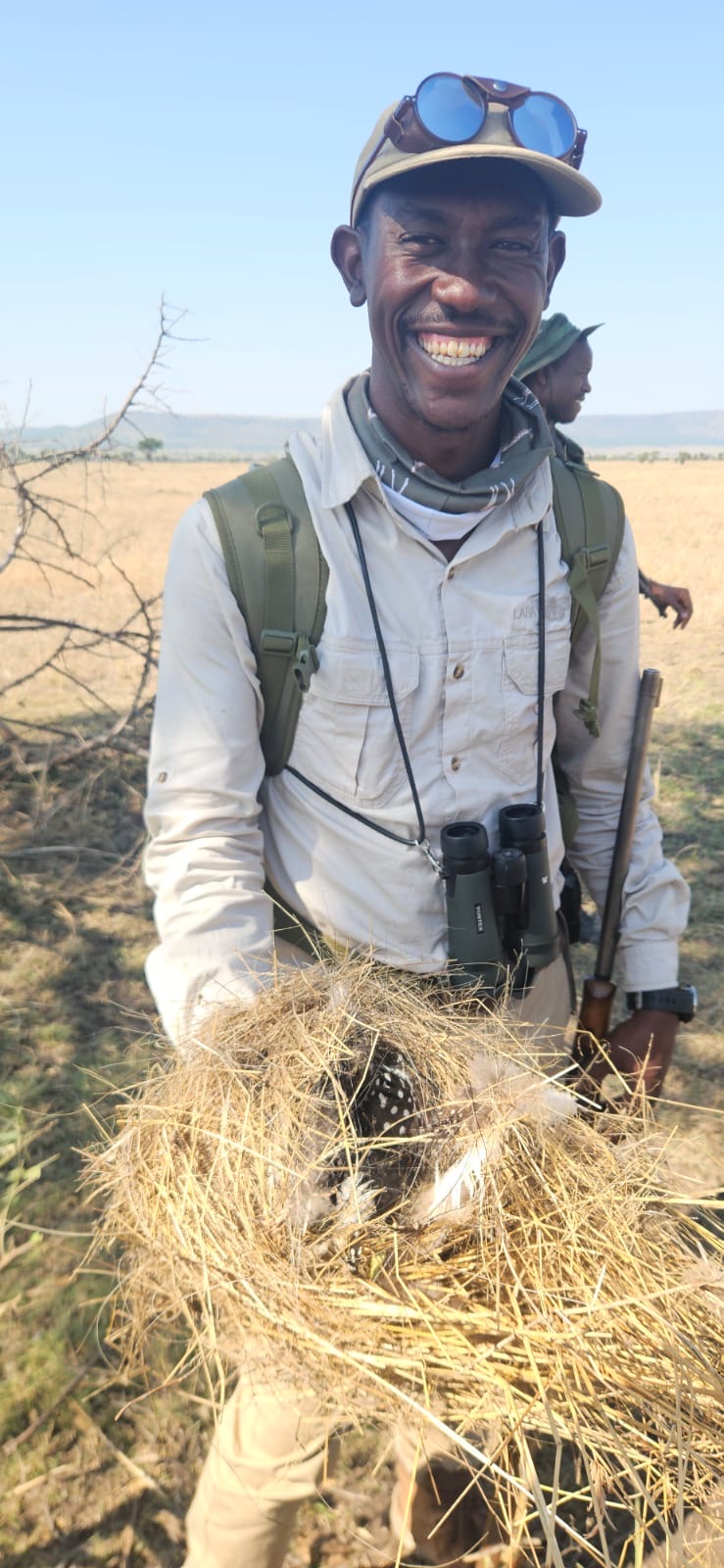
While earning a living from birding activities in places such as Amani, Majamba, the Uluguru Mountains, the Ngorongoro Conservation Area and the Lake Zone, Mollel says his experience shows that the invasive house crow is not attractive to tourists.
Even worse, he says the invasive birds are killing other native species that attract visitors to birdwatching destinations, something he describes as a serious threat to the birding tourism sector.
Although the invasive species has long been associated with coastal areas such as Dar es Salaam and Tanga, their numbers are expanding rapidly into inland regions.
“We once spotted a group of house crows in some parts of Arusha. We communicated through our social media groups asking everyone to chase them away whenever they appeared because they pose a threat to other species,” he says.
On his part, Mr Mrimi, the researcher, says house crows are negatively affecting biodiversity by preying on eggs and chicks of small bird species, harassing raptors, and competing for nesting materials.
He adds that in coastal Tanzania, they are often regarded as pests that disrupt markets and tourism by scavenging on food and waste.
ALSO READ: Efforts afoot to combat invasive species
Efforts to control the aliens
Since the scavenger birds have become troublesome in different parts of Tanzania, authorities in Zanzibar and Dar es Salaam have taken several measures to control their population.
These include hiring individuals to kill the birds and present their heads to designated offices as proof in order to receive payment. Another method involved installing locally made traps in different locations.
Despite these initiatives, Mr Richard Katondo, a senior project officer with Worldwide Fund for Nature in Tanzania, says the efforts have largely failed as the birds continue to increase in number and spread inland.
“They are very clever, and it seems the methods introduced by authorities have not worked,” says Katondo, suggesting that further studies should focus on ways to disrupt reproduction — such as preventing fertilisation of eggs or interfering with incubation.
In 2025, Zanzibar launched a campaign to eradicate Indian crows due to their negative environmental and economic impacts. However, there is still little public information about the success of the initiative.
Knowing the negative impact of invasive alien species on the country’s ecological system—including the elimination of indigenous plant species, depletion of animal forage, and the resulting loss of biodiversity—in 2017, TANAPA released the Guidelines for Invasive Alien Species Management in Tanzania National Parks with emphasis on prevention mechanisms.
The document also calls for the conduct of regular surveys to detect the establishment and/or spread of invasive alien species (IAS), as well as the identification and mapping of sites, habitats or ecosystems, and native species that are vulnerable to IAS.
It further recommends mapping pathways that are frequently disturbed or visited by tourists, such as gravel pits, roadsides, trails, walkways, picnic sites, and viewpoints.
Poisoning campaign in Kenya
With the increasing number of house crows along the Kenyan coast, a February 2025 report by Mongabay states that the East African Community member has revived a poisoning campaign to curb the invasive Indian house crow, nearly two decades after shelving the plan.
According to the report, in 2024 Kenya targets the killing of at least one million of the alien birds in a bid to halt their spread from coastal areas to inland tourist destinations and the capital, Nairobi.
While Kenya embarks on this initiative, WWF Tanzania’s Senior Project Officer Mr Katondo advocates for research on new technology that can prevent egg fertilisation or interfere with incubation as a safer method of controlling the problem.
Way foward
Tanzania’s National Development Vision 2050 recognises tourism as among nine transformative sectors in driving economic transformation. The sector has been selected strategically based on their potential to generate jobs, boost exports, and drive structural transformation, contributing to local and global markets.

With wildlife-based tourism contributing 25 percent to Tanzania’s export earnings, the stakeholders suggest that the sector should be protected against invasive species, including the alien house crows in order for the country to realise its vision.
The birdwatching tour guide, Mollel suggests that conservation institutions should conduct research and develop effective techniques to control the territorial expansion of house crows which pose threat to the sustainability of the sector.
On this, Mr Mremi adds that understanding and mitigating tourism-related impacts should form part of future research and management strategies.
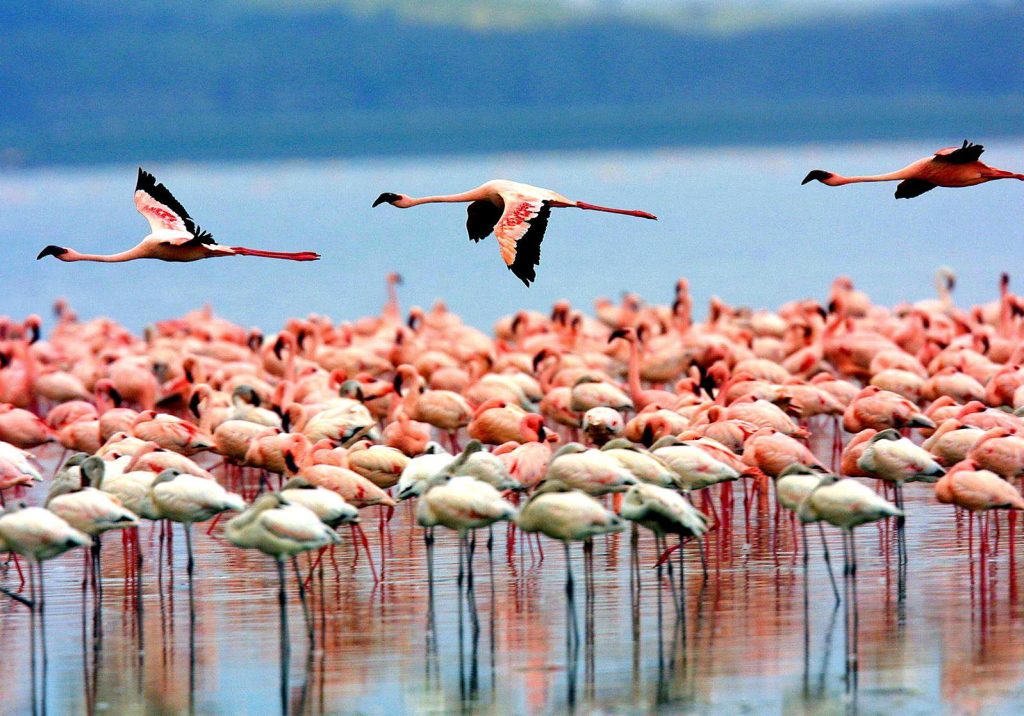
“Addressing the house crow challenge requires integrated research combining field ecology, behavioural studies and social science approaches,” he says. “Effective management will depend on improved urban sanitation, community engagement and regional coordination to prevent further spread.”
A study focusing on “Predation Dynamics: Hunting Tactics, Impact, and Control Strategies of Indian House Crows on Local Chicken in Dodoma District, Tanzania,” by Gayo L. and Ingongolo K. from the Department of Biology at the University of Dodoma also recommends stronger intervention from government and non-governmental organisations to control invasive crow populations.
The researchers suggest policies that support poultry protection, technical and financial assistance for farmers, and public awareness campaigns on effective methods of controlling the invasive species.
Overall, researchers and stakeholders are calling for in-depth studies on mechanisms for controlling invasive house crows in Tanzania, which would guide strategies for managing their population and protecting tourism, biodiversity and local livelihoods.
Sauli Giliard is a Tanzanian journalist specializing in environmental reporting. He can be contacted at sauli.giliard@gmail.com or +255 714 082 648.