Tanzania is planting millions of trees, but are we planting the right ones?
DAR ES SALAAM: Across Tanzania, tree planting is gaining momentum as the country confronts some of its most pressing environmental and agricultural challenges, including soil degradation, changing weather patterns, and declining agricultural productivity.
The country has committed to restoring 5.2 million hectares of degraded land—an ambitious vision that could contribute significantly to healthier landscapes, more resilient farms, and stronger rural livelihoods. Yet, as restoration efforts accelerate, an important question deserves greater attention: Are we simply planting more trees, or are we planting the right trees?
Restoring agricultural landscapes requires more than increasing tree cover. The choice of tree species matters, particularly in landscapes where farmers are already coping with declining soil fertility and increasingly unpredictable rainfall. Indigenous tree species have an important role to play in this process. However, as demand for these species grows, one critical constraint remains largely overlooked: access to quality indigenous tree seed. The shortage has practical consequences.
Organizations working to expand restoration efforts are often forced to source indigenous seed from outside Tanzania. This increases costs, complicates logistics, and can slow the expansion of programs that depend on reliable supplies of quality planting material.
If Tanzania is serious about meeting its restoration ambitions, strengthening the systems that make indigenous trees available must become part of the restoration agenda itself. Indigenous trees are essential for healthy soils While many exotic tree species are valued for their rapid growth and economic returns, indigenous species offer a combination of environmental and agricultural benefits that makes them particularly suited to restoring Tanzania’s farming landscapes.
ALSO READ: Tanzania is planting millions of trees, but are we planting the right ones?
Species such as Faidherbia albida and Sesbania sesban, like many other trees, can improve soil structure, enhance moisture retention, reduce erosion, and contribute to nutrient cycling. Some indigenous species can also help replenish nitrogen in the soil, potentially reducing farmers’ dependence on costly synthetic fertilizers. At the same time, trees can provide protection against heat and wind stress, creating conditions that can support agricultural production.
Their value, however, extends beyond these individual benefits. Indigenous trees have evolved within Tanzania’s landscapes and are therefore deeply compatible with local ecosystems. They support native biodiversity, integrate naturally into surrounding environments, and can contribute to restoring ecological balance without disrupting existing habitats.
For smallholder farmers, these ecological advantages are not simply environmental concepts. They can directly affect the productivity and resilience of their farms.
When soil fertility declines and rainfall becomes increasingly erratic, restoring the health of the land becomes essential not only for environmental sustainability but also for protecting household livelihoods.
Farmers are already seeing the benefits Evidence from farmers participating in agroforestry and carbon credit programs in Tanzania’s southern highlands demonstrates what these approaches can achieve when farmers receive the necessary support. Through One Acre Fund Tanzania, where I work, participating farmers receive seedlings, training, and continued support to establish and maintain trees on their farms.
Through Payments for Environmental Services, farmers are also rewarded for environmental stewardship while investing in the long-term productivity and sustainability of their land. One of these farmers is Efeso Kibiki from Tagamenda Village in Njombe Rural District.
After joining the agroforestry and carbon credit program during the 2024/2025 season, Efeso planted 218 trees, which are now thriving on his farm. He recently received his first tree survival incentive payment of TZS 20,000. Rather than spending the money immediately, he chose to reinvest it in his growing poultry business.
That decision illustrates another important dimension of agroforestry: environmental restoration can also create opportunities for households to diversify their income and strengthen financial resilience. Efeso has also come to appreciate the longer-term benefits of the trees.
“I have also learned that trees can restore soil health. This is a benefit I eagerly anticipate, as declining soil fertility has been a persistent obstacle in my agricultural activities,” he says.
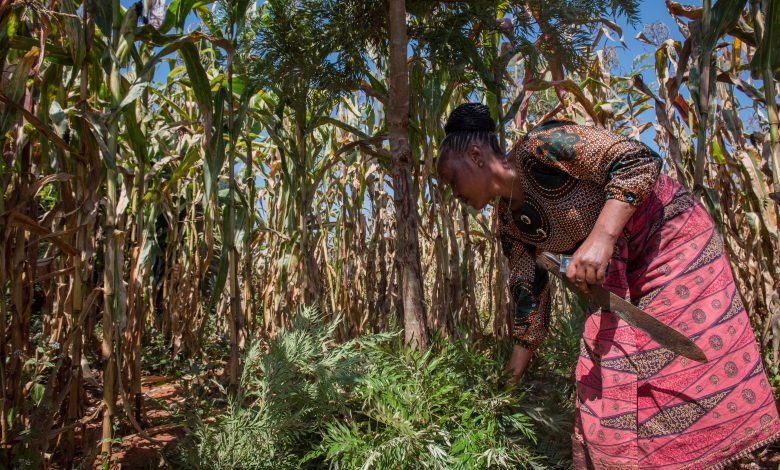
His experience is echoed by another smallholder farmer, Betty Kihanga, in Kilolo District, Iringa. Since planting trees on her farm, Betty has observed a noticeable difference in the performance of crops growing closer to the trees.
“In areas closer to where I planted trees, usually crops look different from other areas,” she says.
The difference, she explains, was particularly clear when comparing crops growing near the trees with those farther away. Even though she applied fertilizer across the entire field, the variation remained noticeable, leading her to believe that the trees contributed to the difference.
Such experiences point to the practical potential of agroforestry at a time when climate change is making agricultural production increasingly unpredictable.
By integrating trees into farming systems, farmers can pursue a pathway that combines soil restoration, greater climate resilience, and additional opportunities for household income. Turning policy into action Tanzania’s national agroforestry policies already recognize the importance of agroforestry in restoring degraded land, strengthening climate resilience, and supporting sustainable agriculture.
ALSO READ: From bins to farms, how Tanzanian technology is turning human hair waste into fertiliser
The challenge now is translating these commitments into implementation at scale. There is already evidence that scaling is possible. During the 2025/2026 season, One Acre Fund Tanzania distributed more than 1.6 million indigenous trees to nearly 48,000 farmers, providing them with tools to restore their soils while building more resilient farming systems. Imagine the potential if similar access were expanded to many more farmers across the country. The benefits would not be limited to individual farms.
Widespread adoption of appropriate indigenous tree species could contribute to healthier soils, stronger agricultural productivity, greater climate resilience, and more sustainable rural livelihoods. Realizing that potential, however, requires investment in the systems behind restoration not simply in tree planting itself, but in the right systems that can sustain it.
Government agencies, research institutions, development partners, and the private sector all have a role to play. Investment is needed to help organizations multiply and commercialize indigenous tree seeds, strengthen community nurseries, and connect research more directly with seed production and distribution. A reliable supply of indigenous seed should therefore be treated as strategic national infrastructure.
Tanzania already possesses the expertise, rich biodiversity, and ecological foundation needed to produce these species. What is needed now is stronger infrastructure and coordination to ensure that quality indigenous seed can reach the organizations, nurseries, and ultimately the farmers who need it.
Tanzania’s restoration ambition is both necessary and achievable. But success should not be measured only by the number of trees planted or hectares targeted. It should also be measured by whether the trees being planted are appropriate for the landscapes they are intended to restore and whether farmers can reliably access quality planting material. he future of Tanzania’s soils may depend on the trees planted today.
But before those trees can take root, the country must ensure that the right seeds are available locally. The writer is the Agroforestry and Carbon Credits Manager at One Acre Fund Tanzania