From bins to farms, how Tanzanian technology is turning human hair waste into fertiliser
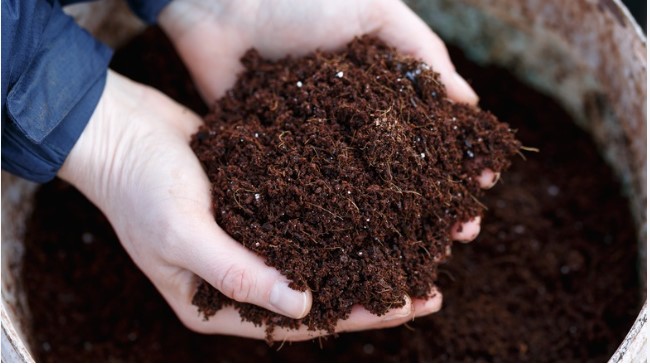
DAR ES SALAAM: FOR years, hair discarded by salons has largely been treated as waste, destined for rubbish bins or disposal sites. In Tanzania, however, one entrepreneur has turned this overlooked material into a potential agricultural resource, developing technology that converts human hair into fertiliser and plant nutrients.
The innovation, developed by entrepreneur David Denis through CutOff Recycle Limited, demonstrates how waste can become a valuable raw material when combined with research, technology and entrepreneurship. The process begins in salons in Dar es Salaam, Kilimanjaro and Arusha, where discarded hair is collected through the company’s network of collection points.
Instead of being thrown away, the hair is transported for processing into agricultural products, including amino-acid liquid fertiliser, organic fertiliser and plant nutrients. What began as a school project in 2018 has since evolved into a business with patented technology, commercial products, production capacity and more than 100 reported users.
For Denis, the journey was driven by a simple question: could a material considered waste be put to productive use in agriculture? The answer has developed into a technology platform linking waste management, agriculture, innovation and commercial enterprise.
From an idea to a tested product
Turning an innovative idea into an agricultural product, however, requires more than demonstrating that the concept works. Products intended for farmers must meet regulatory and safety requirements. Denis says his products underwent testing at the Tanzania Fertilizer Regulatory Authority (TFRA) laboratory.
“We had it tested at the Tanzania Fertilizer Regulatory Authority (TFRA) laboratory,” says Denis.
According to him, the laboratory results showed that the company’s organic fertiliser met applicable nutrient standards in East Africa. He explains that for liquid fertiliser, the combined levels of nitrogen (N), phosphorus pentoxide and potassium oxide must reach at least three per cent under the relevant East African standard.
ALSO READ: Cotton waste to become biochar
The sample tested by the company recorded 4.06 per cent, he says. The tests also examined heavy metals, including arsenic, cadmium, chromium, lead and mercury. Denis says the levels detected were below permitted limits, with some substances not detected.
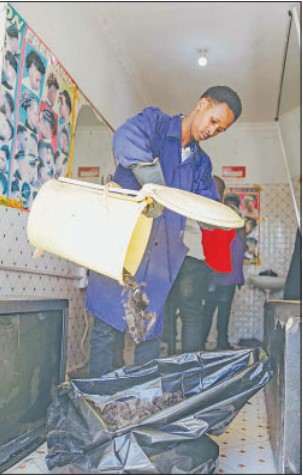
from a salon.
Such testing is essential because agricultural inputs cannot be introduced to the market solely on the basis of an inventor’s claims. Quality, safety and regulatory compliance are critical to protecting farmers, consumers and the environment. TFRA Northern Zone Manager Gothard Liampawe says regulation also applies to organically produced fertilisers.
“People think that, as a regulatory authority, we only regulate industrially produced fertilisers, but we also regulate organic fertilisers,” he says.
Protecting innovation through patents
Another important stage in Denis’ journey was intellectual property protection. The Tanzania Commission for Science and Technology (COSTECH), which is marking 40 years of supporting science, technology, research and innovation in Tanzania, has been working to help local innovators move from ideas to commercially viable technologies. COSTECH has supported 125 innovators and funded 57 research projects between 2021 and 2025, while attracting more than Sh60 billion from the Government and development partners.
For Denis, a major breakthrough came in 2023 when he participated in the National Young Innovators Training Programme in Dodoma.
According to Dr Erasto Mlyuka, Acting Director of COSTECH’s Technology Development and Transfer Centre, Denis was among 15 young innovators selected for specialised training aimed at helping innovators protect their technologies through patents. The support included assistance with intellectual property documentation and eventually contributed to the granting of patent TZ/P/2024/00036 on September 18, 2024.
The patent covers a method of producing amino-acid liquid fertiliser from human hair waste. For Denis, obtaining the patent gave the technology legal protection while creating a foundation for commercial production, investment, licensing and partnerships.
The company has subsequently developed products including Rutubisha, McheKuza and Vuna and continues to explore other agricultural applications for recycled hair. In 2026, it also filed international patent application PCT/IB2026/050342 for an artificial-intelligence-based fertiliser distribution system intended to improve access to fertiliser in Tanzania and other markets.
Creating income from waste
The innovation has also created an economic opportunity around waste collection. CutOff Recycle says people who collect hair waste receive Sh300 per kilogramme delivered to its collection centres. This model creates an income stream for collectors while providing the company with raw material for production.
However, Denis says maintaining the quality of collected hair is important because contamination with unwanted materials makes sorting and processing more difficult. The challenge therefore extends beyond the technology itself. A reliable supply chain is essential if production is to expand.
The company currently collects hair in Dar es Salaam, Kilimanjaro and Arusha and plans to extend its network. Production is already increasing. Denis says the company produces about five tonnes of planting fertiliser per week, equivalent to approximately 20 tonnes per month. It is also working to expand liquid fertiliser production through facilities at SIDO Arusha, where land has been provided to support increased production.
“Demand is still outstripping our production capacity. We need to increase production to meet market demand,” Denis says. That statement highlights the next major challenge: scaling up.
The technology has moved beyond the question of whether hair can be transformed into agricultural products. The immediate question is whether production can grow quickly and efficiently enough to satisfy demand.
Farmers put the technology to the test
Ultimately, an agricultural innovation must demonstrate value in farmers’ fields. CutOff Recycle says its products have reached more than 100 users.
Among them is Mpemba, a maize farmer in Mbeya, who says his crops became greener and healthier after using the company’s fertiliser. He also reports an approximately 40 per cent increase in harvest compared with the previous season. In Arusha, flower farmer Happyness Makundi says the company’s plant nutrients helped her reduce water use and preparation time.
ALSO READ: Maternal health project set for wider expansion
Tomato farmer Nashe, also from Arusha, says he appreciates both the products and the agricultural advice provided before and after purchase.
These accounts are farmer experiences rather than independent scientific trials, but they demonstrate that the innovation has progressed from an exhibition concept into practical agricultural use. The company’s product portfolio includes Amino Acid+ Crop Booster, a liquid fertiliser derived from recycled human hair and containing nitrogen and amino acids. McheKuza is a bio-fertiliser intended to support early plant growth and soil health, while Nutrified Growing Medium is designed to improve soil structure and water retention.
The expanding product range demonstrates how an initial waste-management idea can develop into a broader agricultural technology platform.
The challenge facing Tanzania’s innovators
Denis’ experience also highlights a wider issue in Tanzania’s innovation ecosystem. Developing an idea is only the beginning. Moving from a prototype to a commercial product can require research, intellectual property protection, laboratory testing, regulatory approval, finance, machinery, production space, technical expertise and market access. Capital remains one of the biggest challenges, according to Denis. He estimates that some innovators require between Sh300 million and Sh400 million to establish or expand production.
“You can be given money to buy raw materials, but if you do not have somewhere to invest, process and manufacture, it becomes difficult,” he says.
He wants the Government to strengthen industrial clusters and establish dedicated production areas where innovators can manufacture at lower costs. His argument points to an important distinction: a patent can protect an invention, but investment, infrastructure and market access are necessary to turn that invention into economic value. CutOff Recycle is also looking beyond Tanzania.
The company has entered into a partnership with Alibaba.com to explore international markets, creating an opportunity to take a Tanzanian technology based on locally available waste to customers outside the country.
Denis has also participated in several national and international innovation platforms. According to the company, he was selected among young African entrepreneurs through the Anzisha Prize in 2020, placed second globally in the Global Student Entrepreneur Awards in 2021, entered the top 15 in Startupper of the Year in 2022, became a semifinalist in the Extreme Tech Challenge in 2023 and won an innovation competition at Innovation Week Arusha in 2025.
His journey illustrates the importance of building a complete innovation pipeline—from identifying a local problem and developing a solution to protecting intellectual property, meeting regulatory requirements, securing production capacity and reaching markets.
COSTECH plays a role in helping innovators navigate research, technology development, intellectual property and technology transfer, while TFRA provides the regulatory framework to ensure agricultural inputs meet required standards.
The bigger lesson is that innovation does not necessarily begin with expensive machinery or sophisticated laboratories. Sometimes it begins with recognising value in something society has learned to throw away.
By turning salon hair into agricultural products, this Tanzanian initiative demonstrates how waste can become raw material, technology can become enterprise and a local problem can inspire a potentially scalable solution. Its ultimate success, however, will depend on continued testing, investment, production expansion, regulatory compliance and, most importantly, whether farmers consistently find the products useful and affordable.