Tanzania has women, peace and security plan, now communities need to see results
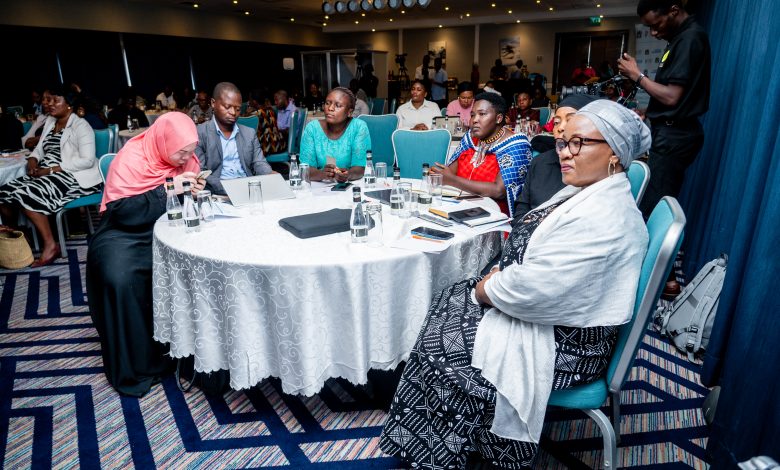
DAR ES SALAAM: It is exactly one year after Tanzania adopted its first National Action Plan on Women, Peace and Security (TNAP-WPS) for 2025–2029, marking an important milestone in the country’s efforts to translate international and continental commitments on women, peace and security into a national framework. One year on, however, attention is shifting from policy commitment to the more difficult questions of implementation, coordination, localization and accountability.
These issues dominated the Tanzania Civil Society Engagement Forum on Women, Peace and Security, held recently in Dar es Salaam under the theme “Strengthening Coordinated Civil Society Action in Support of the Tanzania National Action Plan on Women, Peace and Security.” The Forum brought together government representatives, civil society and women’s rights organizations, women peacebuilders, youth representatives and development partners to consider how the Plan can become meaningful action for women, girls and communities across Tanzania.
Speaking on behalf of UN Women East and Southern Africa Regional Office and UN Women Tanzania, Regional Women and Peace Secretary for East and Southern Africa Idil Absiye commended the Government of Tanzania for its leadership and commitment to advancing the Women, Peace and Security (WPS) Agenda.
She also recognized the support of the Embassy of Ireland towards the development and implementation of the TNAP, alongside contributions from partners including Finland, the Global Peace Foundation Tanzania, the African Women Leaders Network (AWLN) Tanzania and the Tanzania Women Lawyers Association (TAWLA).
Absiye noted that the National Action Plan, developed through consultation with relevant stakeholders, provides a framework for advancing women’s participation and leadership, preventing conflict, strengthening protection, supporting relief and recovery, and improving coordination.
But the priority now is implementation—ensuring that commitments in the Plan make a tangible difference in the lives of women, girls and communities. Tanzania’s membership in the global Women, Peace and Security Focal Points Network was also highlighted as an important opportunity to exchange experiences and strengthen implementation, localization and accountability. Localization emerged as particularly important.
It means taking national WPS commitments to the local level, enabling local governments, women’s organizations, community leaders and women peacebuilders to identify the peace and security issues affecting their communities and translate national priorities into concrete action.
Experiences from Kenya, where 19 counties have localized the agenda through County Action Plans, and Uganda, which has advanced District Local Action Plans, demonstrate that implementation can have greater impact when it is locally owned, coordinated and connected to community realities.
For Tanzania, this requires recognizing the role civil society already plays in preventing violence, strengthening social cohesion, promoting women’s leadership, supporting access to justice and building resilient communities. The challenge is therefore not necessarily to create new structures, but to connect, coordinate, strengthen and scale up existing efforts.
This message was echoed by Pan-African Women’s Organization (PAWO) Secretary General Grace Kabayo, who described Tanzania’s adoption of the National Action Plan as an important demonstration of commitment to ensuring that women are not merely beneficiaries of peace and security, but agents, leaders and decision-makers in building and sustaining peace.
Kabayo challenged stakeholders to move from commitment to coordinated action, from policy to implementation and from isolated interventions to a stronger national movement for women, peace and security. At the centre of this agenda are the four interconnected pillars of WPS: participation, prevention, protection, and relief and recovery.
Participation, she stressed, means more than inviting women to meetings. It means having a voice, influence and access to leadership when decisions are made about security, peacebuilding, justice, humanitarian assistance, development and resources.
Prevention requires addressing the causes of conflict before violence occurs, with civil society playing a critical role through community dialogue, engagement with youth and traditional and religious leaders, promotion of social cohesion and prevention of gender-based violence. Protection requires ensuring that women and girls are protected from violence, discrimination, exploitation and abuse while strengthening access to justice and essential services.
ALSO READ: TNLF turns youth potential into leadership for Vision 2050
Relief and recovery, meanwhile, must involve women in designing, implementing and monitoring recovery programmes, including efforts to rebuild livelihoods and access economic resources. Sustainable peace, Kabayo noted, cannot be separated from poverty, exclusion, inequality and lack of opportunity.
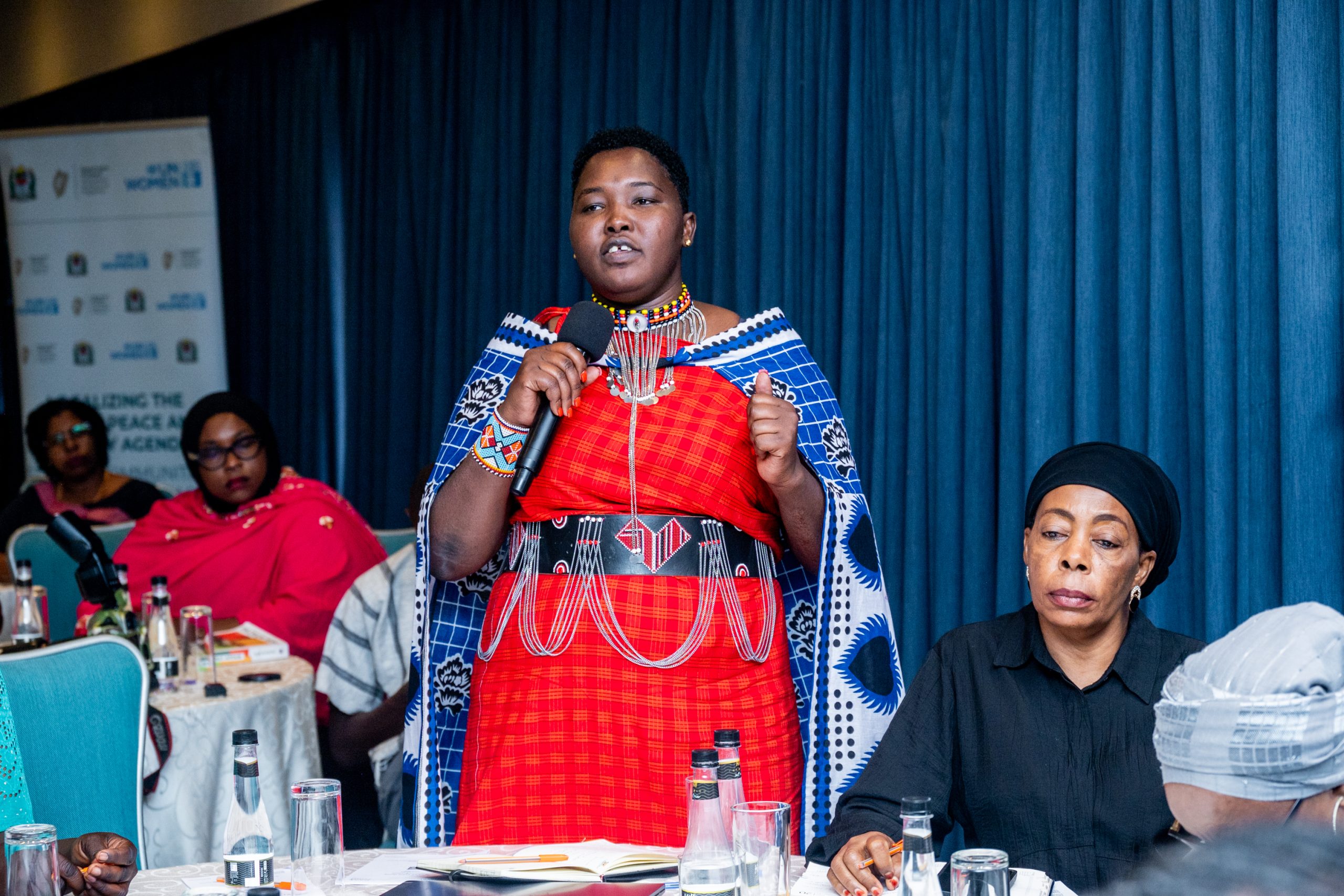
The principle of leaving no one behind also brings into focus women in rural and underserved communities, including pastoralist women. An unnamed participant at the Forum argued that the realities of pastoralist women must become more visible in both policy and implementation.
Their meaningful participation should extend to the design, implementation, monitoring and evaluation of the National Action Plan, particularly on matters affecting peace, security, livelihoods, land and access to resources. For pastoralist women, the participant noted, peace and security are closely linked to land and resource conflicts, climate change and drought, displacement, limited access to education and health services, gender-based violence and barriers to leadership and decision-making.
Addressing these realities requires stronger support for local women peacebuilders and community structures while ensuring that such structures respect women’s rights and voices. Implementation must also be context-specific. What works in urban communities may not necessarily work in pastoralist communities.
The Plan should therefore include clear indicators for pastoralist women and collect data showing whether they are actually benefiting. Most importantly, pastoralist women should not be viewed simply as vulnerable groups requiring protection, but as peacebuilders, leaders and key actors in Tanzania’s peace and security agenda.
The participant’s message from Maasai women was equally direct: they should not only be seen as people who need protection. They are peacebuilders, leaders and decision-makers. Their experiences should inform decisions about land, resources, security and development because their voices are not an addition to the national conversation; they are essential to Tanzania’s future.
The Ministry of Community Development, Gender, Women and Special Groups Director of Gender and Women Development, Timotheo Mgonja, reinforced the message that the WPS Agenda is a shared national responsibility requiring collaboration among Government, civil society, communities, development partners and other stakeholders. He emphasized stronger coordination so that civil society interventions become complementary rather than fragmented, with particular attention to vulnerable and underserved communities.
For Global Peace Foundation Tanzania Country Director Adv. Hussein Sengu, the agenda must similarly move beyond policy commitments and become a practical, coordinated effort that improves women’s and girls’ lives. Women, he stressed, are not merely victims of conflict or insecurity but peacebuilders, leaders and agents of social change whose knowledge and lived experiences must inform peace and security processes.
Sustainable peace requires the involvement of communities, government, civil society, religious leaders, youth and other stakeholders. One significant proposal emerging from the Forum was the potential establishment of a Tanzania 1325 Civil Society Network.
The proposed network could connect organizations already working on WPS, strengthen collaboration and evidence- sharing, support localization and accountability, and provide civil society with a stronger collective voice in implementing the TNAP-WPS.
Speakers cautioned, however, that such a network should not become another organization competing with existing civil society groups or create unnecessary bureaucracy. It should not centralize voices at the expense of grassroots organizations. Instead, it should serve as a platform for coordination, knowledge- sharing, joint action, evidence generation, advocacy, accountability and partnership.
The network could map civil society contributions, identify geographical gaps, document lessons and good practices, support joint advocacy and strengthen links between national policy and realities in districts, villages and households. Existing community structures including women’s and youth groups, faith-based organizations, traditional leadership systems, local peace committees and community organizations—can help anchor this localization process. Young women must also have deliberate space within the agenda.
They should not only benefit from peacebuilding programmes but participate as leaders. Investment in their leadership, civic participation, entrepreneurship, digital engagement, mediation, research and advocacy can help develop the next generation of women peacebuilders. Ultimately, the true test of Tanzania’s National Action Plan will not be its adoption but its implementation.
That requires evidence, clear indicators, community feedback, periodic reviews, civil society monitoring and transparent reporting. Successful mediation, community dialogue, women trained as peacebuilders, survivors connected to services, young women entering leadership and conflicts prevented are all contributions to peace that should be documented and measured.
As Tanzania enters the second year of its five-year Plan, the message from the Forum is clear: the country has established an important policy foundation, but coordinated action is now required to carry that commitment from national institutions to local communities.
The responsibility cannot rest with Government alone. Civil society brings experience and community connections; women peacebuilders bring lived experience and leadership; development partners provide support and resources; while national and continental institutions provide frameworks and opportunities for learning.
One year after Tanzania adopted its first National Action Plan on Women, Peace and Security, the question is therefore no longer whether the country has made a commitment. The real question is whether that commitment will reach the women and communities whose everyday lives define what peace and security truly mean.