Opening doors and shaping the future of African Sport OR Samoura’s journey beyond FIFA and into Africa’s sporting future
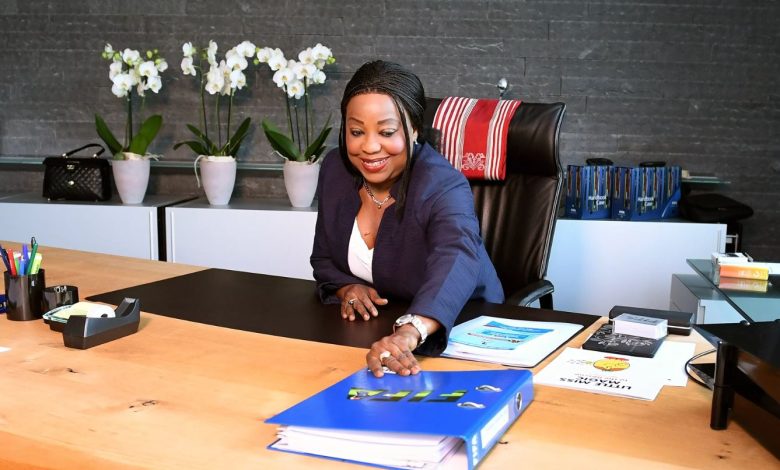
DAR ES SALAAM: For decades, the world of football has been largely defined by men sitting at the most powerful decision-making tables, shaping the direction of federations, competitions, infrastructure and investments.
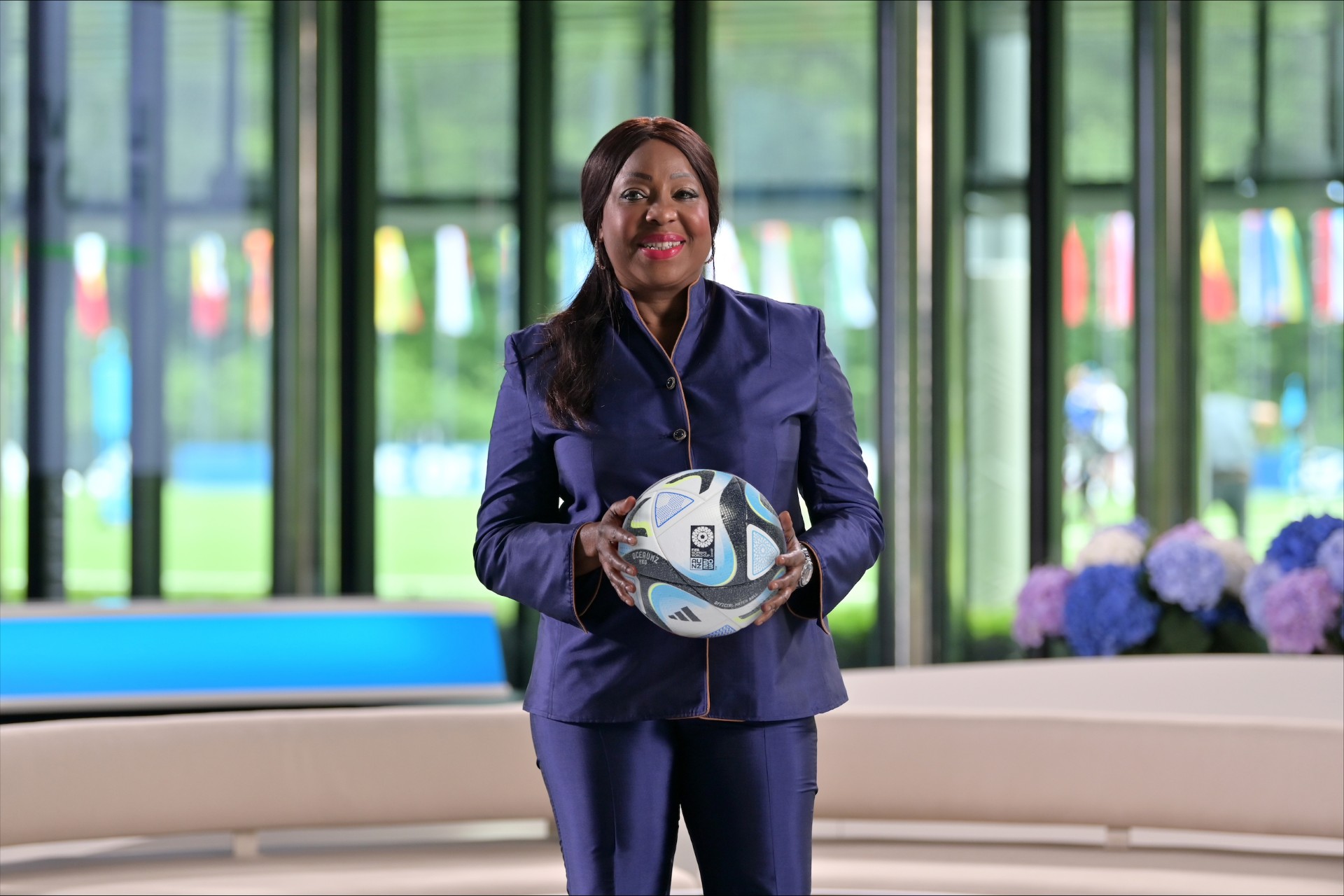
But slowly, that picture has begun to change and few African women embody that transformation more powerfully than Fatma Samoura, the Senegalese diplomat and former Secretary General of FIFA who broke one of football’s most visible barriers when she became the first woman and the first African to hold the organization’s top administrative position.
Her journey was significant not simply because of the title she carried, but because of what her presence represented that African women could occupy influential positions in institutions whose leadership had historically been dominated by men and by people from outside the continent.
Today, Samoura is no longer running the day-to-day administration of FIFA. Instead, she is taking the experience accumulated through more than two decades in international development and seven years at the world's football governing body into a new chapter as an Advisory Board Member of the African Collaborations Group (ACG).
Speaking in a special interview with Daily News, Samoura said that, The new role places her at the intersection of sport, development, investment and African economic opportunity. For Samoura, however, the transition is not about leaving football behind.
“FIFA gave me a second vantage point on the same problem, at a different scale. I saw how much energy exists around football on this continent, and how often that energy is let down by weak governance, poor planning, or projects built for an event rather than for a community,” She acknowledged that She narrated that, seven years leading FIFA’s administration taught me how international institutions, governments, and federations can either reinforce each other or work at cross purposes.
“So, what I bring to ACG is really the sum of those two experiences, not one or the other. From the UN side, an instinct for asking who actually benefits, and whether communities and local institutions are strong enough to sustain what is being built,” she mentioned.
She highlighted that, From FIFA, an understanding of how sport governance works, and does not work, at the international level. If I can help ACG stay honest about both of those things, I will have done my job. Samoura, she made it that clear that her role at ACG is not an executive one.
She will not be responsible for running the organization. Rather, she sees her responsibility as bringing experience, asking difficult questions and challenging assumptions. It is about asking a bigger question: What can sport do for Africa when it is planned not simply as entertainment, but as a long-term engine for development?
“My job is to ask hard questions, to challenge assumptions, and to bring a lifetime of experience in African development to a table that is trying to do something ambitious with sport,” she said
“Long before she became a familiar figure in global sport, she spent more than 20 years working with the United Nations, including assignments in several African countries such as Djibouti, Madagascar, Chad, Cameroon and Nigeria,” she briefed.
Her work involved issues including food security, displacement, health and community development, often in environments facing serious social and economic challenges. Those years shaped an understanding that would later become important in her approach to football administration and development works best when communities are not merely recipients of projects, but active participants in them.
“Development only lasts when it is built with people, not delivered to them, this was is like a slogan which we must have in our heads and the people who were serve in generally,” she mentioned.
“Across the continent, governments and private investors continue to see sport as a potential driver of tourism, employment, infrastructure development and youth empowerment,” she noted.
She highlighted that, yet large sporting projects have also produced difficult questions about sustainability, ownership and the long-term value left behind once major events are over.
She noted that, “I have seen the stadium story play out too many times to count, in my UN years as much as in my FIFA years. A big event comes to town, a stadium goes up, there is genuine pride and celebration, and then the event moves on,”
“A few years later that same stadium is underused, expensive to maintain, and often a subject of embarrassment rather than pride. It is not a football problem. It is a planning and governance problem, and Africa has paid for it too many times,” Samoura indicated Another key area of ACG’s ambition is job creation and long-term investment, particularly for Africa’s growing youth population and local businesses.
Samoura believes major sporting projects should create opportunities that extend far beyond the construction phase.
ALSO READ: German diplomat backs Zanzibar’s push to attract global investors
She explained that, “Africa’s greatest asset is its young population, and its greatest responsibility is making sure that population has something meaningful to do. I saw this constantly in my UN work and the difference between a community with real economic opportunity and one without is not effort or talent, it is access,” She said.
Construction of any large project creates jobs, that part is obvious. What matters more to me is what happens after the ribbon is cut.
“A space that stays active all year, rather than for a handful of match days, can sustain real employment in hospitality, coaching, sports medicine, event management, security, and administration,” Samuora explained Samoura added that, “Training academies attached to these spaces matter to me particularly, because they give young people a structured route into work, not a vague promise,”
She elaborated that, for local businesses, the principle is the same one I saw hold true in every community I worked in during my UN years and sustained footfall, not a single big event, is what allows a small trader or a service provider to plan, invest, and grow.
She noted that, Investors, for their part, are more willing to commit capital when they can see a project managed with discipline and accountability. For Samoura, another critical question is how Africa can ensure that the economic benefits generated by major sporting and entertainment events remain within the communities that host them.
“This is a question I care about more than almost any other, because I watched this pattern up close for two decades before I ever joined FIFA. Too often, when a major event lands in Africa, the expertise, the contracts, and a large share of the revenue arrive with it and leave with it,” she responded She indicated that, the host country carries the cost and cleanup, and keeps only a fraction of the benefit.
It is a familiar story in development more broadly, not only in sport, and it is one I have spent much of my career trying to help correct. She argued that, the way to change that pattern is not complicated in principle, even if it is hard in practice. Build things that last beyond the event, so the economic activity does not leave when the visitors do. Make sure hospitality, retail, and services are anchored locally, so spending stays in the community.
“Invest in training and skills development so that expertise is grown at home rather than flown in. And make sure African governments, businesses, and communities hold a genuine stake in ownership and governance, not a symbolic seat at the table,” she pointed out She described that, “None of that happens automatically. It happens when institutions insist on it, and when African leadership in government, in business, and in civil society has the confidence to insist on it too.
That is the piece of this I feel most strongly about,” Samoura’s historic appointment at FIFA also carried a significance that extended far beyond football.
As the first woman and the first African to serve as the organization’s Secretary General, her rise challenged long-standing assumptions about who can occupy positions of influence in global sport.
Yet, rather than viewing her achievement simply through the lens of representation, Samoura believes the focus should remain on competence, opportunity and the responsibility to create space for those coming behind. Reflecting on her journey from more than two decades in the United Nations system to seven years at the helm of FIFA’s administration, she stressed that African women have never lacked the ability to lead.
“I have never been entirely comfortable being described as a symbol. I would rather be judged on what I did with the role than on the fact that I held it. But I understand why it matters to people, and I have come to accept that representation carries weight beyond any one individuals preference,” she indicated.
She expressed that, What I would say, from my own path, more than two decades in the UN system before FIFA, working in some very difficult places, then seven years leading a global institution most people assumed would never be led by an African woman is that competence was never in short supply on this continent or among women. She identifies that, what was often missing was the opportunity, and the willingness of institutions to trust that competence when it did not look like what they were used to.
“If my time at FIFA, and now this role with ACG, tell young African women anything, I hope it is this and prepare seriously, work honestly, and do not wait for permission to believe you belong in rooms that were not built with you in mind,” she narrated.
“The rest of us have a responsibility to keep opening those doors, not just walking through them ourselves,” Samuora indicated For her, successful development cannot depend only on the size of an investment or the attractiveness of a major event. It must also depend on the systems put in place to manage those investments and ensure that the communities they are intended to serve are not left behind.
ALSO READ: TNLF turns youth potential into leadership for Vision 2050
This is where Samoura believes her combined experience in international development and football administration can add value to ACG’s ambitions. Having worked with governments, international organizations and sporting institutions, she understands the importance of bringing different stakeholders together around a common objective.
She pointed to the need for international institutions, governments and federations to work in ways that reinforce rather than undermine one another. When these institutions operate in isolation, she suggested, even well-funded projects can struggle to achieve their intended impact. The same thinking applies to women’s participation in the sporting economy.
For Samoura, opening doors for women should not stop at symbolic representation. Women must be given opportunities to contribute to decision-making, entrepreneurship, administration and investment across the wider sports industry. Her own journey provides a powerful example of what becomes possible when such opportunities are created.
From the United Nations to FIFA and now ACG, she has repeatedly entered spaces where African women were historically underrepresented and demonstrated that leadership can be built on experience, competence and commitment rather than gender or geography. That experience has also strengthened her belief that Africa should have greater confidence in its own capacity.
The continent does not lack talent, ideas or ambition. What it needs, she argues, are stronger pathways through which those resources can be converted into sustainable opportunities. In that sense, Samoura’s contribution to ACG may extend beyond football itself. It is about encouraging a model of sport that connects infrastructure with communities, investment with local ownership and sporting success with broader social and economic development.
Her challenge is ultimately to ensure that the energy surrounding African sport is transformed into something that continues to create value long after the crowds have gone home. As Fatma Samoura begins this new chapter with the African Collaborations Group, her role represents more than the continuation of an accomplished career in international sport and development. It is an opportunity to apply the lessons of her journey to a continent seeking to transform its sporting potential into lasting social and economic value.
From stronger governance and sustainable infrastructure to youth employment, local investment and greater participation of African women in decision-making, the challenges are significant, but so too are the opportunities.
Samoura’s experience places her in a unique position to question how Africa builds, who benefits from what is built and what remains when the spotlight moves elsewhere. Ultimately, her story is a reminder that breaking barriers is not the end of the journey.
The greater task is to use those newly opened doors to create opportunities for others and to ensure that Africa’s sporting future is shaped increasingly by Africans themselves. For Samoura, the next chapter may no longer be about leading football from the center of the global stage, but about helping Africa build a sporting future that can stand on its own long after the final whistle.