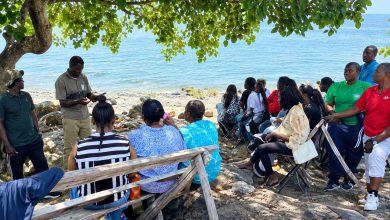
Study calls for co-existence among livestock keepers, farmers and communities in managing land resources

DODOMA: LIVESTOCK keeping, crop farming and community forest conservation can co-exist while helping to reduce land-use conflicts if local communities are involved in planning and managing land resources, a study has found.
The findings emerged from a research project conducted in the Suledo Forest area of Kiteto District, Manyara Region, which examined how farmers, pastoralists and communities living around community forests can share natural resources while supporting conservation.
Acting Director of the Forest and Beekeeping Division in the Ministry of Natural Resources and Tourism, Dr Daniel Pangalasi said the study provides the government with scientific evidence on how economic activities can be integrated with forest conservation.
He said the project, which began in 2020, was implemented through collaboration between Tanzanian institutions, including Sokoine University of Agriculture (SUA) and the Mwalimu Nyerere Memorial Academy (MNMA), and the University of Copenhagen in Denmark, with funding from Danida.
Dr Pangalasi said Suledo is among community forests established with strong community participation in conservation. Communities surrounding the forest depend largely on livestock keeping and farming, making the area suitable for examining how the activities can coexist with conservation.
“The project sought to establish how all these activities can take place together without undermining one another,” he said.
He added that the findings could help the Government, local authorities and other stakeholders develop better land-use planning strategies and address challenges involving farmers, pastoralists and forest conservation.
Project leader , Prof Jumanne Abdallah said the research focused on finding ways in which livestock, farmers, communities and forests could have mutually beneficial relationships rather than focusing solely on conflicts.
He said while previous studies in Tanzania had extensively documented farmer-pastoralist conflicts, the project sought to identify practical approaches that would enable the groups to coexist while using natural resources under mutually agreed arrangements.
Prof Abdallah said the Suledo findings showed that some challenges could be addressed within communities through agreements and land-use systems that take into account the needs of different groups.
The research involved three PhD students who examined policy, legal and institutional frameworks governing livestock and forests; relationships between pastoralists and communities when livestock enter community forests; and environmental impacts associated with livestock grazing in forest areas.
The findings showed that the environmental impact of livestock in forests should not be assessed from a single perspective, as it depends on factors including herd size, season and the length of time livestock remain in a particular area.
“We have found that it is possible. By considering the history of an area and how pastoralists and farmers have traditionally lived together, we can reduce conflicts,” Prof Abdallah said.
He said the project had also trained three PhD students, produced more than 15 scientific publications, strengthened academic and research networks and developed educational videos that could be used to raise public awareness on sustainable resource use.
Representing the Vice Chancellor of Sokoine University of Agriculture Prof Japhet Kashaigili said the findings could help the Government formulate strategies and policies aimed at reducing farmer-pastoralist conflicts and strengthening forest conservation.
He said the research examined the relationship between livestock and forests and explored approaches for building sustainable conservation systems capable of generating benefits for both the environment and communities.
Such benefits, he said, include improving the incomes of farmers and pastoralists who depend on land resources while reducing conflicts associated with their use.
Prof Thorsten Treue of the University of Copenhagen said the research also examined how farmers and forest managers could work together to promote forest conservation and sustainable land use.
He said cooperation and openness among village communities involved in the research enabled researchers to gain a broader understanding of the challenges and opportunities for reducing conflicts among farmers, pastoralists and conservationists.
One of the approaches identified, he said, was creating arrangements that allow pastoralists to graze livestock on harvested agricultural fields after crops have been removed, rather than relying primarily on natural forest areas.
Such arrangements, he said, could reduce competing demands for land while supporting forest conservation.
Researcher and PhD student Benezet Rwelengera said the study was conducted across three major areas, covering policy and legal issues, relationships between pastoralists and communities at village level, and environmental impacts associated with the use of forest areas for grazing.
He said the research showed that the presence of livestock in a forest should not automatically be regarded as causing environmental degradation, since the impact depends on herd size, the season, grazing practices and the duration of use.
In Suledo, he said, positive relationships between farmers and pastoralists had contributed to reducing conflicts.
“For example, some farmers and pastoralists support each other in production activities, with farmers using livestock for agricultural activities while pastoralists gain access to grazing areas during agreed periods after harvesting,” he said.
Kiteto Member of Parliament Edward Ole Lekaita said research of this nature was important to lawmakers and policymakers because it provides scientific understanding of challenges facing communities.
He said the findings could help strengthen laws and systems that enable pastoralists, farmers, conservationists and other resource users to share resources for mutual benefit.
Prime Minister’s Office official Dr Salim Nandonde said the research had provided insights into how livestock keeping and environmental conservation could be pursued together.
He stressed the need to create an enabling environment for livestock production while ensuring forest resources remain protected from degradation.
ALSO READ: TALIRI to roll out demo livestock farms in Mwanza
Dr Kochocho Mgema of the Tanzania Livestock Keepers Association said the findings could provide a basis for bringing pastoralists, farmers and conservationists together to address resource-use challenges.
He said applying the findings in land-use planning and policy could help reduce conflicts and enable communities to coexist while protecting the environment.
Pastoralist Adam Ole Mwalabu said the Suledo experience demonstrated that communities could share natural resources while conserving them for present and future generations.
He called for similar approaches to be considered in other parts of the country with conditions comparable to Suledo.
The study concludes that addressing farmer-pastoralist relations and forest conservation requires approaches that take into account local history, environmental conditions and community relationships, rather than applying a single model across different areas.
Stakeholders said the Suledo experience could provide valuable lessons for developing sustainable land-use systems and reducing resource-related conflicts in other parts of Tanzania.