Strengthening domestic financing for FP

DODOMA: AS Tanzania continues to strengthen its health system and advance efforts to reduce preventable maternal deaths, Members of Parliament have reaffirmed the importance of increasing domestic financing for family planning (FP) services and commodities to ensure sustainable access to reproductive health care for all Tanzanians.
The call was made during a high level dialogue held in Dodoma, bringing together Members of Parliament, government officials, development partners, and reproductive health experts to explore strategies for sustainable financing of family planning in a changing external funding landscape.
Opening the meeting, the Chairperson of the Tanzania Parliamentary Association for Population and Development (TPAPD), Hon Lutengano Mwalwiba (MP) emphasised that family planning remains a critical investment in the country’s future.
“Family planning is not merely a health intervention, it is an investment in human capital, economic development, and the well-being of families. If we want healthier mothers, healthier children, and a more productive nation, we must prioritise domestic financing for family planning,” he said.
Participants acknowledged the important contribution development partners have made in supporting reproductive health programmes over the years. At the same time, they underscored the need for Tanzania to progressively strengthen domestic resource mobilisation to sustain and expand these gains.
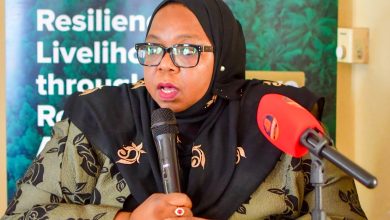
Speaking during the meeting, UNFPA Assistant Country Representative, Dr Majaliwa Marwa, commended the Government of Tanzania for prioritising reproductive, maternal, newborn, child and adolescent health within the 2026/27 national budget framework, as well as for maintaining support for reproductive health commodity security through the Compact Agreement.
He noted that while Tanzania has made significant progress in improving maternal health outcomes and expanding access to family planning services, increasing demand for services and evolving external financing trends call for stronger domestic investment.
Emphasising the role of Parliament, UNFPA called on Members of Parliament to champion increased investments in family planning and reproductive health, strengthen oversight of budget implementation, and ensure timely and effective utilisation of allocated resources.
“Sustainable investment in reproductive health is essential to ensure that every woman, adolescent, and young person in Tanzania can access the services they need to realise their full potential,” Dr Marwa said.
Presenting the case for increased domestic financing, the Director of Tanzania Men as Equal Partners in Development (TMEPiD), Dr Cuthbert Maendaenda, underscored that investment in family planning is central to Tanzania’s long-term social and economic transformation.
He explained that family planning contributes to the realisation of the demographic dividend by reducing dependency ratios and enabling a larger productive workforce to drive economic growth.
Dr Maendaenda noted that Tanzania has made important commitments under the ICPD Programme of Action, FP2030 Country Commitments, and the Compact Agreement on Family Planning lifesaving commodities, stressing that sustained domestic investment is essential to fully realise these commitments.
ALSO READ: Financing national development requires smarter partnerships
“Domestic financing for family planning is about ownership, accountability and sustainability. These are our development priorities and our responsibility. Parliament has a critical role in ensuring that resources allocated for reproductive health are not only budgeted, but also fully disbursed and effectively utilised,” he said.
The meeting further highlighted the strong link between family planning and maternal health, noting that enabling women to plan and space pregnancies significantly contributes to safer motherhood and healthier families.
Strengthening community education is important in addressing persistent myths and misconceptions that continue to limit the uptake of family planning services.
Many of these misconceptions are driven by limited access to accurate information hence, the need for continued investment in education and awareness to enable informed decision-making on reproductive health.
Male engagement emerged as a key theme during the dialogue. Family planning should be recognised as a shared family responsibility rather than solely a women’s issue.
Therefore, engaging men as partners, clients and champions is essential for achieving meaningful and sustained progress in family planning uptake Sharing her lived experience, Paskazia Sospeter, a mother of two from Karakata, Dar es Salaam, described her journey with family planning as one of relief, dignity and restored hope.
She recalled the early days when life felt overwhelming, when her children were born too close together and every day was a struggle to meet their needs.
“I used to feel like I was always one step behind life. My children needed so much, but I had so little time, strength, and even peace of mind,” she said.
She explained that everything began to change after receiving counselling and choosing a family planning method that suited her health and lifestyle. What once felt like chaos gradually turned into stability.
“Family planning didn’t just help me control births, it gave me back my life. Now I can care for my children properly, I can work with a clear mind, and I no longer live with constant worry about the future. I feel like a better mother,” she said.
As Tanzania continues its journey toward universal access to reproductive health services, stakeholders reaffirmed that strengthening domestic financing for family planning remains essential for safeguarding the health and wellbeing of women, children, and future generations.
Eugenia Msasanuri is the Communications and Advocacy Manager for TMEPiD.