Tanzania could draw on Trade Development Bank experience to develop Public Investment Fund
DAR ES SALAAM: TANZANIA’s proposed Public Investment Fund (PIF) is emerging at a time when the country is asking a broader question about public wealth: how can the assets already owned by Government be managed more strategically to generate greater returns and create capital for future investments?
The question is particularly relevant given the scale of Tanzania’s public investment portfolio.
Through the Office of the Treasury Registrar (OTR), the Government oversees 252 public institutions in which it holds majority ownership and 56 companies in which it has minority shares.
Together, these investments are valued at about 92.3tri/-. The proposed PIF, contained in the Public Investment Bill expected to be finalised in the 2026/27 financial year, is intended to strengthen the mobilisation and allocation of capital for strategic investments through Public and Statutory Corporations (PSCs).
As Tanzania works towards establishing the Fund, experience from institutions that have helped other African countries develop specialised investment funds and vehicles could provide useful lessons.
This is where the Trade and Development Bank (TDB), in which the Government, through OTR, holds an 8.3 per cent shareholding, comes in.
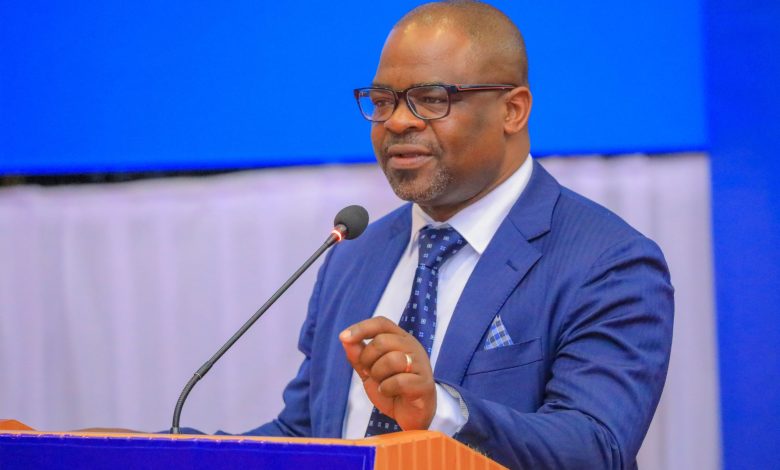
TDB Group President and Managing Director, Mr Admassu Tadesse, said the bank was ready to provide technical and advisory support to Tanzania as it considers how best to structure and operationalise the proposed Fund.
His offer followed discussions with Treasury Registrar Mr Nehemiah Mchechu at the OTR offices in Dar es Salaam, where the two sides examined ways of strengthening public investment management and ensuring Government assets generate greater value for the economy.
The potential contribution from TDB goes beyond financing. The bank has experience in designing investment structures, mobilising capital and supporting African countries in developing funds and other investment vehicles.
Mr Tadesse cited TDB’s experience with countries including Angola and Ethiopia, where the bank has supported countryspecific funds and other investment vehicles.
“On average, from an idea to a functional fund, it takes 15 to 36 months, depending on every country’s context,” he said.
The observation carries an important lesson for Tanzania because establishing a PIF is not simply a matter of putting money into a separate account.
Its effectiveness will depend on the legal framework, institutional structure, investment policy, governance arrangements and sustainable funding mechanism behind it.
Tanzania will also need to determine what model best suits its circumstances.
The broader international experience of sovereign wealth funds also offers useful lessons, although Tanzania’s proposed instrument is a Public Investment Fund.
Sovereign wealth funds have been used in different countries to preserve natural resource revenues, diversify national wealth and generate long-term investment returns.
The underlying principle is that some forms of national wealth can be managed with a longer-term horizon instead of being consumed immediately.
For Tanzania, that principle is relevant because the country already has a substantial asset base from which to begin building its long-term investment capacity.
Importantly, Tanzania does not necessarily have to wait for future liquefied natural gas (LNG) or other natural resource revenues before beginning this process.
Its existing public investment portfolio provides a starting point, while future resource revenues could, in time, add another source of capital.
That shifts the conversation from anticipating future wealth to making better use of wealth Tanzania already holds.
Mr Tadesse explained that TDB has evolved beyond conventional trade and development financing, operating through different entities and investment vehicles capable of providing commercial financing, concessional funding, grants, insurance and specialised investment solutions.
He cited the Trade and Development Fund, which works with development partners to provide concessional financing and grants for projects that may not yet be commercially viable but have significant development potential.
Such experience could be valuable because Tanzania’s strategic investment needs will not all have the same financial characteristics.
Some investments may be commercially viable, while others may require public or concessional capital before attracting private investors.
Mr Tadesse also said TDB would not rule out State-owned enterprises that are creditworthy and fit for purpose when considering investment opportunities.
The implication is that the proposed Fund could potentially support viable public enterprises while also helping Government participate in new strategic opportunities, provided investments meet clearly defined governance, financial and strategic criteria.
For Tanzania, therefore, the potential partnership with TDB is as much about knowledge as it is about money.
The bank’s experience could provide practical lessons on fund structuring, investment policy, governance, capital mobilisation and institutional capacity.
But the final model must reflect Tanzania’s own circumstances. The PIF is being developed within the country’s legal and institutional framework and must serve national priorities.
Its relationship with OTR, the Ministry of Finance, PSCs and other institutions will need to be clearly defined to avoid duplication and strengthen coordination.
The bigger opportunity is to change how Tanzania thinks about its public assets. A portfolio worth about 92.3tri/- is significant, but its importance should not be measured only by its size.
The more important question is how effectively that wealth is managed, how much value it generates and how much of that value can be reinvested to create additional wealth.
That is where the proposed PIF could become transformative. It could provide a mechanism for mobilising capital, directing it towards strategic investments, retaining part of investment returns and strengthening Government’s capacity to build a larger and more productive asset base.
The logic is straightforward: improve the performance of existing assets, retain an appropriate share of the resulting returns, reinvest those returns in carefully selected opportunities and, over time, expand the country’s productive asset base.
TDB’s readiness to provide technical and advisory support comes at a useful stage in that process.
By drawing on experience from across Africa, Tanzania can examine what has worked elsewhere, understand the risks and adapt relevant lessons to its own circumstances.
Mr Mchechu, for his part, said the Government was looking at how to transform its existing portfolio into a more productive investment base capable of generating higher returns and supporting long-term development objectives.
This points to a potentially important role for the PIF in strengthening the way Government manages its investment portfolio, with greater emphasis on capital allocation, returns and long-term value creation.
The central question, therefore, is not only what Government owns, but what those assets generate. Some investments may require recapitalisation to unlock their potential, while others could attract private capital to support their growth.
Mr Mchechu said Government should be prepared to restructure, merge or exit investments where there is no longer a strategic justification for maintaining them, while recognising that institutions providing essential public services should not necessarily be judged solely on commercial profitability.
That distinction matters because public investments serve different purposes. Their performance should therefore be assessed against their respective mandates, while Government capital should be deployed with discipline where stronger opportunities exist elsewhere.
This also raises the question of how returns from public investments are used.
As envisaged in the Public Investment Bill, the proposed Fund could provide a framework for retaining a portion of these returns for reinvestment, while transferring the remainder to the Government Consolidated Fund.
Such an approach could allow part of the income generated by existing investments to become capital for new investments.
In simple terms, today’s returns could help finance tomorrow’s growth. For such a system to work, however, governance would be critical.
TDB advisor Mr Anthony Mwithiga said four elements were particularly important in developing an effective investment fund: an enabling legal framework, establishment and capacitation of the institution, a clear investment policy and a sustainable funding mechanism.
These will be central as Tanzania finalises the Public Investment Bill. The legal framework will need to clarify the Fund’s mandate, governance, funding, investment authority and accountability.
The institution will require professional capacity in investment management, risk assessment and portfolio analysis, while its investment policy will need to define where and how capital can be deployed.
Mr Mwithiga said Tanzania had a distinctive starting point, with a public investment portfolio valued at 92.3tri/- from which to build its investment capacity.
That starting position means the country can develop its investment architecture around assets it already owns while preparing for additional opportunities in mining, energy and other strategic sectors, including LNG.
Developing the institutional and investment architecture now would allow Tanzania to manage future opportunities from a position of greater preparedness.
If substantial resource revenues emerge, the country would already have the systems, policies and professional capacity needed to determine how much should be spent, saved or invested for the long term.