

CAUGHT IN CRISIS| Two Years On, Tanzania’s Fish Shortage Threatens Job
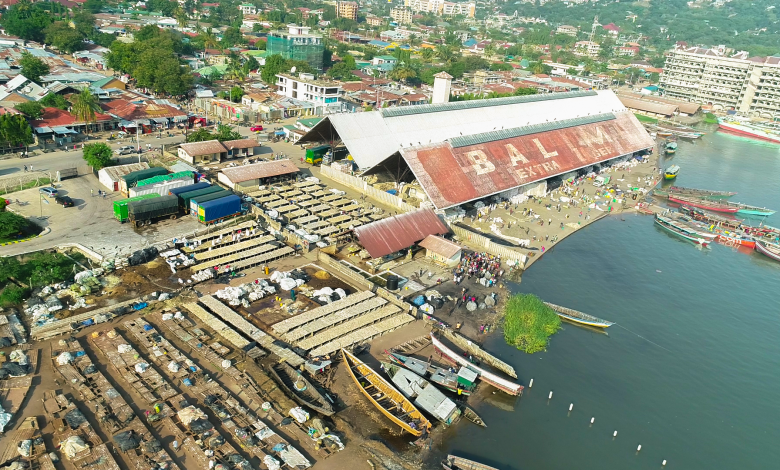
Two years after an investigation warned of a crisis in Lake Victoria’s fisheries, Mwanza processors say they are operating at a fraction of capacity and cutting jobs. But government statistics tell a more complicated story.
MWANZA — Inside some of Mwanza’s fish-processing factories, the problem is not the size of the machinery. It is what is arriving at the factory gate.
Processors say supplies of fish from Lake Victoria have become increasingly unreliable, forcing some plants to operate at around 20 percent of their installed capacity. One factory in Ilemela has reduced its workforce by about 120 people, in just three years, while industry representatives warn that other factories could eventually close if the shortage persists.
The claims echo the findings of the 2024 investigation Havoc as Tanzania’s Fish Exports Plummet, which reported that six of 12 registered fish-processing plants in the Lake Victoria zone were dormant and the remaining plants were operating at less than 30 percent capacity. Fishermen interviewed for that investigation described dramatically smaller catches.
But there is a significant difference between the situation reported then and the official data available now.
Government statistics do not show a simple collapse in Tanzania’s fish production.
Instead, they show an increase.
The Ministry of Livestock and Fisheries says total fisheries production reached 659,242.69 tonnes by April 2026, an increase of 10.02 percent from 599,200.33 tonnes during the comparable period of 2024/25. Natural-water fisheries accounted for 477,661.93 tonnes, while aquaculture contributed another 181,580.76 tonnes.
Lake Victoria remains the country’s dominant fishing ground. By April 2026, it had produced 354,887.43 tonnes, accounting for 74.3 percent of natural-water fish production.
So why are processors in Mwanza saying they cannot get enough fish?
That contradiction is now at the centre of the story.
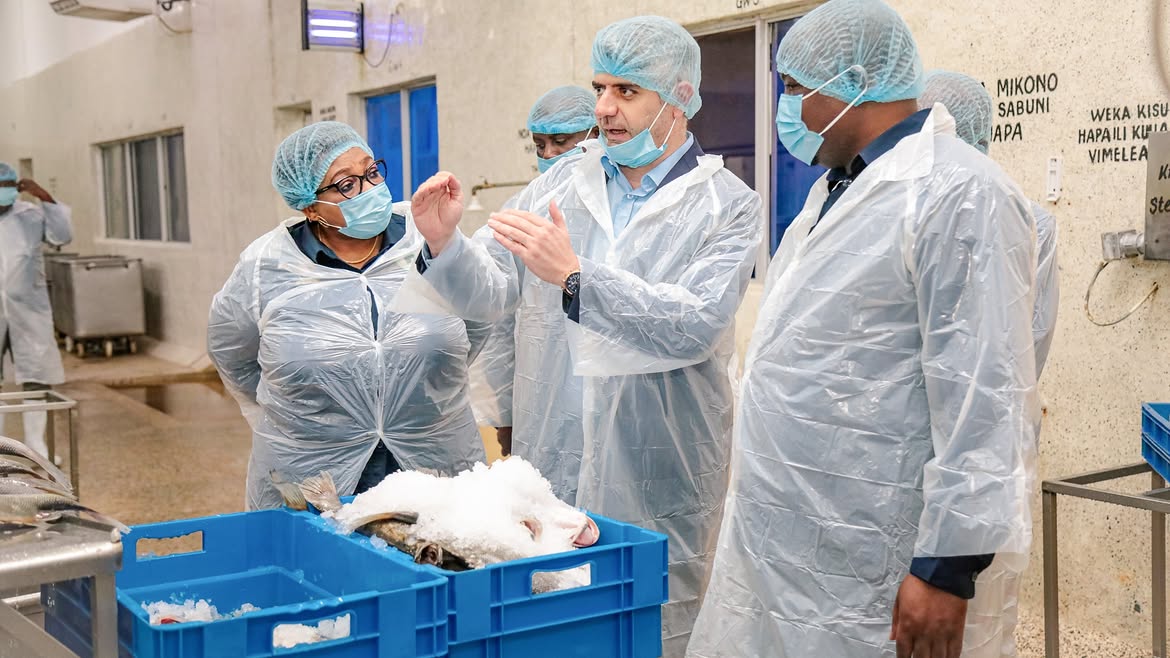
The factory floor tells a different story. At Omega Fish in Mwanza, Zena Marijani says the decline in fish supplies has become a serious problem for the processing industry and its workers.
The shortage, she says, has persisted for several years and is increasingly affecting employment.
The situation is similar at a fish-processing factory in Ilemela, where around 120 workers have reportedly been removed from the payroll as production has declined.
Industry representatives say some factories are receiving only enough fish to operate at approximately 20 percent of their capacity. For a processing plant designed to handle tens of tonnes of fish a day, such utilisation levels create a serious commercial problem.
“Factories still have electricity bills, equipment, maintenance costs, regulatory obligations and staff-related expenses,” she told the Minister. “But without sufficient raw material, the production line cannot operate efficiently.”
The result is a problem that moves quickly from the lake to the factory and then to the labour market.
The Numbers
The official numbers complicate the crisis. The government’s own statistics provide a reason to look more closely at what is happening.
The Minister for Livestock and Fisheries Development, Dk Bashiru Ally told the National Assembly recently that fisheries contributed 1.6 percent of Tanzania’s GDP in 2024 and grew by 2.3 percent. The minister estimates that approximately six million Tanzanians benefit from the fisheries value chain, including 205,559 fishermen and 53,992 aquaculture producers. Fisheries also provide about 30 percent of animal protein consumed in the country.
The Ministry reports that production increased by 10.02 percent through April 2026. That is not consistent with a straightforward national production collapse.
But production figures do not necessarily tell a processor whether enough Nile perch of the required size and quality is reaching its factory.

Observers say, fish can be caught and sold through different channels. Domestic consumers compete with exporters. Traders can move fish away from processing centres. Some fish may be sold fresh rather than processed.
And a rise in total production can be driven by species other than Nile perch or by aquaculture.
“The distinction matters because the processing industry is particularly dependent on the availability of suitable raw material,” Grace Kall, Acquaculture experts says.
The government’s own 2024 Economic Survey reported that total fish harvesting increased to 522,788.33 tonnes in 2024, from 479,976.62 tonnes in 2023. Freshwater harvesting rose from 415,879.6 tonnes to 458,799.6 tonnes.
At the same time, the Economic Survey recorded 24,433 tonnes of Nile perch exports in 2024, compared with 20,192 tonnes in 2023. The value of those exports increased from about US$132.2 million to US$174.8 million.
The numbers therefore point to a more complicated story than simple depletion.
“A fishery can produce more while factories still struggle,” she adds. “The question is not simply: Are there fewer fish in Lake Victoria? It is: What is happening to the fish between the lake and the processing factory?”
According to the experts, it requires examining catch composition, fish size, fishing grounds, domestic consumption, prices, traders, processing demand and illegal fishing.
The distinction between total fish production and the availability of commercially valuable Nile perch is particularly important.
In the government’s 2024 budget speech, the Ministry itself acknowledged that declining availability of raw material had affected fish-processing factories.
It said that fisheries revenue had fallen short of its target partly because of “kupungua kwa malighafi kwenye viwanda vya kuchakata samaki” — a decline in raw materials available to fish-processing factories — while also attributing this partly to stronger domestic fish trade.
That statement is significant because it shows that the raw-material problem was already recognised by government before the latest Mwanza complaints.
The issue, therefore, is not whether the government knows there is a raw-material problem.
It is whether the interventions have resolved it.

Illegal fishing remains part of the equation
On the shores of Lake Victoria, fishermen and industry representatives continue to point to illegal and destructive fishing practices.
Onesmo Salu, secretary of the association representing fish-processing factory owners, says illegal fishing remains a major problem. He says prohibited fishing gear continues to be used and raises particular concern about the use of solar lights in the dagaa fishery.
According to Salu, such practices can attract juvenile Nile perch together with dagaa, removing young fish before they reach maturity. A fisherman interviewed in Mwanza makes a similar argument.
He blames some dagaa fishing operations for damaging the future Nile perch stock because young fish are caught before reaching maturity. The argument is important but should be tested scientifically rather than treated as established fact.
The government’s own research and enforcement records show that immature fish and illegal fishing remain persistent management concerns.
In 2024, the government reported seizing 8,142 kilograms of immature fish, arresting 990 suspects involved in illegal fishing and environmental destruction, and collecting Sh372.5 million in fines. It also seized 2,138 monofilament nets, 460 gillnets and 386 beach-seine nets.
The scale of those seizures demonstrates that illegal fishing remains a real enforcement challenge. But enforcement statistics alone cannot establish whether the fish stock is recovering.
The government’s response is expanding
The government has not remained inactive. In the 2026/27 budget speech, the Ministry says it is reviewing the country’s fisheries regulations to reflect current policy, economic and technological conditions.
The proposed regulations are intended to protect important breeding and nursery areas, regulate fishing methods, gear and technology, and strengthen the management of fish-processing factories, fishing-net suppliers, fish markets and ice production.
Minister of Livestock and Fisheries Bashiru Ally Kakurwa told Parliament that the new regulations are intended to strengthen fisheries management by protecting important breeding and fish-growth areas and controlling fishing methods, gear and technology.
This is an important policy development because the problem is no longer being framed only as an enforcement issue.
It is also being treated as a regulatory and institutional issue.
The government says it plans to conduct 8,400 patrol working days during 2026/27 and install buoys marking fish breeding areas in Lake Victoria, Lake Tanganyika and the Indian Ocean. It also plans to strengthen community-based fisheries management through BMUs and CFMAs.
The drone question
Technology has also entered the fight. The government has been introducing drones, or “Ndege Nyuki”, to strengthen surveillance of fisheries resources. But there is an important accountability gap.
The 2026/27 budget does not provide a public performance assessment showing how much illegal fishing has been detected by the drone already deployed, how many cases resulted from aerial surveillance, how many reached court or whether the technology has reduced illegal fishing.
Instead, the government says it will continue strengthening surveillance and plans to purchase another drone as part of fisheries protection efforts. That means the drone is more accurately described as an intervention whose effectiveness remains to be demonstrated.
The question is no longer whether government has responded. It has. The question is whether those interventions are producing measurable changes.
The industry is also changing
There are signs of investment elsewhere in the fisheries value chain.
The 2024 Economic Survey recorded 25 large-scale fish-processing industries and 32 small-scale industries by December 2024, compared with 21 large-scale and 29 small-scale industries in 2023. It also recorded 18 fish-maw processing industries and 98 cold-storage facilities.
The government also reported that 59,746.41 tonnes of fishery products were granted export permits in 2024, worth Sh677.55 billion, compared with 42,371.41 tonnes worth Sh509.91 billion in 2023.
That again makes the Mwanza situation more complicated. The national fisheries economy is not simply shrinking. Some parts are expanding. But the gains may not be reaching every segment of the value chain equally.
Nile perch exports have recovered — but not to their old peak. According to the government’s Economic Survey, Tanzania exported:
The 2024 recovery was significant, but exports remained approximately 25 percent below the 2019 level.
This is one of the strongest pieces of evidence connecting the original investigation to the current follow-up.
There has been a recovery.
But the industry has not returned to its earlier peak. And the latest evidence from Mwanza suggests that the recovery may not be translating into adequate supplies for every processing plant.
The government’s 2024 Economic Survey recorded 424.49 tonnes of fish maw export permits worth Sh176.84 billion, compared with 433.55 tonnes worth Sh145.25 billion in 2023. The value increased by 21.7 percent, which the government attributed partly to increased maw-processing capacity and higher international prices.
The 2024 Economic Survey also recorded 317.23 tonnes of dried maws exported by April 2026 in the Ministry’s fisheries export table, although the broader 2024/25 and 2025/26 datasets use different reporting periods and categories.
The economics of the Nile perch therefore extend beyond fillets. The fish supports several markets simultaneously: fresh domestic consumption, frozen and fresh fillets, fish maw and other by-products.
That creates competition for the same biological resource.
The employment risk
The consequences of declining factory utilisation are most visible in employment.
A government budget statement presented to Parliament in May 2025 reported that 4,631 Tanzanians were employed in 64 fish-processing factories, while 56 of those factories exported fisheries products.
That figure provides context for the approximately 120 jobs reportedly lost at the Ilemela plant. The number may appear small relative to national employment.
But the impact is concentrated.
A fish-processing factory supports workers, transporters, traders, ice suppliers, fishermen, boat operators, equipment suppliers and other businesses.
When a factory reduces production, the economic effect moves backwards through the supply chain.
That is why Minister of State in the Prime Minister’s Office responsible for Labour, Employment and Relations, Deus Sangu, says the government does not want to wait until factories close before intervening.
He says discussions are under way with the relevant ministries to accelerate measures to address the situation in Lake Victoria. For the government, the issue is therefore not only fisheries conservation.
It is employment policy.
Aquaculture is part of the answer — but not an immediate replacement
The government is also investing in aquaculture as a way of increasing fish supply.
By April 2026, Tanzania had produced 49,056.5 tonnes of farmed fish during the 2025/26 financial year, worth approximately Sh343.4 billion, according to the Ministry’s budget data. The government plans to expand hatcheries, fish cages and extension services.
It also plans to produce more than 317 million fingerlings and stock 15 million fingerlings into natural waters during 2026/27.
In Lake Victoria, TAFIRI is monitoring water quality at nine aquaculture locations, including five sites in Mwanza Gulf and three in Shirati Gulf. The Ministry says the results so far indicate that water quality in those areas meets requirements for fish growth and sustainable aquaculture.
Aquaculture can increase overall fish availability.




Europas schönstes Papageien Paradies 🦜
As the article says, Aquaculture can be part of the solution, especially with regards to the unutilised processing capacity. By its very nature, fish catches are inconsistent and fluctuate. Farming fish can provide a regular, reliable flow of raw material – and sustainable permanent jobs.
Why is this not happening already? Most likely complacency and poor planning. We know there are maximum limits to how much a Fishery like the one for Nile Perch in Lake Victoria can produce, so where are the plans for when population increase pushes demand beyond current production?
Plan for tomorrow!
More reading on this subject here –
https://www.academia.edu/167154345/Updated_Nile_Perch_1_