Sisal’s comeback, Tanzania’s green gold rises again
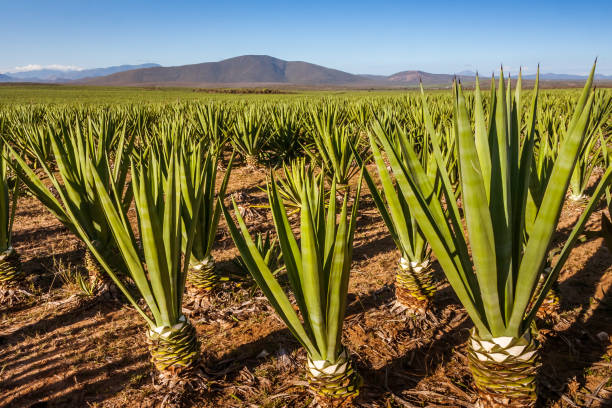
PWANI: SISAL production remains one of Tanzania’s most historically significant and economically promising agricultural activities.
Derived from the Agave sisalana, sisal is a hardy, drought-resistant crop that thrives in semiarid regions, making it well-suited to Tanzania’s climate.
For decades, the country has been among the world’s leading producers of sisal fiber, a natural material widely used in ropes, carpets, mats, geotextiles and increasingly in environmentally friendly products.
The sisal industry in Tanzania dates back to the late 19th century during German colonial rule, when large plantations were established along the coast, particularly in regions such as Tanga Region, Morogoro Region and Pwani Region.
By the mid20th century, Tanzania had become the world’s largest exporter of sisal, contributing significantly to foreign exchange earnings.
However, the industry experienced a steep decline in the 1970s and 1980s due to falling global prices, competition from synthetic fibers and inefficiencies following nationalisation policies.
In recent years, there has been a notable revival of the sisal sector, driven by renewed global demand for biodegradable and sustainable materials.
ALSO READ: Sisal farmers push for modern processing factories
As environmental concerns grow worldwide, natural fibers like sisal are gaining favor over plastics and synthetic alternatives.
This shift presents Tanzania with a valuable opportunity to reclaim its position as a leading producer.
Today, sisal production in Tanzania involves both large estates and smallholder farmers. Efforts have been made to modernise processing techniques and improve yields through better farming practices and research.
Institutions such as the Tanzania Sisal Board play a key role in regulating the industry, supporting farmers and promoting exports.
There is also increasing investment in value addition, with companies exploring new uses of sisal fiber in composite materials, paper production, and even bioenergy