Science education is the foundation of future national progress

DAR ES SALAAM: ACCESS to quality education is not the responsibility of one individual or institution. It requires coordinated efforts involving the government, private sector, development partners and communities working together towards a common goal.
At a time when the world is experiencing rapid transformation driven by science and technology, the education sector cannot achieve meaningful progress without embracing innovation and attracting private investment to provide technology-based learning solutions. The primary beneficiaries of these services are students who are preparing themselves to pursue careers in engineering, medicine, technology and other fields that are shaping the future global economy.
Recognising the importance of science education in national development, ProjeKt Inspire, a Tanzanian STEM (Science, Technology, Engineering and Mathematics) education organisation, continues to support efforts aimed at improving access to science-related learning opportunities across the country.
The organisation is founded on one core belief: every child in Tanzania, regardless of their background or geographical location, deserves access to quality STEM education that enables them to compete and participate effectively in a rapidly changing world.
Dr Lwidiko Mhamilawa, Co-Founder and Director of ProjeKt Inspire, recently explained how the organisation operates across Tanzania and Zanzibar to ensure STEM education objectives are implemented effectively at community level.
“Over the past decade, we have grown from a passionate idea into a nationally recognised movement. We have reached more than 450,000 teachers, students and community members while establishing physical STEM infrastructure extending from Dar es Salaam to the islands of Zanzibar and Pemba.
“Our mission remains clear: to spark curiosity, build capability and inspire the next generation of African innovators,” he said.
Dr Mhamilawa explained that STEM education cannot be delivered through a single approach. As a result, ProjeKt Inspire has developed a wide range of programmes designed to reach learners with different needs and circumstances.
The organisation provides STEM Park visits, offering students immersive and practical science experiences at its hubs across Tanzania. It also conducts weekly STEM sessions for children aged three years and above, as well as STEM Bootcamps, which are intensive multi-day programmes allowing young people to explore science, technology, engineering and mathematics in greater depth.
Other initiatives include holiday camps that combine learning with creativity, STEM Kits designed for parents and schools to support practical learning, teacher training programmes focused on strengthening STEM teaching skills, and STEM clubs that encourage continuous learning beyond regular programmes.
The organisation also develops STEM-themed events tailored for schools, private clients and corporate organisations.
“Each programme is designed to meet young people where they are, whether they are studying in a well-equipped urban school or a community with limited educational resources,” Dr Mhamilawa said.
According to him, ProjeKt Inspire has established eight STEM Parks across different regions, making it one of the organisations with the widest dedicated STEM education infrastructure footprint in Tanzania.
The STEM Parks are located in Dar es Salaam, Tanga, Kigoma, Tabora, Songwe, Zanzibar’s Unguja Island, where there are two hubs, and Pemba Island.
“Each STEM Park is more than a facility. It is a permanent community asset and a centre of opportunity for young people who might otherwise never experience the type of environment required for quality science education,” he said.
Dr Mhamilawa explained that the parks serve as permanent centres for scientific discovery and innovation within communities.
“They are not simply classrooms. They are spaces where curiosity is encouraged, where a child who has never used a microscope or built an electrical circuit can experience those things for the first time,” he said.
He noted that the STEM Parks address a critical challenge facing many schools in Tanzania, where limited access to functioning laboratories and adequate science resources continues to affect practical learning.
The beneficiaries include primary and secondary school students, university students, teachers seeking professional development, out-of-school youth and adults within surrounding communities.
“The impact is already visible. Our data shows that more than 150 careers have been directly influenced by ProjeKt Inspire programmes,” he said.
He added that the organisation’s Five-Year Alumni Wave Model demonstrates how one empowered learner can influence others, including friends, siblings and community members, creating a wider impact beyond the original programme.
Dr Mhamilawa acknowledged that despite the progress made, ProjeKt Inspire continues to face several challenges in expanding and sustaining its programmes. One of the major obstacles is ensuring long-term financial sustainability.
“The cost of delivering quality STEM programmes, maintaining facilities and developing our team is significant. At the same time, grant cycles can be unpredictable,” he said.
To address this challenge, the organisation is diversifying its revenue sources through commercial services, STEM Kits and private event partnerships aimed at building a stronger and more sustainable financial foundation.
Another challenge is geographical reach. Tanzania’s vast size means reaching students in remote areas requires resources beyond what physical STEM Parks alone can provide.
“Our STEM Kits programme is one direct response to this challenge. It allows hands-on STEM learning to reach communities where a STEM Park has not yet been established,” Dr Mhamilawa explained.
He also highlighted teacher training capacity as an ongoing priority, noting that infrastructure alone cannot transform science education without skilled and motivated educators.
“We can build a beautiful facility, but it takes a trained, confident and committed teacher to bring STEM education to life in the classroom every day,” he said.
According to Dr Mhamilawa, addressing these challenges requires collective action involving government, the private sector and communities.
“Tanzania needs greater government investment in STEM infrastructure, stronger private sector commitment to education and communities that recognise science as a genuine pathway for their children’s future,” he said.
He emphasised that ProjeKt Inspire’s work should not be viewed as charity but rather as an investment in Tanzania’s future development.
“The returns are already visible. Every child who walks through our STEM doors and discovers a passion for science represents a future engineer, doctor, entrepreneur or innovator who will contribute to national development,” he said.
Dr Mhamilawa noted that the organisation has documented more than 150 careers influenced through its programmes, with the number continuing to grow each year.
He encouraged parents to expose their children to STEM learning from an early age, saying that curiosity developed during childhood can become the foundation for future innovation.
“To parents, do not underestimate the power of exposing your child to STEM early. The curiosity you see today is the foundation of the innovation Tanzania needs tomorrow,” he said.
He also urged teachers to recognise their important role in shaping future scientists and innovators, assuring them that ProjeKt Inspire exists partly to support educators through training and resources.
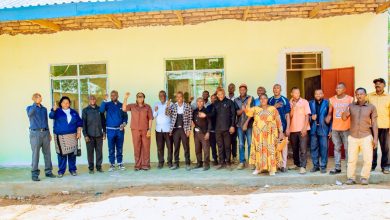
To the private sector and government, he said there is a significant opportunity to invest in STEM education and Pupils from various primary schools in Buhigwe District, Kigoma Region, listen to ProjeKt Inspire Director Dr Lwidiko Mhamilawa explaining how to operate a computer as part of the organisation’s STEM accessibility programme in schools. Science education is the foundation of future national progress The Big Rocks in Life help prepare young Tanzanians for the demands of the modern economy.
“Tanzania’s demographic dividend will only deliver meaningful results if we educate and equip the young people who represent its future. We cannot afford to wait,” he said.
Dr Mhamilawa further encouraged young Tanzanians to embrace science, engineering and technology, reminding them that curiosity is an important asset rather than a distraction.
“Science is for you. Engineering is for you. Technology is for you. Your curiosity is your greatest asset, and ProjeKt Inspire is here to provide a space where you can explore it,” he said.
In conclusion, Dr Mhamilawa recognised the contribution of strategic partners who have supported ProjeKt Inspire’s mission, including the Segal Family Foundation, Fondation Botnar, UNICEF Tanzania, UNICEF Canada and the Ministry of Education, Science and Technology (MoEST).
Other partners include the President’s Office — Regional Administration and Local Government (PO-RALG), the Commission for Science and Technology (COSTECH) and Nabaki Afrika.
Looking ahead, ProjeKt Inspire’s vision is to establish a STEM Park in every region of Tanzania.
“Our vision is based on the belief that no child’s access to quality STEM education should depend on where they are born or where they live,” Dr Mhamilawa said.
He explained that the organisation is pursuing this ambition through partnerships with regional governments, private sector stakeholders and international funders.
ALSO READ: Tanzania expands recognition of skills acquired outside the formal education system
“Every STEM Park we establish represents another step towards a Tanzania where every young person has the opportunity to discover their potential through science,” he said.
As Tanzania continues preparing its young population for a technology-driven future, expanding access to STEM education will remain critical. Through collaboration, investment and innovation, initiatives such as ProjeKt Inspire demonstrate how science education can become a powerful foundation for national transformation, economic growth and the development of future generations.