Retaining women in leadership is new mantra
DAR ES SALAAM: FOR years, efforts to advance women’s leadership have focused on getting more women into decision-making positions. But a different question is gaining importance: what happens after they get there? Women may reach senior positions only to encounter workplace discrimination, sexual harassment, unequal family responsibilities and limited opportunities for promotion.
Others complete their terms in elective office and leave public life, taking valuable experience with them. Addressing these barriers requires more than leadership training or targets for women’s representation. It calls for institutions to change how they recruit, promote, support and retain women, while finding ways to continue using their experience when they leave formal positions.
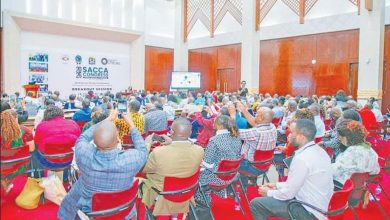
That was the central message at the sixth Women’s Leadership Forum organised by UONGOZI Institute in Dar es Salaam, where government officials, development partners and leadership practitioners examined what it takes for women not only to enter leadership but also to remain and grow in it.
Zanzibar Minister of Information, Youth, Culture and Sports Dr Riziki Pembe Juma said institutions must make women’s leadership longevity a deliberate objective, supported by transparent appointments, fair performance reviews, equal opportunities and protection against workplace discrimination and harassment.
“Women must not only reach leadership positions, but also remain, grow and contribute fully in leadership,” she said, reading a speech on behalf of Zanzibar’s Minister of Community Development, Gender, Elderly and Children, Dr Saada Salum Mkuya.
The distinction matters because representation alone does not reveal whether women have equal opportunities to advance, how long they remain in senior positions or why they leave. Dr Pembe Juma cited figures from Zanzibar’s 2025/26 budget speech showing that women accounted for six ministers, or 33 per cent, and 10 principal secretaries, or 38 per cent.
Their share among directors and commissioners was lower, at 24 per cent. The figures highlight a gap between women’s representation at different levels of public administration.
They do not, by themselves, explain why the gap exists, but they underline the need to examine the systems governing appointments, promotion and career progression. Dr Pembe Juma called on public and private institutions to establish clear leadership development plans for women, with assigned responsibilities, deadlines and measurable targets.
ALSO READ: Twiga model endures as North Mara licence renewed for 15 years
She also urged them to track women’s representation, promotion opportunities, length of service in leadership and reasons for leaving such positions.
Training, she argued, must be accompanied by opportunities to lead important assignments, acquire practical experience and demonstrate readiness for more senior responsibilities. Mentoring and professional networks should also help women navigate workplace challenges and prepare for advancement.
Beyond appointments and training
The European Union Delegation to Tanzania and the East African Community sees institutional barriers as a central part of the challenge. Its Head of Cooperation, Marc Stalmans, reaffirmed the EU’s commitment to women’s leadership and economic empowerment, highlighting its 19-million-euro Gender Transformative Action: Breaking the Glass Ceiling initiative.
Launched in 2021, the programme began direct implementation with local partner organisations in 2023. Stalmans said it had supported eight cohorts of female professionals, with two additional cohorts in the process of enrolling.
He identified pregnancy discrimination, heavy caregiving responsibilities, sexual harassment at work and inadequate institutional support among the factors that interrupt women’s career progression. These challenges extend beyond the workplace.
Where women carry a disproportionate share of childcare and other domestic responsibilities, professional advancement can come at a greater personal cost. Without more supportive working arrangements and shared family responsibilities, institutions risk losing women whose leadership potential they have invested in developing.
Stalmans encouraged participants to build professional networks and mentor emerging leaders, stressing that sustainable leadership development requires more than classroom instruction. UN Women representative in Tanzania Jolly Acen similarly argued that progress in women’s representation must be matched by structural reforms that allow women to thrive and remain in leadership.
She cited women’s share of seats in Tanzania’s National Assembly at 39.5 per cent, saying sustained progress depended on equal access to financial resources and decision-making opportunities, alongside policies addressing unequal domestic responsibilities.
The challenge, therefore, is not simply to prepare women for leadership. Institutions must also examine whether their working environments, promotion systems and allocation of responsibilities enable women to exercise leadership and build lasting careers.
Keeping experience after office
UONGOZI Institute Chief Executive Officer Kadari Singo raised another dimension of leadership longevity: the experience women lose when they leave elective politics. She pointed particularly to women who complete two consecutive terms in Parliament’s designated special seats, asking how their knowledge and experience could continue to serve the country after their parliamentary careers end.
“The fact that a woman has completed her term in Parliament does not mean that she is no longer useful,” Singo said. “What mechanisms do we have to follow up with these women and ensure that their experience continues to be used for national development?”
Her questions shift the debate beyond representation and retention within individual institutions to the wider question of how society preserves leadership experience. Former parliamentarians may have accumulated knowledge of legislation, public administration, constituency needs, political negotiation and national policy.
ALSO READ: Happyness turns kitchen into skincare brand
When their formal mandates end, that experience need not disappear from public service. Structured mentorship, advisory roles and participation in leadership development could offer ways to retain such expertise, although the appropriate mechanisms would need to be developed and supported by relevant institutions.
The principle also applies to women leaving senior positions in business, public administration and other professional fields. Career transitions need not mean the end of their contribution, particularly where institutions maintain networks that connect experienced leaders with emerging talent.
Singo said the institute’s executive programme, conducted in collaboration with Yale School of Management, provides intensive training and coaching for African women in middle and senior management positions. Since its launch in 2022, the initiative has organised six major leadership forums, reaching more than 1,000 professional women delegates across the continent.
The forum also brought together 100 women selected for the programme’s ninth and tenth cohorts.
Turning targets into institutional change
The long-term ambition is reflected in Tanzania’s development frameworks. Zanzibar’s Development Vision 2050 targets women’s representation in relevant public-sector decisionmaking positions of 40 per cent by 2030 and 50 per cent by 2040, with the latter level maintained through 2050.
Dr Pembe Juma said such targets must translate into practical policies, appointments, promotion systems and measurable commitments by institutions. Achieving a numerical target, however, is only one measure of progress. The wider test is whether women can enter leadership through fair processes, receive meaningful responsibilities, advance on merit and remain in positions where their skills and experience can be used.
UONGOZI Institute is conducting a study on women’s leadership longevity in Tanzania. Dr Pembe Juma urged the institute to complete the research, incorporate participants’ views and use the findings to recommend changes to institutional practices.
The study could help clarify where women encounter the greatest obstacles, why they leave leadership and which institutional responses are most effective. Such evidence would also give organisations a basis for measuring progress beyond the number of women appointed.
The Women’s Leadership Programme, delivered in collaboration with Yale School of Management and supported by the governments of Tanzania and Finland and the European Union, provides training, coaching and mentoring for women in middle and senior management positions across Africa.
Its next challenge, alongside developing women’s leadership capabilities, is to help ensure that the organisations employing them provide the conditions in which those capabilities can flourish over time. The message from the forum was clear: women’s leadership cannot be judged by entry alone.
It must also be judged by the opportunities they receive to advance, the barriers they are able to overcome and whether their experience continues to benefit institutions and society long after they leave a particular office.