Respect the law, strengthen the nation
DAR ES SALAAM: YOUTH, elders and socio-political analysts across Tanzania have raised a clarion call for calm, urging citizens to place dialogue, lawful political engagement and respect for the country’s institutions at the forefront of national development.
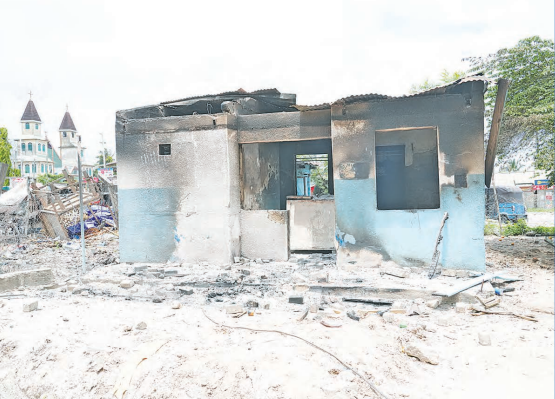
Their message comes as a poignant reminder of the unrest that shook the nation at the end of last year, 2025, a stark example of how quickly tensions can escalate when communication breaks down and the rule of law is disregarded.
These voices of reason emphasise that lasting peace and stability are not achieved through anger or destruction, but through deliberate, constructive and lawful participation in political processes.
They stress that a steadfast commitment to peaceful activism, adherence to legal frameworks and respect for national institutions are indispensable not only for preventing the recurrence of unrest but also for safeguarding the unity of the Tanzanian people.
According to these civic leaders and analysts, when citizens engage responsibly in political life, the benefits extend far beyond mere stability.
Peaceful and lawful political activism nurtures trust in governance, strengthens democratic systems, and creates fertile ground for social and economic development. In essence, they argue, the pathway to a stronger, more prosperous Tanzania lies in the hands of its people and it begins with dialogue, accountability and respect for the law.
Speaking to Daily News some youth, elders and political analysts warned that unrest undermines both social cohesion and economic development.
A leader of ‘bodaboda’ riders at Kimara stop over, Abdallah Msemembo told the Daily news recently that the country should avoid a repeat of the violence and unrest witnessed on October 29, last year highlighting that lasting solutions require dialogue, accountability, and respect for the law.
Mr Msemembo said that all political parties, both in government and in opposition, have a crucial role in ensuring peace and political stability.
He said: “Those in power have a responsibility to strengthen systems, uphold justice, and create platforms for dialogue. Opposition parties have a duty to demand rights through legal means and guide their supporters to follow the law. Parties are not enemies; they are political competitors who must coexist for the benefit of the nation,” he said.
Moreover, Dickson Joel, a student at the University of Dar es Salaam stressed that Tanzania’s Constitution recognises the right of citizens to demonstrate, but this right must be exercised within legal frameworks, peacefully, and responsibly.
“Global experience shows that when protests are properly led and managed, they promote accountability without disturbing peace,” he added.
Mr Joel emphasised that every citizen has a duty to respect the law and the rights of others. Asserting your own rights should never involve damaging property or causing harm; rights must always be exercised alongside responsibility.
He also underscored the need to tackle challenges facing young people, pointing out their prominent role in the October 29 protests.
Problems such as unemployment, limited economic opportunities, and a sense of marginalisation not only affect the youth but also have a direct impact on national stability, making it essential to address them seriously.
“If we return to the negotiation table and build politics based on reconciliation, friendship, and competition of ideas, we will establish strong systems, strengthen peace, and reduce recurring conflicts that hinder national development,” said Mr Joel.
On his part, one of the elders, Mussa Shomvi called on political parties, activists and young people to firmly embrace peaceful and lawful political engagement.
Mr Shomvi, a retired secondary school teacher, emphasised that political parties have a fundamental responsibility to reflect on their actions and ensure they are never linked to violence.
While parties have the legitimate right to push for reforms and demand accountability, he stressed that such efforts must be carried out through lawful, professional, and non-violent means.
“Political parties are national institutions registered under the law. They must clearly distance themselves from violence. Destroying public property or disrupting livelihoods only harms ordinary citizens, who fund these assets through their taxes,” he said.
He added that violence erodes political legitimacy, which should be built on ideas, public trust, and respect for the law not anger or destruction. Citing historical examples such as India’s independence movement led by Mahatma Gandhi, he highlighted that peaceful actions can bring about meaningful and lasting change.
He said youth must be educated on the goals, principles and consequences of political action, warning that protests without clear direction can degenerate into chaos and social division.
He stressed that all demonstrations, even those demanding basic rights, must remain peaceful and orderly. Failure to uphold non-violence, he warned, risks endangering national unity and the country’s long-term stability.
Furthermore, activist Imelda Mbaga pointed out that election-related violence, which has been witnessed in many countries, does not provide lasting solutions and instead generates long-term negative effects.
Ms Mbaga explained that such violence disrupts citizens’ ability to engage in productive economic activities, causing economic setbacks that affect both individuals and the nation as a whole.
She also highlighted the human cost, noting that lives are lost particularly those of breadwinners who support their families and communities. This, she said, leaves families vulnerable to poverty and dependency while simultaneously weakening the broader workforce.
Social affairs analyst Mr Thomas Kibwana said that societal challenges cannot be resolved through violence instead, they should be addressed peacefully in order to move forward without causing economic harm to the country.
He emphasized the importance of reflecting on appropriate and constructive ways to resolve challenges without resorting to force or violence, noting that problems arising during elections have had negative impacts in some areas, particularly on transport infrastructure.
ALSO READ: NEVER AGAIN: From trucks to markets, businesses pay price of violence
According to him, this situation has affected the national economy, as public funds are being spent on repairing damaged infrastructure rather than financing development initiatives.
He added that as a result of such challenges, citizens spend excessive time in transportation instead of engaging in productive activities, a situation that weakens the economy from the individual level up to the national level.
“Societal challenges cannot be resolved through violence, they must be addressed peacefully to avoid harming the economy and ensure progress,” he said.