Refugee region reinvents itself through sustainable development

KIGOMA: IN the western region of Kigoma in Tanzania, a quiet but significant transformation is unfolding. Long associated with humanitarian assistance and refugee relief, the region is now becoming a powerful example of how sustained support can evolve into long-term development and resilience.
While food insecurity remains a persistent challenge for both refugees and host communities, the role of the World Food Programme (WFP) has expanded well beyond emergency food distribution.
Today, Kigoma represents more than a humanitarian response zone.
It tells a broader story of communities gradually transitioning from dependence to self-reliance, supported by strategic investments in agriculture, education and local systems.
This shift reflects a more integrated approach that combines immediate relief with sustainable development.
Kigoma’s importance stems largely from its geographic position. Bordering countries affected by instability, particularly the Democratic Republic of the Congo and Burundi, the region has for decades served as a refuge for people fleeing conflict.
Over time, it has hosted large populations of refugees, with the Nyarugusu Refugee Camp remaining the country’s only active refugee camp.
Despite the protracted nature of displacement, WFP continues to provide essential monthly food assistance to more than 200,000 refugees, the majority of whom are women and children.
However, the current narrative in Kigoma is no longer defined solely by food aid. Increasingly, it is about creating pathways that enable both refugees and host communities to build independent and sustainable livelihoods.
A central driver of this transformation is the focus on strengthening local agriculture and empowering smallholder farmers.
Through the Kilimo Tija Kigoma (KITIKI) project, implemented in partnership with the Republic of Korea, WFP has reached nearly 20,000 farmers and their families.
The initiative aims to improve agricultural productivity, enhance post-harvest handling, and expand access to markets.
Importantly, the project is not only about increasing food production.
It is also designed to promote peaceful coexistence between refugees and host communities by creating shared economic opportunities.
In a region where tensions could easily arise over limited resources, this approach fosters collaboration and mutual benefit, reinforcing social cohesion alongside economic growth.
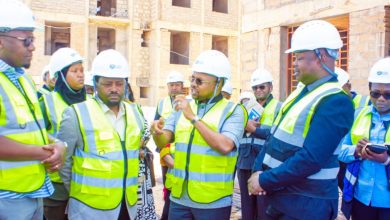
This integration of humanitarian assistance with development strategies is further demonstrated through WFP’s recent handover of five community warehouses across Kigoma.
Located in districts such as Kibondo, Uvinza, Kasulu, and Kakonko, these facilities are expected to play a critical role in reducing post-harvest losses and improving food storage for local farmers.
In an area where food security is closely tied to agricultural performance, such infrastructure represents a practical and necessary investment.
The developments in Kigoma closely mirror similar progress being made in southern Tanzania, particularly in the regions of Mtwara and Lindi.
Here, WFP is implementing a School Health and Nutrition Project with support from the Government of Canada.
The programme is already reaching approximately 65,000 schoolchildren across 116 schools, delivering measurable improvements in nutrition, attendance, and learning outcomes.
According to WFP’s Country Director in Tanzania, Ronald Tran Ba Huy, school feeding programmes represent one of the most effective investments in education.
With Canada’s support, thousands of children are not only receiving meals but also gaining opportunities to learn, grow, and secure better futures.
He emphasised that food support plays a critical role in shaping educational outcomes.
By ensuring that children receive regular meals, schools become more accessible and appealing, particularly for families facing economic hardship.
ALSO READ: UK grants 14bn/- for refugee food assistance
As a result, attendance and retention rates improve significantly, especially in communities where food insecurity is widespread.
This perspective is shared by Carol Mundle, Head of Cooperation at the Canadian mission in Tanzania.
She highlighted the importance of linking education with nutrition, noting that the two are deeply interconnected.
Without adequate nutrition, children are less able to concentrate, learn effectively, and reach their full potential.
Conversely, improved nutrition supports both physical health and cognitive development, creating a strong foundation for academic success.
She further pointed out that school feeding programmes serve multiple purposes.
Beyond addressing hunger, they contribute to improved educational outcomes, including better attendance, higher retention rates, and enhanced academic performance.
These programmes therefore represent a strategic investment in human capital. Equally important, she stressed, is the role of partnerships in achieving sustainable development.
Collaboration between governments, international organisations, and local communities is essential for delivering meaningful and lasting impact.
Canada’s partnership with Tanzania exemplifies this approach, demonstrating a shared commitment to strengthening education systems and investing in future generations.
At the school level, the impact of these initiatives is already visible.
Ismaili Said, Head Teacher of Nanhyanga Primary School, noted clear improvements following the introduction of enhanced school meals.
Attendance has increased, and students are more attentive and engaged in class.
He explained that these changes are not abstract or theoretical. They are evident in the daily experiences of both teachers and students.
More children are attending school consistently, addressing a longstanding challenge in areas affected by poverty.
At the same time, improved attentiveness has led to better learning outcomes, as students are more focused and ready to participate in lessons.
The recent visit by Canada’s High Commissioner to Tanzania to Tandahimba District further highlighted the tangible results of these efforts.
It provided a clear view of how targeted international support is improving both education and child wellbeing in some of the country’s most vulnerable regions.
Mtwara and Lindi continue to face significant socio-economic challenges, with high levels of poverty and food insecurity affecting many households.
These conditions directly impact children’s ability to attend school and perform academically.
Health indicators reinforce the urgency of intervention, with anaemia rates among school-aged children reaching 44 per cent in Mtwara and 40 per cent in Lindi.
Access to school meals also remains uneven, with only 52 per cent of children in Mtwara and 63 per cent in Lindi currently covered.
For many students, the meals provided at school represent the most reliable source of daily nutrition.
This reality underscores the critical importance of expanding and strengthening school feeding programmes.
Canada’s support addresses these challenges through a comprehensive and multi-dimensional approach.
The initiative not only provides food but also enhances the quality and sustainability of school feeding systems.
Financial contributions are used to improve meal quality and dietary diversity, while complementary activities such as school gardens and small livestock projects promote local food production and long-term resilience.
Another key component of the programme is capacity building. Teachers, cooks, and school committees receive technical training to improve the management and delivery of school meals.
At the same time, nutrition education initiatives equip students and their families with the knowledge needed to adopt healthier practices.
This ensures that the benefits of the programme extend beyond the classroom and into the wider community.
Ultimately, the progress seen in Kigoma, as well as in Mtwara and Lindi, reflects a broader development vision. It is one in which humanitarian assistance is not an end in itself but a foundation for building stronger, more resilient communities.
By addressing immediate needs while simultaneously investing in long-term solutions, initiatives led by WFP and its partners are helping to reshape the future of some of Tanzania’s most vulnerable regions. The story emerging from these efforts is one of transition and possibility.
It demonstrates that even in areas long defined by crisis, it is possible to create pathways toward stability, growth, and self-reliance.