Reasons for farmers’ poverty explained
DAR ES SALAAM: LAST week on this page, we had a very engaging dialogue following an essay titled ‘Why are Farmers Poor?’. I attempted to highlight a few reasons behind this unfortunate reality affecting millions of Tanzanians employed in this vital sector. I pointed out that the low use of technology, including limited adoption of improved seeds and fertilisers together with poor infrastructure, particularly storage facilities, leads to very low returns on farmers’ investments.
As has become customary on this platform, the discussion that followed was lively and insightful. There were numerous exchanges with my wonderful readers on several issues raised in the article. I express this with humility and appreciation, knowing that meaningful public feedback can only come through active participation. Personally, these engagements have also been an important learning opportunity.
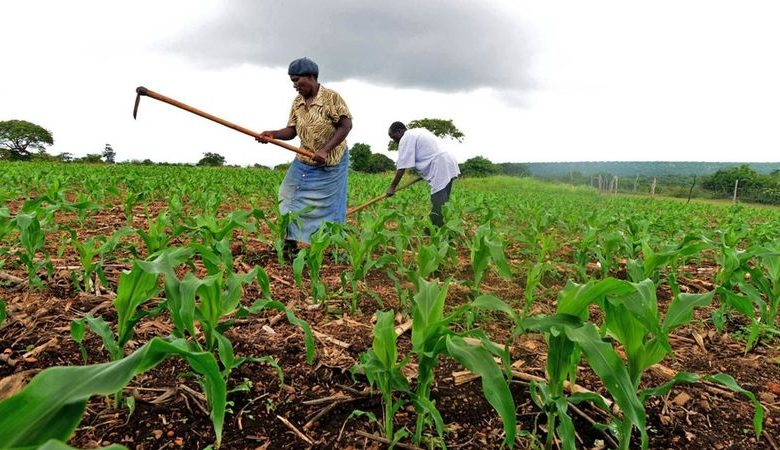
Shortly after the article was published, I received a rather blunt but honest message. It read: “Mr Zirack, it is a pity you have forgotten our recent history of Ujamaa, where everything in this country, particularly agriculture, was politicised. Our primitive farming system using the hand hoe, still in use today, is the legacy of the Ujamaa policy.
ALSO READ: BoT’s steady policy rate: Balancing growth and stability
According to this policy, quality in anything was never an issue to be considered.” I responded with a counterargument: “I largely agree with the point you raise. Ujamaa did significant damage to our farmers and the nation at large, a legacy that will take years to undo. Nevertheless, it would be unfair to blame all our current problems solely on Ujamaa.
There are socialist countries that, despite other challenges, managed to address efficiency in agriculture. Russia is often cited as an example, with relatively high product quality. If this is true, then there must be additional underlying factors at play.” However, a highly informed debater was unconvinced and offered a revealing perspective on socialism worldwide.
He responded: “You referred to the possibility of efficiency in socialist economies and cited Russia as an example. But improvements in Russia’s agricultural production occurred only after the collapse of the socialist system and the privatisation of collective farms. Before that, wheat output per hectare on collective farms was less than a quarter of what an American farm of similar size produced.” He continued: “Marxism-Leninism, which underpinned socialism, is the genesis of Russia’s economic problems and the main reason its agriculture was inefficient and backward compared to that of the United States and the Western world.
Tanzania’s experience with Ujamaa farming in the 1970s is a clear case in point.” Driven by curiosity and a desire to establish facts rather than rely on opinion, I conducted further research. I was struck by the findings. During the 1970s and 1980s, agricultural production in Russia was so low that the country became a major food importer. During that period, a Russian farmer fed between 10 and 20 people, while an American farmer fed between 60 and 80.
The United States was a consistent net exporter of food, including wheat, soybeans, corn, meat, dairy products and processed foods. Russia, by contrast, had only brief and inconsistent periods of export. The contrast is striking. This discussion is particularly important for Tanzania, which pursued socialism under Ujamaa for nearly two decades. Although the policy was formally abandoned in 1985, it is evident that some socialist elements remain embedded in current systems.
As a result, the legacy of Ujamaa continues to influence agriculture today and may take considerable time to fully overcome. Ultimately, while Ujamaa belongs to history, its consequences remain firmly rooted in the country’s agricultural reality. Persistent low productivity, weak incentives for innovation, and limited private investment are not accidents of nature but the result of policy choices whose effects compound over time.
Acknowledging this legacy is not about assigning blame; it is about confronting reality with honesty. If farmers are to escape poverty, the country must decisively move beyond subsistence thinking and embrace policies that reward efficiency, technology adoption and market-driven production. Without a clear break from the past, agriculture will remain a sector of survival rather than prosperity, and the farmer will continue to bear the cost. What say you?