Ramadan diplomacy reinforces Tanzania–Arab strategic partnership
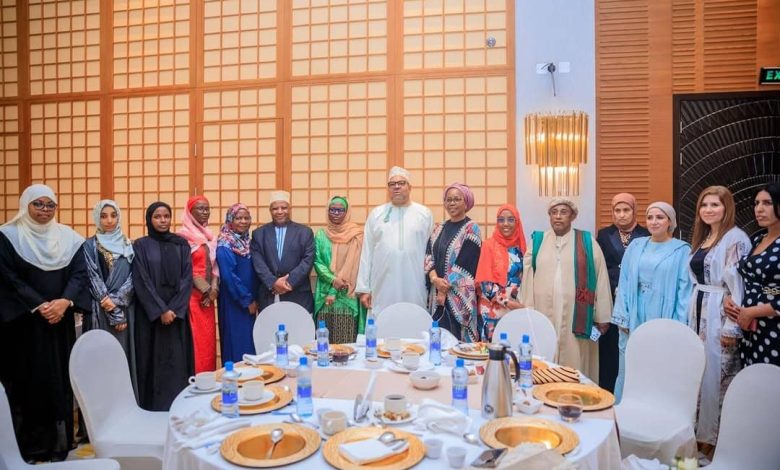
DAR ES SALAAM: THE joint Iftar hosted this week by Arab embassies accredited to Tanzania was not merely a ceremonial observance of the holy month of Ramadan.
It was a carefully calibrated diplomatic gesture and a soft-lit room where faith met foreign policy and where the breaking of bread mirrored the breaking of barriers.
In that shared twilight hour between fasting and feasting, cultural tradition and statecraft converged with quiet precision, reinforcing a strategic partnership that has grown steadily between Tanzania and the Arab world.
Held in Dar es Salaam, the gathering convened senior government officials, diplomats, business leaders and development stakeholders.
On the surface, it embodied the essence of Ramadan unity, generosity and reflection. Beneath that symbolism, however, lay a deeper diplomatic narrative: the deliberate consolidation of Tanzania’s engagement with Arab nations.
The evening’s call to prayer seemed to echo a broader call to partnership, reminding attendees that diplomacy, like fasting, demands patience, discipline and vision.
In contemporary international relations, informal settings often yield strategic dividends. An Iftar dinner may not resemble a negotiation table draped in official communiqués, yet it offers something equally valuable a trust-building space.
Over dates and water, conversations flowed beyond the confines of protocol. In such settings, guarded rhetoric softens, candor replaces caution and relationships evolve from transactional exchanges into enduring alliances. Soft power, in moments like these, becomes the velvet glove guiding the iron hand of policy.
Addressing the gathering, the Minister for Foreign Affairs and East African Cooperation, Mahmoud Thabit Kombo, reaffirmed Tanzania’s commitment to deepening cooperation with Arab nations.
His remarks underscored tangible progress in trade, infrastructure, energy and investment sectors that align seamlessly with Tanzania’s economic transformation agenda.
He spoke not only of agreements signed, but of bridgesbuilt bridges of steel and concrete across ports and highways and bridges of confidence across boardrooms and ministries. Over the past decade, engagement between Tanzania and member states of the Arab League has expanded in both scale and complexity.
What was once primarily anchored in shared historical and cultural ties has matured into multifaceted economic collaboration.
The Swahili Coast has long whispered stories of dhows crossing the Indian Ocean, carrying spices, textiles and ideas. Today, those ancient currents have been replaced by container ships and digital transactions, yet the spirit of exchange endures.
Arab partners are increasingly visible contributors to Tanzania’s infrastructure landscape. Investments in port modernisation, logistics networks and energy expansion are reshaping the country’s economic geography.
Cranes that punctuate the Dar es Salaam skyline stand as modern minarets of development, signaling progress driven in part by Gulf and North African capital. Roads extend like arteries from the coastline to land-linked neighbours, reinforcing Tanzania’s ambition to serve as a regional gateway.
Countries represented at the event included Saudi Arabia, the United Arab Emirates, Qatar, Kuwait, Egypt, Morocco, Algeria, Libya, Sudan and Oman. Their collective diplomatic presence illustrated a diversified network of cooperation spanning North Africa and the Gulf.
For Tanzania, this geographic spread offers strategic leverage access to capital markets, technology transfer and expanded trade corridors linking East Africa to the Middle East and beyond. In diplomacy, diversity of partners is akin to diversification of investments: it spreads risk and strengthens resilience.
The partnership is particularly pronounced in energy and transport infrastructure. As Tanzania advances its industrialisation drive, reliable energy supply becomes the lifeblood of ambition.
Collaboration with Arab investors in petroleum, gas and emerging renewable sectors enhances energy security while supporting sustainable growth.
In transport, improved port efficiency and airline connectivity amplify Tanzania’s role as a maritime and aviation hub. Tourism, too, has benefited, with joint ventures and increased flights stimulating visitor flows and cultural exchange.
Saudi Arabia’s Ambassador to Tanzania, Yahya Okeish, described the relationship as grounded in historical, cultural and religious bonds, yet attuned to contemporary priorities.
His words reflected a broader diplomatic truth: heritage provides the foundation, but economic pragmatism propels momentum. Tradition may plant the seed, but strategy ensures the harvest.
Indeed, Tanzania’s foreign policy increasingly balances continuity with calculation. Cultural diplomacy expressed through Ramadan observances and heritage-linked engagements reinforces goodwill.
Economic diplomacy translates that goodwill into measurable outcomes: contracts signed, projects financed, jobs created.
The interplay resembles a well-composed symphony, where soft notes of cultural affinity harmonise with the firm cadence of development objectives.
The significance of such gatherings becomes clearer when situated within Tanzania’s long-term ambitions.
The nation continues to pursue industrialisation, infrastructure modernisation and regional trade integration under frameworks aligned with continental aspirations.
Achieving these goals requires diversified partnerships and sustained capital inflows. Many Arab states, bolstered by sovereign wealth funds and expansive global investment footprints, represent natural collaborators in this endeavour.
Trade volumes between Tanzania and several Arab countries have trended upward in recent years, supported by bilateral agreements and improving connectivity.
Tanzanian agricultural exports, minerals and manufactured goods have found expanding markets across the Gulf and North Africa.
In return, imports of petroleum products, construction materials and technological equipment have supported domestic growth.
This interdependence deepens policy coordination and encourages regulatory alignment, the nuts and bolts beneath the architecture of partnership. Beyond economics, the relationship carries geopolitical nuance.
Tanzania’s strategic position along the Indian Ocean renders it a vital maritime partner. For Arab states historically linked through centuries-old trade routes across the Swahili Coast, maritime cooperation retains enduring relevance.
The Indian Ocean corridor remains a shared economic artery, pumping commerce between East Africa and the Middle East.
Security collaboration in safeguarding sea lanes and combating transnational threats further underscores mutual interests.
The Iftar gathering therefore represented more than communal observance; it illustrated how soft power reinforces hard policy objectives.
Social diplomacy humanises international relations, ensuring that partnerships are not confined to memoranda but nurtured through shared experiences. Breaking the fast together symbolised breaking down hesitation.
In that collective act lay a subtle affirmation: trust, once built, becomes the currency that sustains investment and cooperation. Crucially, such engagements also encourage private sector participation.
By convening business leaders alongside diplomats, the event blurred the boundary between policy formulation and commercial opportunity.
ALSO READ: Ramadan: Where worship meets compassion and conscience
Investment decisions often follow confidence and confidence flourishes where dialogue is consistent. In this sense, the Iftar functioned as both forum and catalyst-a meeting of minds as much as a meeting of plates.
Looking ahead, Tanzania’s engagement with Arab partners is poised to deepen in sectors aligned with national priorities. Infrastructure financing, renewable energy collaboration and enhanced trade facilitation frameworks hold promise for expanded mutual benefit.
As global economic currents shift amid geopolitical recalibrations, diversified alliances will remain central to resilience.
A partnership anchored in both sentiment and strategy is less vulnerable to the tempests of uncertainty. Yet sustainability depends not solely on capital flows but on institutional coherence and transparency.
Strengthened regulatory frameworks, predictable policy environments and accountable governance structures are essential to maintaining investor confidence. Diplomacy may open doors, but durable development requires disciplined stewardship within.
Ramadan, in this context, becomes both symbol and strategy. Its themes of compassion, reflection and community mirror the principles of equitable partnership and mutual respect.
The month’s emphasis on self-restraint offers a metaphor for measured diplomacy engagement that is patient rather than impulsive, principled rather than opportunistic.
As Tanzania positions itself as a regional economic hub, platforms that blend cultural connection with strategic dialogue will grow increasingly significant.
The Dar es Salaam Iftar demonstrated how ceremony can transcend symbolism and contribute meaningfully to diplomatic architecture.
It showed that the most profound agreements are sometimes not inked in conference rooms but cultivated in shared spaces of understanding.
In an era of shifting alliances and recalibrated priorities, Tanzania’s engagement with the Arab world reflects pragmatic statecraft.
Heritage provides continuity; development priorities provide direction. Like the crescent moon that heralds Ramadan, the partnership is both a reminder of enduring bonds and a beacon guiding future collaboration.
The evening concluded in fellowship, yet its resonance extends beyond a single gathering.
Through sustained cooperation and calibrated diplomacy, Tanzania and its Arab partners are shaping a relationship designed not merely for the present season, but for enduring shared advancement a partnership where faith-inspired fellowship fortifies forward-looking strategy