

Faith leaders back inquiry into 2025 election violence for national cohesion
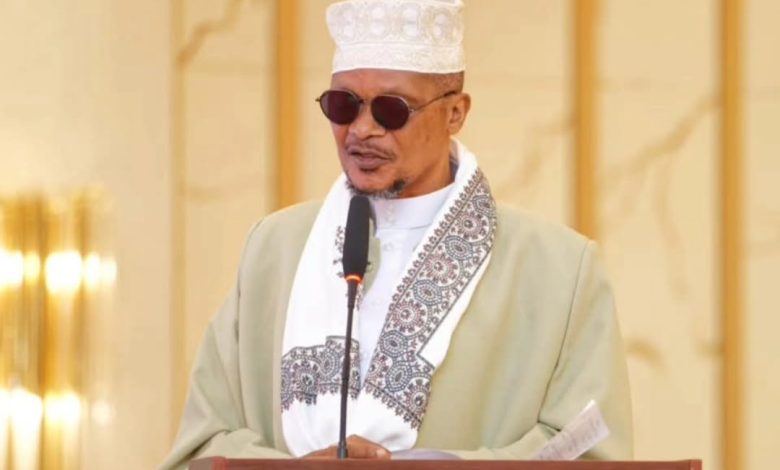
DAR ES SALAAM: RELIGIOUS leaders have expressed strong confidence in the Commission of Inquiry on October 2025 post-election chaos, describing it as a significant step towards strengthening national unity and cohesion.
They said they have full trust in the members of the commission, whom they regard as individuals of high integrity, competence and extensive experience, viewing the move as a positive direction for the country.
The clerics expressed optimism that the commission will foster reconciliation, justice and unity, enabling Tanzania to continue making independent and well-informed national decisions.
Speaking in an interview with a local media outlet, Archbishop of the Anglican Church of Tanzania, Dr Mahimbo Mndolwa said the formation of the commission signals hope and a clear, constructive path for the nation.
He underscored the importance of resolving internal conflicts through domestic mechanisms before seeking external assistance, describing this approach as a sign of national maturity.
Dr Mndolwa argued that relying on internal systems and institutions strengthens national sovereignty and reflects maturity in governance and civic responsibility.
He also commended President Samia Suluhu Hassan for what he described as a wise and thoughtful decision to establish the commission, noting that it provides an opportunity for grievances to be addressed in a structured and inclusive manner.
The archbishop urged citizens to prioritise resolving disputes internally, stressing that external intervention should only be considered as a last resort.
Elaborating further, Dr Mndolwa referenced biblical teaching from Matthew 18:15, explaining that conflict resolution should begin with direct, personal dialogue before involving others.
He noted that this approach reflects maturity and has long been practised successfully in the country, suggesting that when applied at a national level, it can foster accountability, trust and unity.
The archbishop also pointed out that Tanzania has a longstanding tradition of handling its own affairs internally since independence.
While acknowledging that international perspectives can sometimes be useful, he maintained that such input should only be considered after exhausting all domestic avenues.
ALSO READ: Tanzanians cautioned against unverified information on the Oct 29 violence
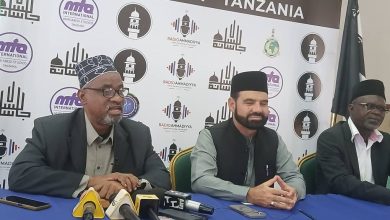
Mufti of Tanzania, Sheikh Abubakar Zuber bin Ally, also expressed confidence in the commission, stating that it is operating within a framework of justice and national reconciliation.
He said he expects the commission to produce professional, well-researched and constructive recommendations that will contribute to a stronger and more united nation.
He added that the commission is composed of highly capable individuals with considerable expertise.
Drawing from his own experience of being invited to present his views, he noted that the commission has demonstrated openness and inclusivity in its approach, reinforcing his belief that the process is credible and meaningful.
He expressed optimism that the commission marks the beginning of a healing process that will restore normalcy in the country.
According to him, the initiative represents not only a response to past events but also a foundation for preventing similar challenges in the future.
Sheikh Zuber further underscored the importance of homegrown solutions, saying Tanzanians are best placed to understand and resolve their own challenges.
He argued that sustainable solutions must be rooted in local realities and driven by those directly affected, rather than relying on external actors.
The Independent Commission of Inquiry was established on November 18, 2025 by President Samia Suluhu Hassan to investigate incidents related to the October 29 General Election.
The commission operates under the Commissions of Inquiry Act, 2023 (Chapter 32), which grants the President legal authority to probe critical national matters through independent bodies.
Globally, governments have long relied on such commissions during periods requiring thorough investigation, reflection and credible recommendations.
The commission is chaired by retired Chief Justice Mohamed Chande Othman, one of Tanzania’s most distinguished jurists with extensive experience in judicial administration, international law and human rights.
Justice Othman served as Chief Justice from 2010 until his retirement in 2017, having previously served as a Justice of Appeal and a High Court judge.
The commission also includes Ambassador Ombeni Yohana Sefue, a senior diplomat and former Chief Secretary, who served as Secretary to the Cabinet, Secretary of the National Security Council and Head of the Public Service.
Another member is Ambassador and retired Lieutenant General Paul Ignace Mella, who has served in senior military command and diplomatic roles, including as Force Commander for United Nations peacekeeping forces in Darfur.
Diplomatic expertise is further represented by Ambassador David Joseph Miyeye Kapya, who has been involved in several regional peace initiatives.
The commission also includes Ambassador Radhia Naima Msuya, a seasoned diplomat who has represented Tanzania in South Africa and covered responsibilities for Namibia, Botswana, Lesotho and the Southern African Development Community.
Also serving on the panel is Dr Stergomena Lawrence Tax, a senior leader with extensive experience in regional integration and international diplomacy.
Completing the team is Ambassador George Madafa, a retired senior government official with vast experience in security and intelligence affairs.
Dearest Confidant
Please forgive my intrusion into your privacy as this is borne out of my immediate desperation to secure your partnership in the actualization of a very mutual beneficial Business Transaction on behalf of my high profile client.
My client is desirous in Investing through you or your company in high profile investment, as well as Acquisition of choice property in your country.
Please do revert to the email given hereunder for further details of the Investment.
Alexfedulov15@gmail.com
Alex Fedulov Esq
Hi there,
Not sure who on your team handles Google Ads — could you point me to the right person?
My name is Ivan. I specialize in Google Ads and Google Ad Grants (and I share paid-ad strategies on YouTube).
I visited your website: https://dailynews.co.tz/ and we are seeing that you guys are currently running Google Ads or have tried in the past.
If you guys want, we could help you save a lot of money for a lifetime on the Google Ad Grants account that has a $10K/month free ad spend credit (provided and paid by Google Ads each month), meaning that you don’t have to spend a dime each month to get free quality leads and sales.
With our expertise on Google Ads, we can also help you set up successful ad campaigns, manage and optimize them to get you more customers/clients.
If you have any questions/concerns private email me: support@AdGrantsLab.com or USA text only (don’t call I won’t answer): +1619-500-2853 (sorry, but we only responding questions via email to INTERNATIONAL people meaning no text messages).
If you’re not the right contact, please forward this or let me know who I should contact. Thanks for your time — I appreciate it.
I hope I hear back from you.
Best regards,
Ivan Ramirez
Ad Grants Lab
P.S. $10,000 Month in Free Credit for Google Ads – Social Proof Videos: http://AdGrantsLab2026.shop
If you would like to opt-out of communication with us, visit: https://bit.ly/website opt out
Hello there,
Not sure who on your team handles Google Ads — could you point me to the right person?
My name is Ivan. I specialize in Google Ads and Google Ad Grants (and I share paid-ad strategies on YouTube).
I visited your website: https://www.dailynews.co.tz and we are seeing that you guys are currently running Google Ads or have tried in the past.
If you guys want, we could help you save a lot of money for a lifetime on the Google Ad Grants account that has a $10K/month free ad spend credit (provided and paid by Google Ads each month), meaning that you don’t have to spend a dime each month to get free quality leads and sales.
With our expertise on Google Ads, we can also help you set up successful ad campaigns, manage and optimize them to get you more customers/clients.
If you have any questions/concerns private email me: support@AdGrantsLab.com or USA text only (don’t call I won’t answer): +1619-500-2853 (sorry, but we only responding questions via email to INTERNATIONAL people meaning no text messages).
If you’re not the right contact, please forward this or let me know who I should contact. Thanks for your time — I appreciate it.
I look forward to hearing from you.
Best regards,
Ivan Ramirez
Ad Grants Lab
P.S. $10,000 Month in Free Credit for Google Ads – Social Proof Videos: http://AdGrantsLab2026.shop
If you would like to opt-out of communication with us, visit: https://bit.ly/website opt out