

Protecting critical thinking in Artificial Intelligence age
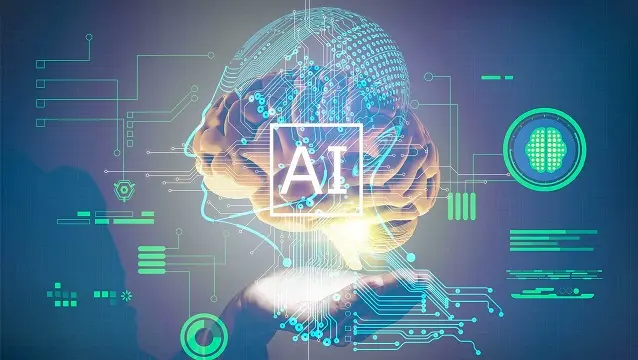
DAR ES SALAAM: ARTIFICIAL Intelligence (AI) is rapidly changing how people learn, work, communicate and solve problems. In Tanzania, it presents an opportunity to transform education, improve productivity and prepare young people for an increasingly digital economy.
However, AI adoption also raises concerns about independent thinking.
The term “digital dementia”, although not an official medical diagnosis, is sometimes used to describe concerns about excessive dependence on digital technologies and their possible effects on memory, attention, reasoning, creativity and problemsolving.
For Tanzania, the question is no longer whether students will use AI. They increasingly will. The question is whether education can guide them to use AI while preserving critical and independent thinking. AI should not be viewed primarily as a threat to education.
If used appropriately, it can become a powerful educational resource. A student in a rural community can use AI to understand difficult concepts, practise languages, receive feedback on writing or explore subjects where resources are limited.
Teachers can use AI to prepare lesson plans and identify areas where students need support.
The risk emerges when AI assistance replaces active learning. If students routinely rely on AI to write essays, solve mathematics problems, formulate arguments or summarise books without engaging with the ideas, education can shift from developing skills to simply obtaining answers.
Critical thinking is therefore central to Tanzania’s AI-in-education strategy. Students should ask not only, “What does AI say?” but whether the answer is accurate, what evidence supports it, what assumptions have been made, what information is missing and how it can be verified.
The second challenge is assessment. Traditional examinations and take-home assignments face pressure from generative AI, which can produce essays almost instantly.
Tanzania should therefore consider assessment methods that measure demonstrated understanding rather than text production alone.
Schools and universities could emphasise oral examinations, presentations, supervised problem-solving, practical tasks, projects, debates and research journals.
Students could instead disclose when and how they used AI and explain its contribution, allowing educators to assess understanding, responsible use and ownership of ideas.
ALSO READ: Preparing Tanzania’s youths for the age of Artificial Intelligence
The third challenge is preparing teachers. Effective integration cannot happen without teachers who understand both AI’s potential and limitations.
Training should cover AI tools, ethics, factchecking, prompt design, data privacy, intellectual property and assessment methods.
Teachers should emphasise mentorship, judgement, motivation, creativity and understanding human circumstances. Tanzania could consider a national AI-literacy programme for teachers. The fourth challenge is strengthening digital literacy.
Knowing how to operate a smartphone or computer does not necessarily mean being digitally literate. Digital literacy requires understanding algorithms, misinformation, privacy, cybersecurity, intellectual property and AI limitations.
Young people need to recognise that AI-generated information can appear convincing while being inaccurate or incomplete.
This is particularly important as misinformation spreads through social media. AI literacy should therefore become part of citizenship education rather than remain confined to ICT classes. The fifth challenge is protecting foundational human skills.
As AI becomes more capable, basic abilities may become even more important. Students still need strong reading, writing, mathematics, communication, reasoning and memory skills. AI should enhance these abilities rather than provide a shortcut around them.
A student who cannot independently understand a text, perform basic calculations or construct an argument may become increasingly dependent on technology.
The objective should be to develop students whose intelligence is strengthened by AI, not students who cannot function without it.
The sixth challenge is unequal access to AI. Although the technology could reduce educational disparities, unequal access could produce the opposite result.
Students in wellresourced urban schools may have reliable internet, computers, advanced AI tools and digitally skilled teachers, while those in underserved areas may face poor connectivity, limited electricity or basic mobile phones.
If this gap widens, AI could create a new form of educational inequality based on access to digital intelligence. Tanzania should connect AI policy with investment in broadband, electricity, affordable devices, digital libraries and teacher training.
AI-enabled education should reach communities beyond major urban centres. The seventh challenge concerns universities.
Higher education institutions should move beyond reacting to AI developments and take a leading role by integrating AI, data science, digital ethics and emerging technologies across disciplines.
Economists, medical professionals, agricultural scientists and lawyers all need to understand AI’s implications for their fields.
AI should therefore not remain confined to computer science departments. It is increasingly becoming a cross-cutting skill with implications across Tanzania’s economy.
Tanzania needs a comprehensive national AIin-education framework setting out appropriate applications, ethical boundaries, student responsibilities and institutional standards.
AI literacy should be integrated from secondary schools to universities and vocational training institutions. Assessment should prioritise reasoning, originality, practical skills and the ability to justify conclusions, alongside teacher development and investment in digital infrastructure.
The principle should be “think first, AI second.” Students should first attempt to solve problems independently and then use AI to test, improve, challenge or expand their understanding. Tanzania’s challenge is therefore not simply technological. It is educational and cultural: Moving from digital consumption to digital intelligence.
The goal should not be to produce a generation merely skilled at asking AI questions. It should be to develop people who can identify important questions, understand their significance, critically evaluate answers and make responsible decisions based on evidence.
AI can strengthen Tanzania’s education system, but it cannot substitute for human judgement. Success should therefore be measured not simply by how many students use AI, but by whether they remain capable of thinking independently, questioning information and making informed decisions after engaging with it.


Such a chill vibe and the bonuses for new users are actually generous. I’ve tried many sites but bet55game stands out for its honesty.