OTR-convened minority interest forum charts new course with four resolutions
DAR ES SALAAM: THE Office of the Treasury Registrar (OTR) has increasingly positioned itself as a strategic steward of government-owned enterprises, overseeing their performance and ensuring that even minority stakes contribute tangible value to the nation.
The 2026 Minority Interest Directors Forum (MIF 2026), held from March 16 to 18, served as a platform to translate this vision into actionable resolutions.
Among the 308 entities under the Office’s supervision, 252 are wholly government-owned, while 56 are minority interest companies.
Collectively, these represent a public investment of 92.3 tri/-, of which 3.6 tri/- is allocated to minority interest companies.
Though smaller in scale, these minority stakes hold strategic significance, offering a lever to influence governance, optimise performance and channel returns into national development priorities.
It was against this backdrop that the forum, held at PAPU Tower in Arusha Region, convened about 200 participants including board directors, CEOs, policymakers and experts from within and outside Tanzania to discuss how these minority interest companies can contribute more meaningfully to the economy.
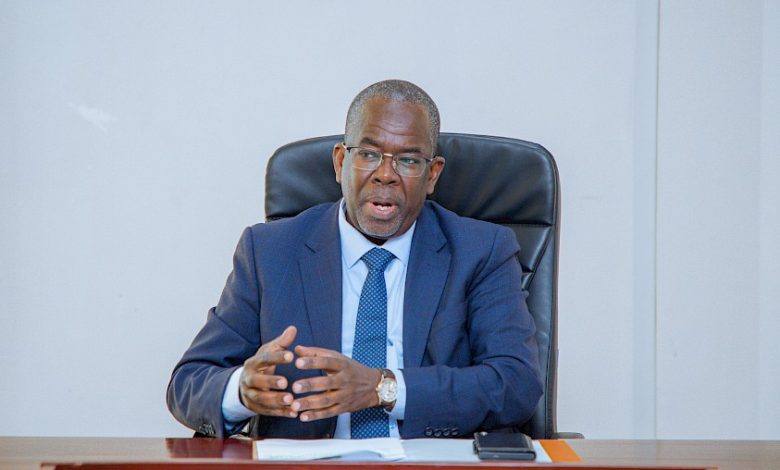
Opening the forum, Minister for Finance Ambassador Khamis Mussa Omar framed the discussions in terms of responsibility and opportunity, emphasising that these companies must operate more strategically, transparently and profitably to support national economic transformation.
On March 18, 2026, Mr Innocent Umbulla, Head of the Monitoring and Evaluation Unit at OTR, presented the four key resolutions for 2026 on behalf of the secretariat.
These directives build on the progress of the previous year while setting higher expectations for performance and governance.
At the core is the call to sustain and enhance dividend contributions. The 36 per cent leap from 195bn/- in 2023 to 266bn/- in 2024 is now treated not as an extraordinary achievement but as a baseline for ongoing performance.
Minority interest companies are being challenged to institutionalise such growth, linking it directly to national priorities like Dira 2050 and non-tax revenue targets.
Dividends, in this framework, are instruments of national development rather than mere financial returns.
Closely connected is the resolution on portfolio optimisation. Though few in number, minority stakes carry significant influence and participants of the MIF 2026 are emphasising active stewardship.
The focus is on making strategic choices deciding where to invest further, where to restructure and how to unlock hidden value so that these investments deliver tangible returns and contribute meaningfully to national development.
As the resolution puts it, “OTR should optimise its investment portfolio in minority interest companies to unlock greater value and support the achievement of Dira 2050 and Government NTR contribution targets by 2030.”
The forum also emphasised the importance of sector-specific focus, particularly on mining.
Mining, with its complex governance structures and high economic stakes, cannot be treated through generic oversight alone.
By allocating dedicated time to mining topics, the participants underscored the need for sustained engagement with sectors that have a disproportionate impact on public investment performance and national development.
In the same spirit of strengthening oversight and ensuring that strategic discussions translate into action, the forum participants also agreed on a resolution requiring CEOs of Minority Interest companies to attend all days of the MI Forum, rather than only Day One, to maximise engagement and learning outcomes.
Limiting chief executives to opening sessions had increasingly been seen as a missed opportunity and their presence throughout the three-day forum is now expected to reinforce continuity, enrich deliberations and ensure insights are implemented at the corporate level.
The OTR emphasises that leadership engagement is as crucial as financial or structural reforms in driving sustainable performance.
The weight of these forward-looking resolutions is enhanced by the track record of 2025 commitments.
Three of the four key resolutions from last year have been fully implemented under the guidance of the Treasury Registrar, Mr Nehemiah Mchechu.
Capacity-building initiatives for directors have evolved from broad, abstract goals into targeted, sectorspecific learning sessions embedded in both the MIF and CEO Forum programmes.
The dedicated mining governance panel at MIF 2026 is a tangible example of this focused approach, providing practical guidance without fragmenting the forum.
The increase in dividends underscores the practical outcomes of these interventions.
A 36 per cent growth in dividends did not happen by chance; it reflects a growing alignment between government expectations and corporate performance.
Companies are beginning to internalise a broader role within the national economy, understanding that minority ownership is a strategic instrument rather than a mere financial stake.
There are, however, areas where progress remains ongoing. The review of the state-owned enterprise portfolio, particularly the plan to identify candidates for listing on the Dar es Salaam Stock Exchange, is still underway.
Two enterprises have already been identified as ready for initial public offerings, but the broader capital markets roadmap has yet to be finalised.
As Mr Mchechu emphasised, these reforms require careful sequencing and sustained policy commitment, with full implementation expected during the 2026/27 financial year.
This underscores the inherent complexity of structural transformation, where timing, strategy and regulatory alignment must converge to deliver meaningful outcomes.
The discussions over the three days were rigorous and forward-looking, bringing together a cross-section of stakeholders.
Board directors, policymakers and experts sustained the dialogue throughout the forum, debating, challenging assumptions and sharing sectoral insights, while CEOs participated on Day One, contributing to the discussions at the outset.
The forum’s theme “From Oversight to Foresight: Advancing Agile and Innovative Leadership under Transformation Pressures” captured the evolving expectations.
Oversight alone is no longer sufficient; boards are now called to anticipate challenges, adapt to emerging opportunities and lead with foresight.
This analytical lens, combining financial performance, governance and strategic leadership, is becoming central to OTR’s oversight philosophy.
The Deputy Minister in the President’s Office – Planning and Investment, Dr Pius Chaya, officially closed the forum, emphasising that OTR’s mandate extends beyond policy formulation.
Monitoring, evaluation and accountability are essential to ensure that resolutions translate into measurable outcomes.
For the OTR, the real challenge lies beyond the conference hall. The resolutions have been articulated, past progress acknowledged and performance benchmarks set.
The ultimate test will be execution how minority interest companies operationalise directives, strengthen governance and implement structural reforms such as SOE listings.
MIF 2026 is no longer merely an annual gathering. It represents a strategic evolution in how Tanzania manages minority ownership.
These stakes, though relatively small in financial terms, are now instruments for national development.
If fully realised, the four 2026 resolutions could redefine the relationship between government ownership, corporate performance and economic transformation, demonstrating that strategic oversight, sectoral focus and leadership engagement can converge to deliver sustainable national value.