Tsunami lessons: Building Tanzania’s economic resilience today
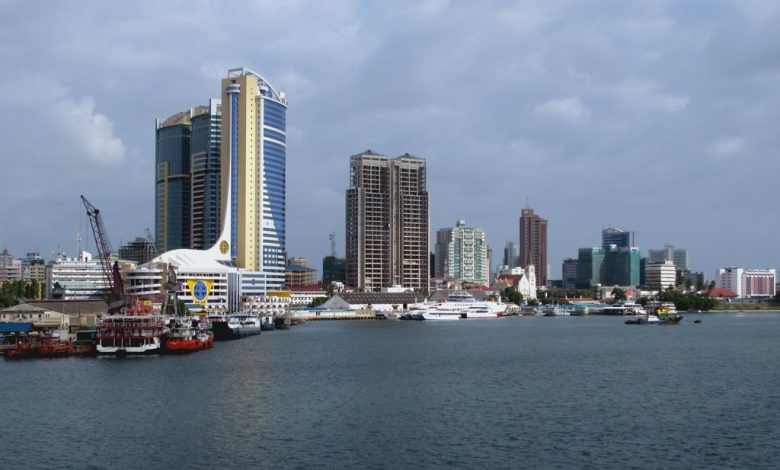
DAR ES SALAAM: THE conflict between Iran and Israel may seem distant from Tanzania. It is taking place thousands of kilometres away, involving countries with different histories, interests and geopolitical realities. Yet the economic shockwaves from that conflict have reached our shores with remarkable speed.
Within weeks, global oil prices surged, freight costs more than doubled, fertilizer prices rose sharply, and supply chains became increasingly uncertain.
The recent turmoil is best understood as an economic tsunami. Like a tsunami generated by an earthquake deep beneath the ocean, the initial disturbance occurs far away, but its effects eventually reach distant coastlines with enormous force.
Tanzania has not been at the centre of the conflict, yet our economy has already felt its impact through higher fuel costs, rising transportation expenses, increased agricultural input prices, and growing pressure on global trade. Fortunately, the country enters this period from a position of relative strength. Economic growth remains robust, inflation is contained within target ranges, the banking sector remains stable, and gold exports continue to provide valuable foreign exchange earnings. However, economic shocks also reveal structural weaknesses that are often hidden during normal times.
One of the most significant vulnerabilities is our continued dependence on imported inputs that are essential for production and daily life. Fuel, fertiliser, machinery, industrial equipment, pharmaceuticals, and many manufactured goods still come largely from abroad. As a result, when international prices rise or supply chains are disrupted, domestic households and businesses feel the effects almost immediately.
A second vulnerability lies in the structure of our exports. While gold has provided an important buffer against rising oil prices, our export base remains concentrated in commodities and primary products. Commodity exports generate valuable foreign exchange, but they do not always create the broad industrial ecosystem necessary for sustained transformation. Longterm economic resilience requires a wider range of exports, including manufactured goods, processed agricultural products, and knowledge-based services.
The third concern relates to the pattern of domestic investment. Recent economic data show strong growth in credit to sectors such as mining, trade, transport and communications. These developments reflect confidence in the economy and expanding financial activity.
Yet manufacturing remains relatively weak compared to other sectors. Without a strong industrial base, the country risks remaining a consumer and trading economy rather than becoming a fully diversified production economy – a springboard for Vision 2050 goals.
Perhaps the most important lesson from the current global uncertainty is that economic resilience cannot be imported. It must be built at home.
The foundation of such resilience is domestic capital formation. Every successful economy has relied heavily on its own savings and investment during critical stages of development. Foreign investment can play an important role, but it cannot substitute for strong domestic ownership of productive assets.
Countries that rely excessively on external financing often discover that foreign capital becomes scarce precisely when it is needed most.
Tanzania possesses substantial domestic resources that remain underutilised. Pension funds, insurance assets, household savings, cooperative societies, and institutional investors collectively represent enormous pools of capital.
The challenge is not necessarily the absence of capital but rather the mobilisation and productive deployment of that capital. This is where capital markets become critically important.
A well-developed capital market enables citizens to participate directly in national development. It channels savings into productive investments, provides businesses with long-term financing, reduces excessive dependence on bank loans, and allows ordinary Tanzanians to own shares in the growth of their economy.
Capital markets can help finance industrialisation, energy projects, transportation infrastructure, agricultural processing facilities, housing developments, and technology enterprises. They can transform savings into factories, roads, power generation, warehouses, irrigation systems, and digital infrastructure.
The opportunities before us are considerable. Tanzania’s strategic location positions it to become a logistics and trade hub for the wider region. Our agricultural potential remains largely untapped. The mining sector continues to attract investment. The digital economy is expanding rapidly. Financial inclusion has improved significantly. New technologies are reducing barriers to entrepreneurship and innovation.
Most importantly, the country has a young and energetic population capable of driving economic transformation for decades to come. Yet opportunities do not automatically become achievements. They require vision, preparation, investment and collective effort.
The Iran-Israel conflict has provided an unexpected reminder of an enduring truth: economic security is inseparable from economic self-reliance. We cannot control geopolitical events in distant regions. We cannot prevent international commodity price shocks. We cannot eliminate global uncertainty. What we can control is the strength of our own economic foundations.
ALSO READ: UNDP Tanzania Gulf Crisis report overlooks ordinary citizens’ experiences
Over the coming weeks, this column will explore in greater detail the vulnerabilities and opportunities facing the country. We will examine how domestic capital formation, stronger capital markets, industrialisation, agricultural transformation, financial innovation, energy security, and strategic investment can help build a more resilient economy.
The objective is not merely to withstand future tsunamis. It is to use every challenge as an opportunity to become stronger, more productive, and more prosperous. The global tides may remain unpredictable. But if we put our economic house in order today, Tanzania can emerge from this period of uncertainty not weaker, but stronger than before.