NCAA expertise lands in Tz, ignites local talent surge
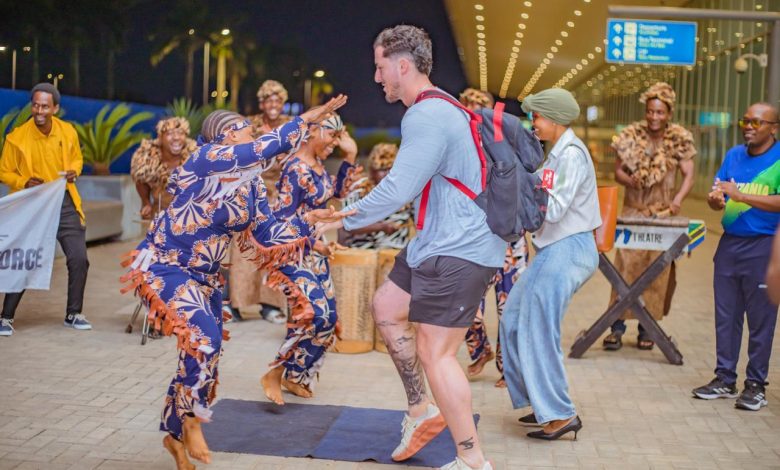
DAR ES SALAAM: Tanzania’s swimming landscape has taken a decisive leap forward with the arrival of acclaimed American coach Austin Pillado, whose presence in Dar es Salaam signals a shift toward high-performance sport development.
Touching down at Julius Nyerere International Airport on Sunday, Pillado begins a focused 10-day elite training camp designed not just to sharpen strokes, but to recalibrate the country’s entire competitive swimming mindset.
This is not a routine clinic. It is a strategic intervention.
Currently serving as Associate Head Coach at Washington State University swimming team, Pillado brings with him the rigor, structure, and results-driven culture of the highly competitive NCAA system, an environment that consistently produces Olympic-level swimmers and global contenders. For Tanzania, this is direct access to a performance blueprint that has been largely out of reach.
The camp, organized through a collaboration between Monti International School and the Tanzania Swimming Association (TSA), is structured like a training camp you would expect ahead of a major championship. Sessions are intense, technical, and purposeful. Young swimmers and local coaches are not merely participating—they are being immersed in global standards.
At the heart of this initiative lies a bigger play: closing the gap.
For years, Tanzanian swimmers have shown promise, but often lacked consistent exposure to elite coaching methodologies, sports science integration, and international competition frameworks. Pillado’s camp directly addresses that gap by introducing modern stroke efficiency techniques, race strategy planning, strength conditioning principles, and mental preparation routines used by top-tier athletes worldwide.
Speaking at the reception, Monti International School Founder and Director Fatma Fernandes framed the moment as a turning point rather than a one-off event.
“This marks the beginning of an important journey in advancing swimming and youth development in Tanzania,” she emphasized. The initiative aligns with national ambitions championed by Samia Suluhu Hassan and supported by Paul Makonda to elevate youth participation and diversify the country’s sporting success beyond traditional disciplines.
From a sports development perspective, the advantages are layered and long-term.
First, there is technical transfer. Local coaches gain firsthand exposure to advanced training methodologies, knowledge that remains in the system long after Pillado departs. This creates a multiplier effect: one coach trains dozens of swimmers, who in turn raise the overall national standard.
Second, there is athlete confidence and psychological conditioning. Competing internationally is not just about speed; it is about belief. Training under a coach embedded in the NCAA ecosystem gives young Tanzanian swimmers a tangible sense that they belong on the same stage as global competitors.
Third, there is pathway creation. Exposure to international coaching increases the likelihood of scholarships, exchange programs, and recruitment opportunities. For talented swimmers, this camp could serve as a gateway to collegiate swimming abroad—particularly in systems like the NCAA, where academic and athletic development go hand in hand.
TSA Chairman David Mwasogye underscored this strategic value, noting that such initiatives are essential in bridging performance disparities.
“By bringing experienced international coaches like Austin Pillado, our swimmers and trainers gain access to professional-level instruction and technical knowledge similar to what elite athletes receive around the world,” he explained.
That access is critical in a sport where marginal gains fractions of seconds separate finalists from champions.
Pillado himself has been quick to recognize Tanzania’s raw potential. His early observations point to a familiar story in emerging sports markets: talent exists, but systems need strengthening.
“Tanzania has many talented young swimmers, but they need exposure to high-level training and international systems,” he noted. His mission is clear—translate the discipline and structure of NCAA swimming into a local context, without losing the enthusiasm that defines Tanzania’s young athletes.
And that enthusiasm may be the country’s greatest asset.
Unlike saturated swimming nations where competition is fierce and pathways are rigid; Tanzania presents an open field, an opportunity to build a high-performance culture from the ground up. With the right investment, governance, and continuity, swimming could evolve into a flagship sport.
There are also broader national benefits tied to initiatives like this.
From a public policy standpoint, strengthening swimming contributes to youth engagement and health outcomes. Structured sports programs reduce inactivity, promote discipline, and offer constructive outlets for young people. Swimming, in particular, carries life-saving benefits in a country with extensive coastlines and water bodies.
Economically, the long-term potential includes sports tourism and hosting rights. As standards improve, Tanzania could position itself as a regional hub for aquatic training camps and competitions, attracting international teams and generating revenue.
On the global stage, improved performance enhances national representation and soft power. Success in international competitions, whether at African championships, Commonwealth events, or the Olympics elevates the country’s profile and inspires future generations.
For now, the focus remains on the pool deck in Dar es Salaam, where each session under Pillado’s guidance is a step toward that larger vision.
Swimmers are refining their starts, perfecting turns, and learning to manage race pace with precision. Coaches are absorbing new drills, analyzing biomechanics, and rethinking training cycles. The energy is competitive, but purposeful more training camp than classroom, more high-performance sport than casual instruction.
If sustained, this momentum could mark the beginning of a new era.
Because in sport, breakthroughs rarely come from isolated effort. They come from exposure, collaboration, and belief. This 10-day camp delivers all three.
And as the final laps are swum and the camp concludes, its true impact will not be measured in days, but in the years of progress it sets in motion for Tanzania’s swimming future.