Nature-based solution takes root along Mirongo River to curb floods
MWANZA: ON the fragile banks of the Mirongo River in Mwanza City, along the southern shores of Lake Victoria, where soil erosion once carved deep scars into the landscape and floodwaters routinely overwhelmed surrounding communities, a new story is taking root, literally.
Rows of young trees now stretch along sections of the river, their leaves swaying gently in the breeze.
But these are not just trees. They represent a deliberate and strategic response to one of Mwanza’s most persistent urban challenges: flooding driven by environmental degradation and poor land management.
As climate change intensifies rainfall patterns across Tanzania, cities like Mwanza are increasingly exposed to flood risks, particularly in informal settlements where infrastructure remains limited.
For years, the Mirongo River has borne the brunt of this pressure, with degraded riverbanks, uncontrolled waste disposal and deforestation worsening the situation.
Now, a community-led reforestation initiative is offering a different path, one that works with nature rather than against it.
The Centre for Community Initiatives (CCI), with support from the GIZ under the SASA Programme, has for several months been implementing a nature-based solution centred on restoring vegetation along the Mirongo River.
The initiative combines scientific research with grassroots participation to strengthen ecosystem stability and reduce the impact of floods.
The project began with detailed mapping of flood prone hotspots, identifying areas most vulnerable to erosion and water overflow.
This was followed by soil testing and ecological assessments to determine which indigenous tree species would thrive in the riverine environment.
“We wanted to ensure that what we plant today will survive and continue to protect the environment in the future,” said CCI Executive Director, Dr Tim Ndezi.
“This is not just about planting trees, it is about restoring a system.” The results are already visible.
A total of 2,000 trees have been planted along the riverbanks, carefully selected to stabilise soil, absorb excess water and reduce the speed and volume of runoff during heavy rains. Environmental experts note that such interventions are increasingly recognised worldwide.
According to the Intergovernmental Panel on Climate Change, nature based solutions can significantly reduce flood risks while delivering additional benefits such as biodiversity conservation and carbon storage.
In Mwanza, the initiative is not only about environmental restoration but also about empowering communities to take ownership of climate solutions.
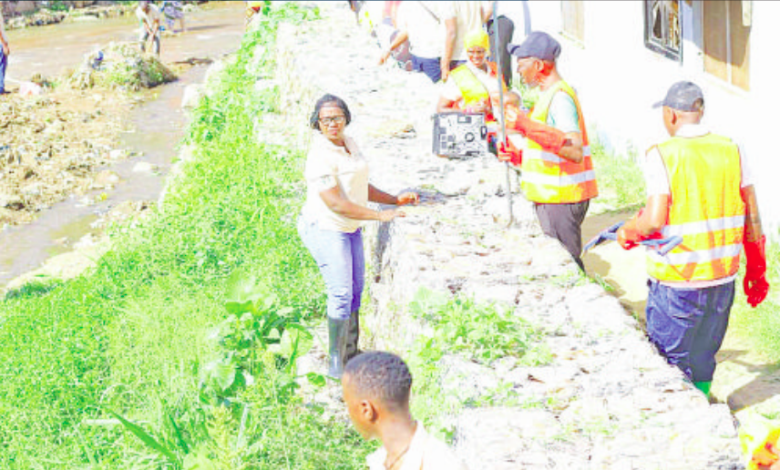
At the heart of the project are community champions, local residents trained to lead environmental actions in their neighbourhoods.
Working alongside them are students from three participating schools, whose involvement has added both energy and long-term vision to the effort.
“This is our contribution to the future,” said Amani Joseph, a student who took part in the tree planting exercise.
“We planted these trees, and we will make sure they grow.”
The inclusion of schools is a strategic move aimed at nurturing environmental awareness among young people. By engaging students early, the initiative is helping to build a generation that understands the importance of sustainability and conservation.
ALSO READ: CCM to curb flood woes
But planting trees is only the beginning. To ensure long-term impact, community champions and local leaders at the street level have been entrusted with the responsibility of nurturing and monitoring the trees.
This localised stewardship model is designed to guarantee high survival rates while reinforcing a sense of ownership among residents.
“Environmental protection should not be seen as the responsibility of the government alone,” Dr Ndezi emphasised.
“It must be a shared duty. Communities must be at the centre of these efforts.” Local authorities have also thrown their weight behind the initiative.
The Mwanza City Council has provided institutional support, helping to align the project with broader urban environmental management strategies.
City Director Kiomoni Kibamba is urging residents to embrace a culture of environmental care, noting that sustainable change depends on everyday practices.
During community engagements, he has consistently called on citizens to take responsibility for maintaining clean and safe surroundings.
The project has further benefited from technical collaboration with key stakeholders, including MWAUWASA and the Lake Victoria Basin Commission.
These institutions have contributed expertise in water resource management and ecosystem conservation, ensuring that the intervention is both scientifically sound and contextually relevant.
Saul Mwandosya, Project Advisor for GIZ in the Lake Zone, said the broader goal is to improve environmental management in the Mirongo River catchment area, including controlling the flow of solid waste into the river.
“This is about integrated management,” he said. “You cannot address flooding without also addressing waste, land use and community behaviour.” Indeed, the strength of the initiative lies in its holistic approach, bringing together environmental restoration, community mobilisation and institutional collaboration.
For residents living near the river, the impact is already tangible. Areas that were once highly vulnerable to erosion are beginning to stabilise. The presence of vegetation is improving soil structure, while also enhancing the aesthetic value of the environment. More importantly, awareness is growing.
“Before, we did not see the connection between trees and floods,” said one resident involved in the project. “Now we understand that when we protect the environment, we are also protecting ourselves.”
Across Tanzania, the push for nature-based solutions is gaining momentum. The Vice-President’s Office (Environment) has increasingly highlighted ecosystem-based approaches as key to building climate resilience and achieving sustainable development goals.
In urban centres like Mwanza, where rapid population growth is placing pressure on land and infrastructure, such approaches are proving not only effective but necessary.