Modern farming technology benefits over 1,000 Tanzanian farmers
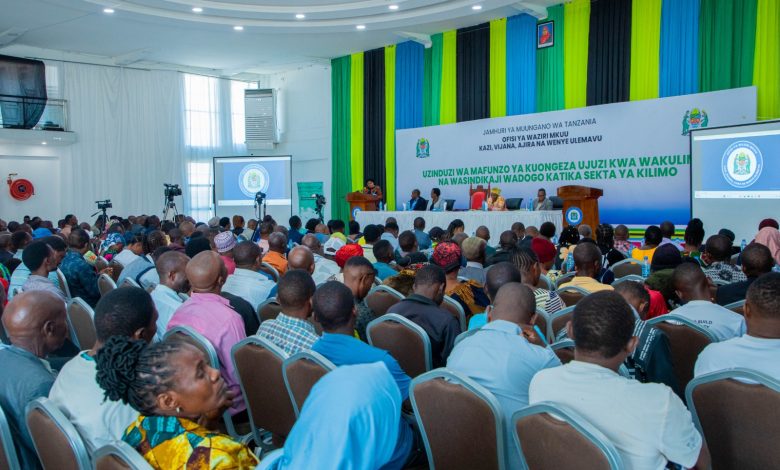
DODOMA: THE Tanzanian government, through the Prime Minister’s Office (Labour, Youth, Employment and Persons with Disabilities), has unveiled a programme to provide up-skilling training to 1,000 smallholder farmers and producers across four regions in the country.
Speaking today,October 21,2025 in Dodoma during the official launch of the programme, the Deputy Permanent Secretary in the Prime Minister’s Office, Ms Zuhura Yunus, said the initiative aims to enhance farmers’ practical skills and productivity in the agricultural sector.
She said the training, being implemented in Dodoma, Singida, Iringa and Mbeya regions during the 2025/2026 financial year, focuses on hands-on sessions to enable participants to apply what they learn directly on their farms.
“The objective of this training is to improve production efficiency, strengthen work methods, and raise product quality, which in turn will increase personal income, expand agro-industrial activities, and contribute to national economic growth,” Ms Zuhura explained.

She said the programme aligns with Tanzania’s Development Vision 2050, which seeks to build a competitive, industrialised economy powered by a skilled workforce.
ALSO READ: Citizen science model to empower farmers, boost aafer agriculture
“To realise this goal, the government continues to work with both public and private partners through the National Skills Development Programme,” she said.
Ms Zuhura added that the government’s long-term goal is to ensure smallholder farmers grow to reach middle and advanced levels of productivity.
She underscored that empowering farmers is part of President Samia Suluhu Hassan’s vision of inclusive development, ensuring that no one is left behind in driving the country’s progress.
She noted that smallholder farmers are key contributors to food security and provide raw materials for industries, yet many still face challenges such as limited knowledge of value chains and market access.
Ms Zuhura further said the government targets to raise agriculture’s contribution to GDP from 4.6 per cent in 2025 to 10 per cent by 2030, by ensuring food sufficiency, increasing farmers’ incomes, expanding agro-industries, and creating more jobs.

She also revealed that the government plans to establish a guarantee fund through the Agricultural Inputs Fund, the Tanzania Agricultural Development Bank (TADB), and the Cooperative Bank Tanzania (CBT) to enable farmers and agro-processors to access affordable loans for value addition in crops, livestock, and fisheries.
The training is being conducted in collaboration with the Tanzania Agricultural Research Institute (TARI), focusing on grapes in Dodoma, sunflowers in Singida, tomatoes and amaranthus in Iringa, and beans, avocados, and agricultural machinery in Mbeya.
TARI Director General, Dr Thomas Bwana, urged researchers to make effective use of their knowledge in delivering the training and encouraged participants to share what they learn with fellow farmers for broader impact.

Dr Bwana added that TARI is committed to ensuring that the outcomes of its research reach and benefit farmers and agro-processors across the country to enhance productivity and contribute to economic growth.