Millions targeted as Tanzania scales climate resilience efforts
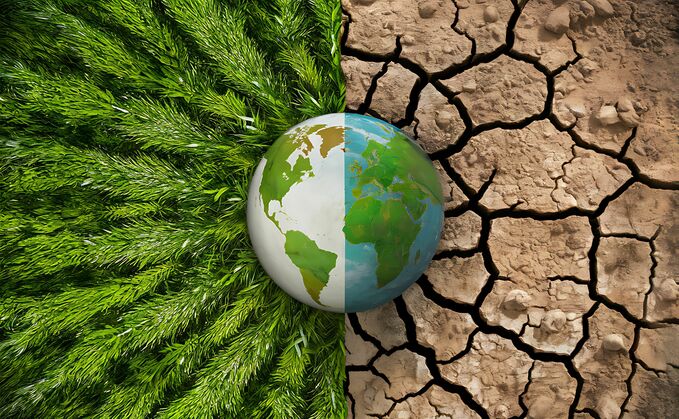
DAR ES SALAAM: TANZANIA’S efforts to strengthen climate resilience are gaining momentum as support from the Green Climate Fund continues to expand.
This growing support is providing both financial resources and technical expertise aimed at helping the country respond more effectively to the increasing impacts of climate change. Currently, Tanzania is implementing 11 major projects supported by the Green Climate Fund, with total financing amounting to approximately 354.2 million US dollars.
In addition to these large-scale investments, the country has received 4.3 million US dollars through four readiness programmes. These initiatives are specifically designed to strengthen national capacity, support the development of climate policies, and prepare bankable projects capable of attracting further climate financing.
Readiness programmes play a vital role in turning climate ambitions into practical actions. They equip governments and institutions with the tools, knowledge, and systems needed to design and implement projects that deliver tangible benefits to communities.
Without such groundwork, large-scale climate investments would be far more difficult to execute effectively.
Through these combined efforts, a new climate adaptation project valued at 23.6 million US dollars, equivalent to about 61.1 billion Tanzanian shillings, is set to be implemented in Kigoma Region. This region has become increasingly vulnerable to climate change, with environmental shifts now directly shaping the daily lives of its residents. In Kigoma, climate change is no longer a distant or abstract issue. It is a lived reality affecting farms, water sources, and entire communities.
Rainfall patterns that were once predictable have become erratic and unreliable. When rains do come, they often arrive in intense bursts that cause flooding, damaging crops, homes, and infrastructure. At other times, prolonged dry spells leave farmers struggling to sustain agricultural production.
Scientific observations confirm that these unpredictable weather patterns are becoming more frequent. Rising temperatures, combined with irregular rainfall, are placing significant pressure on already limited water resources in the region.
This situation is particularly challenging for both refugee and host communities, many of whom depend heavily on rain-fed agriculture and natural ecosystems for their livelihoods. The new Green Climate Fund-supported project aims to help communities confront these challenges through an integrated, landscape-level approach.
This strategy combines development, humanitarian, and climate interventions, ensuring that solutions are both comprehensive and sustainable.
More than 1.28 million people are expected to benefit from the initiative. This includes 570,341 direct beneficiaries, as well as an additional 711,516 individuals who will benefit indirectly through improved environmental management and enhanced resilience across the region.
A central focus of the project is the restoration and protection of natural systems that underpin livelihoods in Kigoma. Healthy ecosystems play a crucial role in supporting agriculture, maintaining water availability, and preserving biodiversity.
However, many of these systems have been degraded over time due to human activity and climate pressures.
ALSO READ: Taifa Gas maintains steady LPG prices despite global surge
To address this, the project will support the development of clear landuse plans. These plans will guide communities in managing land and natural resources more sustainably, helping to prevent further environmental degradation.
At the same time, efforts will be made to rehabilitate degraded landscapes, restoring essential ecosystem services that communities depend on. Another key component of the initiative involves integrating climate adaptation measures into regional development plans and policies.
By embedding climate resilience into governance structures, the project ensures that adaptation becomes part of longterm planning rather than a short-term response.
Improved land management and ecosystem restoration are expected to increase land productivity while promoting sustainable resource use. This, in turn, will help strengthen agricultural systems that are currently under stress from changing climate conditions.
Water availability is another major area of focus. The project aims to improve access to water for irrigation, particularly during dry periods when rainfall is insufficient. By ensuring a more reliable water supply, farmers will be better equipped to maintain crop production despite increasingly unpredictable weather.
As agricultural productivity improves, communities are expected to experience greater food security and more stable livelihoods. For many households in Kigoma, these interventions could mark a significant shift from merely coping with climate shocks to building long-term resilience. The Kigoma project is part of a broader wave of climate investments being rolled out across Africa by the Green Climate Fund.
These initiatives are designed to strengthen climate action on the continent, where the impacts of climate change are already being felt in profound ways.
Speaking during an Africa-focused press briefing on March 30, Catherine Koffman highlighted the urgency of the situation. She noted that Africa is already experiencing the consequences of climate change through droughts, floods, and rising food and energy costs.
According to her, the key challenge now is not whether to act, but how quickly and fairly solutions can be implemented. At its most recent Board meeting, the Green Climate Fund approved 440 million US dollars in new climate financing across seven projects.
These investments are expected to mobilise an additional 1.1 billion US dollars in co-financing, demonstrating the Fund’s role in catalysing larger flows of climate finance. Among the flagship initiatives is the Resilient Energy Access for Inclusive Development project, widely known as ASCENT-GREEN.
This ambitious programme will support 21 African countries, particularly in Eastern and Southern Africa, by expanding access to sustainable energy solutions. ASCENT-GREEN combines renewable energy, clean cooking technologies, and productive energy use into a blended finance platform valued at 695 million US dollars. It is also expected to attract an additional 521 million US dollars in private sector investment, further amplifying its impact.
Through this initiative, approximately 25 million people are expected to gain access to electricity, while 12 million households will benefit from clean cooking technologies. In addition, around five million farmers and small and medium-sized enterprises will receive support to use energy productively, enhancing economic opportunities across the continent.
The programme aligns with the Mission 300 initiative, which aims to connect 300 million people in subSaharan Africa to electricity by 2030. This initiative has been endorsed by 48 African countries and is part of the African Union’s Agenda 2063 development framework, which outlines a long-term vision for inclusive and sustainable growth.
Beyond financing, the Green Climate Fund is also strengthening its engagement with African countries by establishing a regional presence on the continent for the first time. New regional offices will be opened in Nairobi, serving East and Southern Africa, and in Abidjan, covering North, Central, and West Africa.
Previously, the Fund operated exclusively from its headquarters in the Republic of Korea. The establishment of regional hubs is expected to bring the organisation closer to its partners, enabling faster responses to climate challenges and more effective collaboration in project development and implementation.
For Tanzania, the Kigoma initiative provides a clear example of how international climate financing can translate into meaningful change at the local level. By supporting ecosystem restoration, improving agricultural productivity, and strengthening resilience, the project is helping communities adapt to an increasingly unpredictable climate.