

Media freedom: Separating myth from reality
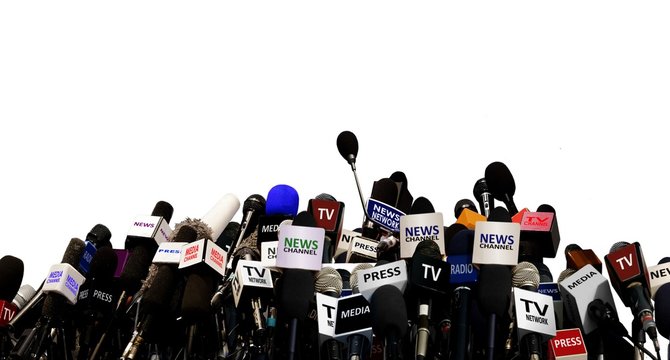
DAR ES SALAAM: FOR decades, media freedom has been regarded as one of the defining pillars of democracy. Countries are ranked, governments are scrutinised and journalists are celebrated or criticised based on how freely information flows within their borders.
Yet according to veteran journalist and media scholar Dr Maurice Mwaffisi, one important reality is often overlooked: no country in the world enjoys absolute media freedom.
Speaking in an exclusive interview at his Segerea residence in Dar es Salaam, Dr Mwaffisi says press freedom is shaped, not by universal standards, but by the unique political, economic and social realities of each nation.
His assessment comes at a time when media freedom continues to dominate global discussions, with international organisations regularly publishing rankings that compare countries’ records on press freedom.
While such rankings have become widely accepted benchmarks, Dr Mwaffisi contends that they often fail to capture the complex environments in which media institutions operate, particularly in developing countries.
“There is no country in the world with one hundred per cent media freedom. The level of freedom that exists depends on the environment in which the media operates,” he says.
One of the biggest challenges facing developing nations, he argues, is their reliance on media freedom standards largely designed by developed countries despite significant differences in circumstances.
Dr Mwaffisi argues that the criteria commonly used to assess media freedom are largely shaped by Western experiences and expectations.
These assessments often examine factors such as media ownership, the relationship between journalists and governments, the safety of reporters, and the extent to which media institutions rely on government advertising or subsidies.
Under such frameworks, government-owned media outlets are frequently perceived as less independent, while media organisations that receive substantial state support are often viewed as lacking editorial freedom.
Dr Mwaffisi, however, maintains that such conclusions can be misleading.
“If we use their standards as our standards, we will always appear to have less media freedom than they do,” he says.
He contends that developing countries have made the mistake of allowing others to define what media freedom should look like, rather than developing standards that reflect their own realities.
For him, the existence of a government-owned media outlet does not automatically mean that it lacks editorial independence.
Equally, privately owned media organisations are not necessarily free from pressures and influences.
“The fact that a media institution belongs to the government does not mean it has no freedom. But at the same time, governments must understand that ownership should not mean a media outlet spends every day praising those in power,” he notes.
At the heart of journalism, he insists, lies one principle above all others which is truth. “The foundation of journalism is truth. Where truth exists, it should be told, truth that can stand scrutiny and be proven.”
One of Dr Mwaffisi’s most compelling arguments is that every journalist operates within systems of control, whether they realise it or not.
Drawing from communication theories, he explains that media institutions are governed by both formal and informal controls.
The first are what he describes as “actual control variables”—the official rules, editorial policies and institutional guidelines that regulate newsroom operations.
“No media organisation anywhere in the world is allowed to do whatever it wants,” he says.
Recalling his days at Radio Tanzania, he remembers being told that a journalist’s freedom effectively ended at the office entrance.
“Once you entered the newsroom, you had to follow the rules of that institution.”
These written policies exist in every media house, whether in Tanzania, Europe or North America.
But there is another, less visible layer of influence. Dr Mwaffisi refers to these as “perceived control variables”—the unwritten rules and newsroom cultures that shape editorial decisions.
A journalist may hesitate to pursue certain stories not because any policy prohibits it, but because of workplace traditions, peer expectations or assumptions about what is acceptable.
Sometimes, these invisible pressures can be just as powerful as official regulations.
“You may not find anywhere written that a particular story should not be covered, but the environment itself discourages it,” he explains.
Beyond newsroom cultures and editorial policies, every country has laws governing the media.
While legal frameworks differ in their severity and approach, Dr Mwaffisi notes that regulation is universal.
“There is no country without laws that regulate media freedom,” he says.
Some legal systems may be more accommodating to journalists than others, but all societies establish boundaries within which media organisations operate.
For this reason, he argues that discussions about media freedom should focus less on whether freedom exists and more on the degree of freedom available within a particular context.
Tanzania, he says, may enjoy greater media freedom than some countries despite a few constraints. Comparisons therefore depend heavily on which countries are being used as reference points.
If there is one situation where media freedom becomes particularly constrained, Dr Mwaffisi says, it is during times of crisis.
Whether during war, national emergencies or security threats, governments around the world tend to impose limitations on the flow of information.
Journalists themselves often accept such restrictions when national interests are at stake.
To illustrate the point, he recalls the 1982 Falklands War between Britain and Argentina.
During the conflict, a journalist reporting on military operations famously stated: “I counted all of them out, and I counted all of them in.”
The reporter revealed that all military aircraft sent into battle had safely returned. However, he deliberately withheld crucial details such as the number and types of aircraft involved.
Why? Because disclosing such information could have jeopardised military operations and national security.
For Dr Mwaffisi, the lesson is clear, “During times of crisis, media freedom becomes more limited everywhere in the world.”
In such moments, he says, national interests often take precedence over unrestricted reporting.
While traditional debates about media freedom continue, Dr Mwaffisi says one of the greatest challenges facing journalism today comes from the explosive growth of online media.
For generations, news passed through multiple layers of scrutiny before reaching the public.
Reporters gathered information. Editors verified facts. Sub-editors reviewed content. Publishers gave final approval.
By the time a story appeared in print or on air, it had passed through several professional filters.
Today, technology has fundamentally altered that process. A single individual armed with a smartphone can simultaneously act as reporter, photographer, videographer, editor and publisher.
“They can broadcast anything immediately,” Dr Mwaffisi notes.
Dr Mwaffisi said while social media has democratised access to information and created employment opportunities for many young people, it has also weakened some of the professional safeguards that traditionally protected journalistic integrity.
He said many content creators have never received formal journalism training and may be unfamiliar with ethical standards governing accuracy, privacy and fairness.
As a result, practices that would never be accepted in professional newsrooms have become increasingly common online.
Dr Mwaffisi cites the publication of graphic images showing accident victims or deceased individuals, content that violates long-established ethical principles.
“The problem is that many of these people were never taught journalism ethics,” he says.
Among Dr Mwaffisi’s biggest concerns is the growing prevalence of sensationalism.
Like many people, he once relied heavily on social media platforms to stay informed.
However, he says he has become increasingly cautious due to the volume of misleading and exaggerated content.
Recently, he came across a headline claiming that a prominent leader had died. Alarmed, he immediately opened the story.
Upon reading further, he discovered that the deceased was actually another individual in China who happened to share a similar name.
The headline had been deliberately crafted to create confusion and attract attention.
“That is sensationalism. It is done to gain followers, but ethically it is unacceptable,” he says.
Such practices may generate clicks and online engagement, but they undermine public trust in journalism and blur the distinction between professional reporting and content designed purely for traffic.
Contrary to popular perceptions, Dr Mwaffisi does not agree that journalists today face the most difficult working conditions.
In fact, he argues that earlier generations of journalists operated under stricter limitations.
“There has never been a period when journalism has been easier than it is today,” he says.
During his early years in the profession, journalists worked under specific guidelines that restricted criticism of government policy while permitting scrutiny of how policies were implemented.
For example, questioning the existence of major national policies was often discouraged, but exposing those who undermined or misapplied those policies was permitted.
Despite those constraints, journalists still found ways to hold leaders accountable.
Dr Mwaffisi recalls an incident involving a senior official who ordered the closure of private shops before cooperative stores had become operational in a village. The decision left residents without access to essential goods.
Journalists reported the story, and despite the official’s influence, the facts ultimately prevailed.
“The truth was reported because it was true,” he recalls.
As the media landscape continues to evolve, Dr Mwaffisi believes the profession faces a critical challenge which is preserving its core values while adapting to technological change.
The rise of social media, changing business models and growing political polarisation have transformed how information is produced and consumed.
Yet the fundamental mission of journalism remains unchanged.
Whether working for a government-owned broadcaster, a private newspaper or a digital platform, journalists have a responsibility to pursue facts, verify information and serve the public interest.
For Dr Mwaffisi, the debate over media freedom should therefore move beyond simplistic rankings and international comparisons.
ALSO READ: Debunking media freedom myths
“The real question is not whether absolute freedom exists—it does not,” he said.
Rather, societies must determine how to balance freedom, responsibility, professional ethics and national interests in ways that reflect their unique realities.
In an age of information overload and rapidly changing technologies, that balance may prove more important than ever.
Because while media systems differ from country to country, one principle remains universal: journalism earns its credibility not through unlimited freedom, but through its unwavering commitment to truth



Real excellent visual appeal on this internet site, I’d rate it 10 10.
I gotta favorite this internet site it seems extremely helpful very useful
Keep up the fantastic piece of work, I read few articles on this internet site and I think that your blog is very interesting and has lots of great info .
Good post but I was wanting to know if you could write a litte more on this topic? I’d be very thankful if you could elaborate a little bit more. Kudos!
시알리스의 성분인 타다라필과 효과, 지속시간, 5mg·10mg·20mg 차이를 알아보세요. 복용 방식, 부작용, 함께 복용하면 안 되는 약, 처방과 가격 확인 방법을 정리했습니다.
Appreciate it for all your efforts that you have put in this. very interesting information.
Dead composed subject matter, regards for information. “Necessity is the mother of taking chances.” by Mark Twain.
I conceive this web site contains some rattling great info for everyone :D.
Good write-up, I am regular visitor of one’s website, maintain up the excellent operate, and It’s going to be a regular visitor for a long time.
Useful information. Lucky me I discovered your web site by accident, and I’m stunned why this twist of fate didn’t came about earlier! I bookmarked it.
Hi my friend! I want to say that this article is amazing, nice written and come with almost all vital infos. I would like to peer more posts like this.
he blog was how do i say it… relevant, finally something that helped me. Thanks
Spot on with this write-up, I truly suppose this website wants way more consideration. I’ll probably be once more to read much more, thanks for that info.
Really Appreciate this post, how can I make is so that I receive an update sent in an email every time you publish a new article?
I like this post, enjoyed this one appreciate it for putting up. “When you make a world tolerable for yourself, you make a world tolerable for others.” by Anais Nin.
Hey there! Would you mind if I share your blog with my myspace group? There’s a lot of people that I think would really appreciate your content. Please let me know. Many thanks
I do believe all the ideas you’ve presented on your post. They are very convincing and will definitely work. Nonetheless, the posts are very short for novices. May you please lengthen them a little from next time? Thank you for the post.
Your place is valueble for me. Thanks!…
It’s really a nice and helpful piece of information. I’m satisfied that you simply shared this useful info with us. Please keep us informed like this. Thank you for sharing.
I have been exploring for a bit for any high quality articles or blog posts on this kind of area . Exploring in Yahoo I at last stumbled upon this site. Reading this information So i am happy to convey that I’ve an incredibly good uncanny feeling I discovered just what I needed. I most certainly will make certain to do not forget this site and give it a glance regularly.
I happen to be writing to make you be aware of what a brilliant encounter my friend’s child encountered browsing the blog. She learned a good number of issues, which include how it is like to possess an incredible teaching nature to have the mediocre ones without problems fully understand selected impossible matters. You truly did more than my expected results. Many thanks for supplying these important, dependable, educational and in addition unique tips about that topic to Julie.
Hello There. I found your blog the usage of msn. This is a very neatly written article. I’ll make sure to bookmark it and come back to read more of your useful information. Thanks for the post. I’ll definitely return.
I’d need to examine with you here. Which is not one thing I usually do! I enjoy studying a submit that may make people think. Additionally, thanks for allowing me to remark!
Thanks for another informative site. Where else could I get that type of info written in such a perfect approach? I have a venture that I am just now working on, and I’ve been at the look out for such information.
I couldn’t resist commenting
Merely wanna tell that this is very useful, Thanks for taking your time to write this.
I will immediately clutch your rss as I can not find your e-mail subscription link or newsletter service. Do you have any? Kindly permit me know in order that I may just subscribe. Thanks.
This is very interesting, You’re a very skilled blogger. I’ve joined your feed and look forward to seeking more of your wonderful post. Also, I have shared your website in my social networks!
Heya i am for the first time here. I found this board and I find It truly useful & it helped me out a lot. I hope to give something back and help others like you helped me.
Thanks , I’ve recently been looking for info about this topic for a long time and yours is the best I’ve came upon so far. However, what in regards to the bottom line? Are you positive in regards to the supply?
It’s in reality a nice and helpful piece of info. I’m happy that you simply shared this helpful information with us. Please keep us informed like this. Thanks for sharing.
This blog is definitely rather handy since I’m at the moment creating an internet floral website – although I am only starting out therefore it’s really fairly small, nothing like this site. Can link to a few of the posts here as they are quite. Thanks much. Zoey Olsen
I have read several excellent stuff here. Certainly worth bookmarking for revisiting. I wonder how a lot effort you put to make such a fantastic informative site.
I am not sure where you’re getting your info, however great topic. I must spend a while learning much more or figuring out more. Thank you for magnificent information I used to be searching for this information for my mission.
hello there and thank you for your info – I’ve definitely picked up anything new from right here. I did however expertise several technical points using this website, since I experienced to reload the website many times previous to I could get it to load properly. I had been wondering if your web host is OK? Not that I am complaining, but slow loading instances times will sometimes affect your placement in google and can damage your high-quality score if advertising and marketing with Adwords. Anyway I am adding this RSS to my email and could look out for much more of your respective fascinating content. Make sure you update this again very soon..
Hey there, You’ve performed a fantastic job. I’ll certainly digg it and for my part recommend to my friends. I am sure they’ll be benefited from this web site.
Nice post. I learn something more challenging on different blogs everyday. It will always be stimulating to read content from other writers and practice a little something from their store. I’d prefer to use some with the content on my blog whether you don’t mind. Natually I’ll give you a link on your web blog. Thanks for sharing.
I think you have observed some very interesting details , thanks for the post.
The next time I read a weblog, I hope that it doesnt disappoint me as a lot as this one. I imply, I do know it was my choice to read, however I really thought youd have something interesting to say. All I hear is a bunch of whining about something that you may fix in case you werent too busy on the lookout for attention.
I was very pleased to find this web-site.I wanted to thanks for your time for this wonderful read!! I definitely enjoying every little bit of it and I have you bookmarked to check out new stuff you blog post.
Hello! Do you know if they make any plugins to protect against hackers? I’m kinda paranoid about losing everything I’ve worked hard on. Any recommendations?
I genuinely appreciate your work, Great post.
With havin so much content do you ever run into any problems of plagorism or copyright violation? My website has a lot of completely unique content I’ve either written myself or outsourced but it looks like a lot of it is popping it up all over the internet without my agreement. Do you know any techniques to help reduce content from being ripped off? I’d definitely appreciate it.
You really make it seem so easy with your presentation but I find this matter to be really something that I think I would never understand. It seems too complicated and very broad for me. I’m looking forward for your next post, I’ll try to get the hang of it!