Mchuchuma and Liganga: The industrial holy grail for Vision 2050
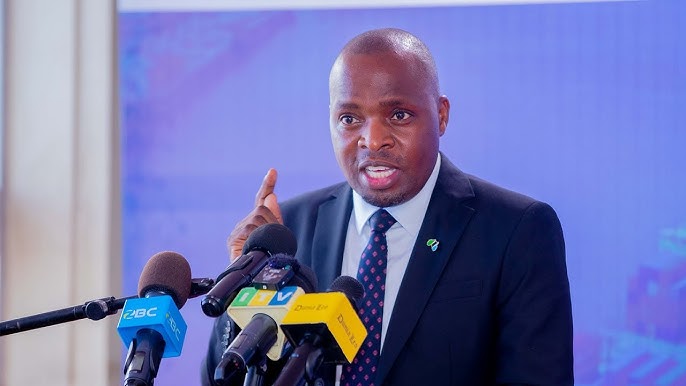
DAR ES SALAAM: FOR decades, the mention of the Mchuchuma coal and Liganga iron ore projects in Tanzania’s Southern Highlands felt like a distant mirage—a recurring promise that never quite reached the horizon.
However, the recent announcement by Government Chief Spokesperson, Gerson Msigwa that investment negotiations are over 90 per cent complete and work is slated to begin within three months marks a historic turning point. This is far more than a routine mining update.
It is a foundational shift in Tanzania’s journey toward the 2050 National Development Vision.
To achieve the Vision 2050 goal of a 1 trillion US dollar economy, the nation must move from exporting raw materials to becoming a manufacturing powerhouse.
Mchuchuma and Liganga are the “Twin Engines” of this transformation. The synergy between these two projects represents the “Holy Grail” of industrialisation.
By harnessing domestic coal for power and iron for steel, Tanzania is positioning itself to build its future from its own soil.
The scale is massive: a projected annual output of 2.9 million tonnes of iron ore and 3 million tonnes of coal.
This is the raw power required to fuel a modern, 24-hour economy. Central to the 2050 targets is the transformation of Tanzania into a competitive, semi-industrialised nation.
It is an economic axiom that you cannot build a modern nation without steel.
Currently, our flagship infrastructure projects, for instance, the Standard Gauge Railway (SGR), rely heavily on imported steel.
By producing 1.1 million tonnes of steel products annually at home, we are saving precious foreign exchange, we are insulating our national development from the volatility of global supply chains and we are, finally, forging a steel backbone for our growth.
ALSO READ: Liganga, Mchuchuma power industrial transformation
Beyond mineral extraction, the socio-economic impact is staggering.
The projection of 6,500 direct jobs and over 26,000 indirect jobs provides a concrete solution to youth employment.
These are high-value opportunities in engineering, logistics, and specialised services.
Furthermore, the planned 220-kilovolt transmission line and road networks will open the Southern Highlands, creating an economic corridor that catalyses agriculture and trade far beyond the mines.
With coal reserves estimated at five billion tonnes—among Africa’s largest—Tanzania has the potential to become a regional energy hub.
As the final negotiations are ironed out, the government must remain focused on transparency and local content to ensure benefits trickle down to communities in Ludewa in Njombe and surrounding regions.
The commencement of these projects should be viewed as a national victory.
They are the engines that will drive us toward a future where Tanzania is a premier African producer. It is time to turn this iron and coal into the prosperity of the next generation.