Matinyi takes diplomatic helm, seeks tangible benefits for citizens
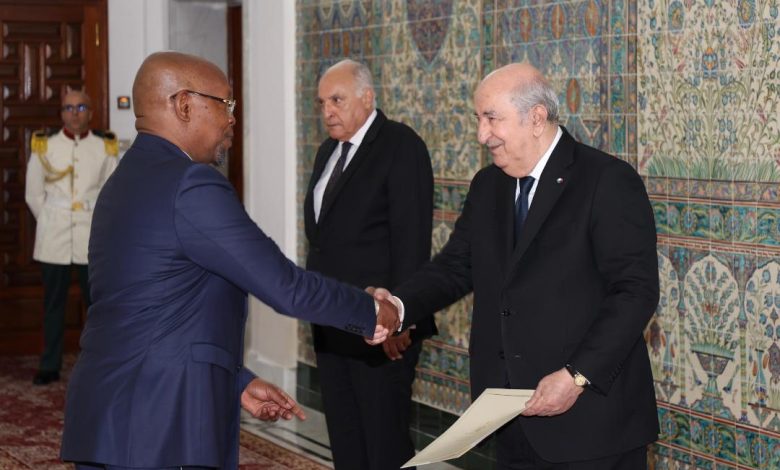
ALGERIA: Diplomacy often unfolds through carefully choreographed ceremonies, but occasionally a ceremonial moment signals something more consequential, precisely a strategic intent to redefine and deepen relations between nations.
Such was the significance of June 10, 2026, when Tanzania’s newly appointed Ambassador to Algeria, Mobhare Matinyi, presented his Letter of Credence to Algerian President Abdelmadjid Tebboune at the Presidential Palace in Algiers.
The ceremony formally marked the commencement of Ambassador Matinyi’s diplomatic assignment. Yet beyond protocol and symbolism, it underscored a broader ambition: transforming one of Africa’s enduring bilateral relationships into a more dynamic partnership anchored in trade, investment, innovation and people- centred development. The presentation of credentials comes at a time when both Tanzania and Algeria are seeking to strengthen economic resilience, diversify their economies and enhance intra-African cooperation.
Against this backdrop, Ambassador Matinyi’s appointment carries significance beyond the traditional functions of diplomacy. His mandate is clear and that is to translate decades of political goodwill into measurable benefits for citizens of both countries. Following his audience with President Tebboune, Ambassador Matinyi elaborated that Tanzania and Algeria possess a unique relationship shaped by history, solidarity and shared aspirations.
“The relationship between Tanzania and Algeria is marked by a deep-rooted kinship and a shared history emanating from our collective struggle for the liberation of Africa,” he said.
That historical connection remains one of the strongest foundations of bilateral relations between the two countries. During the liberation era, Tanzania emerged as a leading supporter of African independence movements, while Algeria became a symbol of anti-colonial resistance following its hard-won independence.
The two nations forged bonds grounded in shared values, Pan-Africanism and a common commitment to African self-determination. More than six decades later, those principles continue to shape diplomatic engagement between Dar es Salaam and Algiers.
Ambassador Matinyi conveyed President Samia Suluhu Hassan’s appreciation to President Tebboune, the Government and people of Algeria for sustaining the cordial relations that have flourished between the two countries over the years. While history provides a strong foundation, contemporary diplomacy increasingly demands practical outcomes.
Today, successful bilateral relationships are measured not solely by diplomatic goodwill but by the extent to which they create jobs, stimulate investment, facilitate knowledge transfer and improve the quality of life for citizens.
This reality appears to be central to Ambassador Matinyi’s diplomatic approach. Speaking to journalists after the credential ceremony, he disclosed that discussions with President Tebboune focused on achieving tangible outcomes in sectors capable of generating meaningful benefits for both countries.
ALSO READ: Gold reserves rise to 27.5 tonnes as BoT marks 60 years
Among the areas identified were defence cooperation and higher education—two sectors that have long played important roles in strengthening bilateral engagement. However, the ambassador indicated that the scope of future cooperation extends much further.
Agriculture, manufacturing, pharmaceuticals, energy, mining and tourism have emerged as priority sectors requiring immediate attention. Equally important are opportunities for collaboration in science, technology, research and cultural exchanges. Together, these sectors represent the building blocks of modern economic transformation.
For Tanzania, which continues to implement ambitious industrialisation and economic diversification strategies, Algeria presents significant opportunities as one of Africa’s largest economies and an influential actor within the continent. For Algeria, Tanzania offers access to one of East Africa’s fastest-growing markets, a strategic gateway to the East African Community and a stable investment destination with vast natural resources and growing infrastructure. The potential for mutually beneficial cooperation is considerable.
Agriculture stands out as a particularly promising area. Both countries recognise food security as a strategic priority. Increased cooperation in agricultural technology, irrigation systems, agro-processing and value addition could significantly enhance productivity while creating employment opportunities for young people. Manufacturing offers another avenue for deepening economic ties.
As Tanzania continues expanding its industrial base, partnerships with Algerian industries could support technology transfer, industrial expertise and market access. Such cooperation would not only strengthen bilateral trade but also contribute to broader continental goals under the African Continental Free Trade Area.
The pharmaceutical sector presents equally compelling opportunities. Recent global health challenges underscored the importance of developing local pharmaceutical manufacturing capabilities across Africa.
Strategic collaboration between Tanzanian and Algerian institutions could strengthen healthcare systems while reducing dependence on imported medicines.
Energy and mining remain vital pillars of economic development for both countries. With growing demand for sustainable energy solutions and increased emphasis on value addition within extractive industries, collaboration in these sectors could yield substantial long-term benefits. Tourism also represents an underutilised area of cooperation.
Tanzania’s globally recognised wildlife destinations, pristine beaches and cultural heritage complement Algeria’s rich historical attractions, Mediterranean coastline and vast Saharan landscapes. Enhanced tourism partnerships could stimulate visitor flows, strengthen cultural understanding and generate foreign exchange earnings. Yet Ambassador Matinyi’s vision extends beyond economics. He has identified science, technology, research and innovation as critical areas for future engagement.
In a rapidly evolving global economy, nations increasingly compete through knowledge, innovation and technological advancement. Partnerships between universities, research institutions and innovation centres can play a decisive role in shaping future competitiveness. Higher education cooperation, in particular, offers opportunities to cultivate the next generation of leaders, scientists and professionals capable of driving development in both countries.
Cultural exchanges remain equally important. While trade and investment create economic value, cultural diplomacy strengthens the human connections that sustain long-term partnerships. Exchanges involving artists, academics, students and professionals help foster mutual understanding and reinforce the people-to-people ties that underpin successful international relations.
“I arrive with a clear mandate from my President to enhance the ties between our two friendly nations for the benefit of our beloved peoples,” Ambassador Matinyi said. That statement reflects a defining feature of Tanzania’s contemporary foreign policy: economic diplomacy.
Under President Samia Suluhu Hassan’s leadership, Tanzanian diplomatic missions have increasingly been encouraged to focus on delivering tangible economic outcomes. Embassies are expected not only to represent national interests but also to facilitate trade, attract investment and promote development partnerships. Ambassador Matinyi appears determined to advance that agenda.
“I have been tasked by Dr. Samia Suluhu Hassan, President of Tanzania, to ensure that the bilateral cooperation between these two countries benefits the people of our two nations,” he said.
His emphasis on citizen-centred diplomacy aligns with broader global trends where foreign policy success is increasingly measured by its impact on ordinary people. President Tebboune’s response suggests that this commitment is reciprocated.
According to Ambassador Matinyi, the Algerian leader reaffirmed his country’s readiness to cooperate with Tanzania across strategic sectors and expressed support for strengthening bilateral agreements through high-level engagements and joint initiatives. Such political commitment at the highest level provides a strong platform for expanding cooperation in the years ahead.
ALSO READ: Samia urges BoT to strengthen economic forecasting amid global uncertainty
Ambassador Matinyi’s posting also carries regional importance. Tanzania’s Embassy in Algeria serves as an accredited mission not only to Algeria but also to Tunisia, Mauritania, Niger and the Sahrawi Arab Democratic Republic. This broad diplomatic jurisdiction places the embassy at the centre of Tanzania’s engagement with a significant portion of North and West Africa. Consequently, the ambassador’s role extends beyond managing bilateral relations with Algeria alone.
He is expected to strengthen Tanzania’s diplomatic, economic and strategic presence across a wider region that presents growing opportunities for trade, investment and political cooperation. As the fourth Tanzanian ambassador to Algeria following Ambassador Omari Yussuf Mzee, Ambassador Major General Jacob Kingu and Ambassador Imani Njalikai, Ambassador Matinyi inherits a relationship built on decades of mutual respect and solidarity. The challenge now is to elevate that relationship to a new level.
The most striking element of Ambassador Matinyi’s first public remarks after presenting his credentials was his focus on outcomes rather than rhetoric. His concluding message captured the essence of his mission.
“I look forward to collaborating closely with the Government of Algeria to translate these opportunities into tangible benefits for both Tanzanians and Algerians.” Those words resonate strongly within diplomatic circles because they reflect a growing recognition that modern diplomacy must ultimately serve people.
Historic friendships remain important. Political solidarity remains valuable. Shared values continue to matter. But the true test of diplomacy lies in its ability to convert goodwill into opportunity, partnership into progress and cooperation into prosperity.
As Ambassador Mobhare Matinyi begins his tenure in Algiers, the foundations are already in place: six decades of trust, a shared Pan-African vision and strong political commitment from both governments. The task ahead is to build upon that legacy and shape a partnership capable of delivering measurable results in trade, investment, education, innovation and human development.
For Tanzania and Algeria, the next phase of their relationship may well be defined not by what they have achieved together in the past, but by what they can accomplish together in the future. Pic: Matinyi Caption: Ambassador Mobhare Matinyi greets Algerian President Abdelmadjid Tebboune after presenting his credentials at the Presidential Palace in Algiers recently.