Malasusa calls for forgiveness as pillar of national cohesion
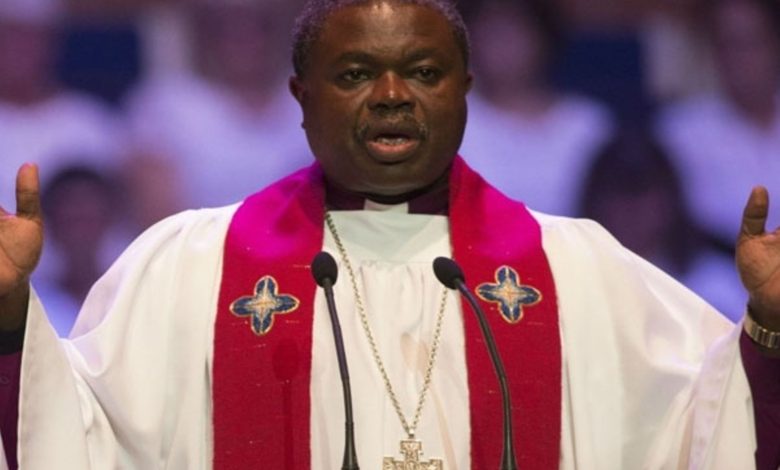
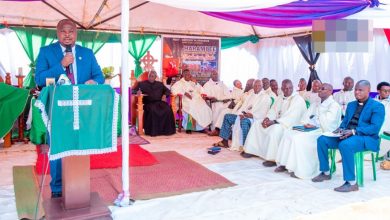
DAR ES SALAAM: THE Head of the Evangelical Lutheran Church of Tanzania (ELCT), Dr Alex Malasusa has issued a message that goes beyond a traditional Easter reflection, offering a framework for addressing some of Tanzania’s most pressing social and moral challenges.
He called on Christians and the wider community to embrace forgiveness, love and peace as essential pillars for building a united and harmonious society.
Delivering a message centred on the significance of Easter, Dr Malasusa emphasised that forgiveness remains a foundational Christian principle that must be actively practised in everyday life.
He noted that in a society increasingly challenged by social tensions, economic pressures and moral shifts, the deliberate choice to forgive will serve as a powerful tool for reconciliation.
“It is important to forgive others just as Christ forgave us. Forgiveness is not optional, it is essential in our lives,” he said.
His call for forgiveness, love and peace is not only theological but also deeply socio-political, positioning these values as foundational pillars for national unity and longt erm stability.
Framed within the significance of Easter, Dr Malasusa’s message draws on the central Christian narrative of sacrifice, redemption and reconciliation.
However, rather than limiting his remarks to spiritual instruction, he presents forgiveness as a practical and necessary tool for social cohesion.
By insisting that “forgiveness is not optional,” he underscores its role in breaking cycles of grievance, retaliation and division, dynamics that are capable of quietly eroding community trust even in relatively peaceful societies like Tanzania.
Dr Malasusa further urged citizens to embrace unconditional love and reject cycles of retaliation, warning that revenge-based thinking undermines social cohesion.
“Peace is a very important value that must be cherished and safeguarded in our daily lives,” he said, linking the Easter message of resurrection to renewal, reconciliation and peaceful coexistence.
His remarks come at a time when Tanzania, like many nations, is experiencing rapid urbanisation, economic inequality and generational shifts, all of which can strain social relationships.
In such an environment, the promotion of love and empathy becomes essential in bridging divides between communities, socioeconomic groups and even political affiliations.
Analytically, the emphasis on forgiveness is particularly significant in the Tanzanian context for three key reasons.
First, Tanzania is a religiously diverse nation, where Christianity and Islam coexist alongside indigenous beliefs.
In such a setting, forgiveness serves as a shared ethical bridge that transcends doctrinal differences.
Dr Malasusa’s framing, therefore, contributes to interfaith harmony by promoting a universally resonant value rather than a narrowly sectarian one.
Second, his message addresses the growing social pressures associated with urbanisation, economic inequality and generational change.
As communities become more fragmented, grievances, whether economic, political or interpersonal can easily intensify.
ALSO READ: Digital public sphere: Youth voice, national cohesion
By advocating forgiveness as a “fundamental value,” Dr Malasusa is effectively proposing a preventative social mechanism that reduces the risk of conflict escalation.
In this sense, forgiveness becomes not just a moral act, but a stabilising force within society.
Third, his call reflects an awareness of the subtle tensions that may arise during political or social disagreements.
His insistence that the church remains neutral and acts as a mediator highlights the importance of trusted institutions in conflict resolution.
In Tanzania, where religious organisations often hold significant moral authority, this mediating role is critical.
It allows the church to function as a space for dialogue, reconciliation and de-escalation, particularly in moments of uncertainty.
Dr Malasusa’s emphasis on love complements this framework by shifting the focus from passive coexistence to active social responsibility.
His rejection of revenge and retaliation introduces a transformative ethic. It signifies that individuals are not only expected to avoid harm but to actively contribute to the wellbeing of others.
This is especially relevant in a society where communal life and extended family structures remain central.
By encouraging love as a daily practice, he reinforces social bonds that are essential for resilience at both family and community levels.
Equally important is his focus on peace, which he describes as both internal and external.
His assertion that “peace begins in the heart” reflects a psychological dimension often overlooked in public discourse.
Dr Malasusa acknowledged that pursuing peace is not always easy and may require personal sacrifice, including letting go of pride, anger or the desire for retribution.
“Seeking peace can be costly, but we must pursue it at any cost, without hatred or revenge,” he said.
This message suggests that national harmony cannot be achieved solely through policies or institutions.
It must also be cultivated at the individual level through attitudes of respect, dignity and empathy.
This perspective aligns with broader peacebuilding theories that emphasise the link between personal transformation and societal stability.
His acknowledgement that “seeking peace can be costly” adds a layer of realism to the message.
It recognises that reconciliation often requires sacrifice, whether in the form of letting go of grievances, accepting compromise, or confronting injustice without resorting to violence.
In the Tanzanian context, this is particularly relevant as the country navigates development challenges that in most cases create competing interests and tensions among different groups.
Reflecting on life after Easter, Dr Malasusa called on Christians to sustain the spirit of repentance observed during Lent, arguing that moral discipline should not be seasonal but continuous.
“The life we lived during Lent, a life of repentance, should continue even after Easter,” he said.
This is another critical dimension of Dr Malasusa’s message. He places his focus on moral formation, especially among children.
By advocating for early education in love, generosity and ethical behaviour, he highlights the longterm nature of social transformation.
Sustainable peace and unity are not achieved through short-term interventions but through generational change.
Teaching children to value giving over receiving and respect over division, lays the groundwork for a more cohesive future society.
His reflections on life after Lent further reinforce the idea of continuity in moral discipline.
Rather than treating repentance and spiritual reflection as seasonal practices, he calls for their integration into everyday life.
This continuity is essential for ensuring that the values celebrated during religious observances translate into lasting behavioural change.
Importantly, Dr Malasusa also addresses a contemporary challenge: The increasing difficulty of practising love in modern society.
By linking this challenge to a lack of forgiveness, he identifies a root cause of social fragmentation.
This diagnosis is analytically significant because it shifts the conversation from symptoms, such as conflict or mistrust, to underlying attitudes that can be transformed.
Finally, his call for unity and open dialogue positions communication as a key tool for national progress.
In a diverse society like Tanzania, dialogue enables different groups to negotiate differences peacefully and constructively.
By encouraging Tanzanians to “move forward together,” he frames unity not as uniformity, but as a collective commitment to coexistence and mutual respect.
Dr Malasusa’s Easter message is “crucial” (rather than merely “cubical”) for Tanzania because it integrates spiritual teachings with practical societal needs.
It offers a coherent ethical framework rooted in forgiveness, love and peace that addresses the country’s challenges at individual, community and national levels.
By doing so, it reinforces the role of religious leadership not only in spiritual guidance but also in shaping the moral and social fabric of the nation.