Liquidity up as DSE faces pressure
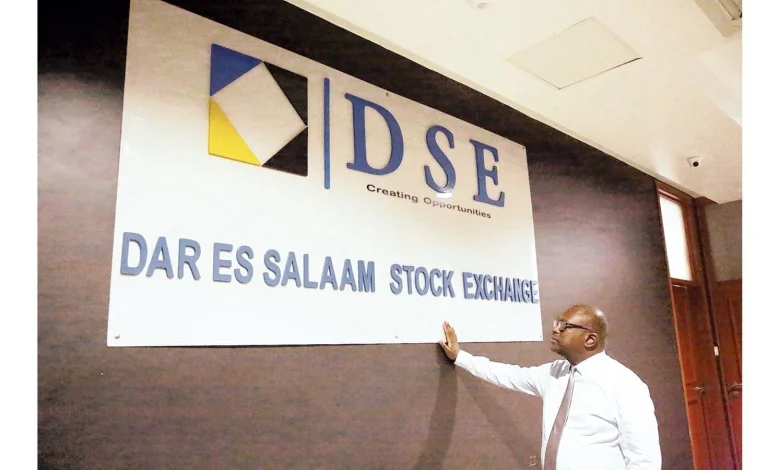
DAR ES SALAAM: THE Dar es Salaam Stock Exchange (DSE) experienced a week of increased trading activity but diverging value performance during the week ended March 27, 2026.
While liquidity saw a healthy uptick, broader market indices faced downward pressure, largely attributed to regional market sentiment and persistent foreign capital outflows.
Total turnover for the week rose by 14.40 per cent, reaching 31.18bn/- compared to the 27.26bn/- recorded in the previous week.
Market liquidity was significantly bolstered by institutional positioning, with the banking sector remaining the primary engine of turnover.
The volume of shares traded saw a substantial jump of 44.07 per cent, totalling 11.44 million shares.
CRDB dominated the exchange with absolute authority, accounting for 77.58 per cent of the total market turnover (24.19bn/-).
TBL followed with a 9.58 per cent contribution, while NMB and DCB represented 5.02 per cent and 2.33 per cent of the weekly activity, respectively.
Price movements presented a mixed bag, with domestic industrial strength being offset by sharp declines in cross-listed and volatile smaller counters.
The gainers were the Industrial & Allied (IA) sector as a notable performer, gaining 0.82 per cent.
This was driven by TPCC (Twiga Cement), which rose 4.73 per cent to close at 7,530/-, and PAL, which gained 2.86 per cent.
Other gainers included TCC (+1.87 per cent) and MUCOBA (+1.67 per cent).
The losers were on the downside, KA (Kenya Airways) was the week’s top laggard, shedding 13.64 per cent.
Significant retreats were also seen in TTP (-10.71 per cent), MCB (-8.89 per cent) and the DSE stock itself, which fell 6.03 per cent to close at 6,540/-.
ALSO READ: DSE, IFC partner to advance gender inclusive governance
Market capitalisation
From a valuation perspective, the exchange recorded a slight contraction. Total market capitalisation declined by 1.26 per cent to close at 33.86tri/-. The domestic market capitalisation showed more resilience, dipping only 0.24 per cent to 23.38tri/-.
Key benchmark indices
All Share Index (DSEI) closed at 3,897.24 points down by 1.26 per cent. Tanzania Share Index (TSI) closed at 8,640.78 points down by 0.24 per cent.
Sector indices
Industrial & Allied Index (IA) closed at 5006.67 points up by 0.82 per cent.
Bank, Finance & Investment Index closed at 19083.99 points, down by 0.53 per cent. Commercial Services Index closed at 2330.51 points, down by 1.18 per cent. On March 25, 2026, Central Bank was in the market offering treasury bills to investors.
The offerings included 29.9bn/- for the 35- day maturity Treasury bill, 39.9bn/- for the 91-day Tbill, 59.9bn/- for the 182-day T-bill and 85.2bn/- for the 364-day T-bill.
Investor demand in this auction was relatively strong across all maturities, with all Treasury bills recording oversubscription.
The 35- day bill attracted solid interest, posting a subscription rate of 260.87 per cent, the 91-day bill 162.9 per cent, the 182-day bill 116.86 per cent and the 364-day bill also achieved a subscription rate of 221.05 per cent.
With strong demand across all maturities, the Bank of Tanzania allotted slightly more than the amounts initially offered for the 35-day and 91-day bills.
Similarly, for the 182-day bill, the Bank accepted more than the amount offered, while for the 364-day bill it accepted exactly the amount initially offered.
The 364-day Treasury bill recorded a notable decline in its weighted average yield, falling from 6.3961 per cent in the mid-March auction to 5.1958 per cent in the current auction, a decrease of 119.73 basis points.
This drop in yield was supported by an increase in the minimum successful price, which rose to 94/0005 from 92/9979 in the previous auction. Across all maturities, a general decline in yields was observed.
The yields for the 35-day and 91- day bills remained around 4.0 per cent, while the 182- day bill yield stayed at approximately 5.0 per cent.
Secondary market activity
The secondary bond market has experienced a significant cooling-off period this week. Total turnover plummeted to 66.22bn/-, a sharp 77.5 per cent decline from the robust 294.73bn/- recorded the previous week.
This contraction suggests a shift in market appetite, moving away from the high-volume institutional liquidations seen previously toward more granular, retailsized activity.
Despite the overall drop in volume, activity remained heavily concentrated in the long-end of the yield curve.
The 20-year and 25-year papers dominated the session, accounting for a combined 44.53bn/- (approx. 67 per cent of total turnover).
The 20 years 15.49 per cent bond was the standout performer of the week, moving 22.42bn/- across 23 deals, indicating it remains the preferred instrument for investors seeking a balance of yield and duration.
Market outlook:
The Dar es Salaam Stock Exchange is transitioning into a phase characterised by high liquidity but cautious valuation.
While institutional positioning continues to drive healthy turnover particularly within the banking sector, the broader market indices may face persistent downward pressure from foreign capital outflows and shifting regional sentiment.
Investors should anticipate continued dominance from heavyweights like CRDB, which recently commanded over 77 per cent of market activity, though the Industrial & Allied sector’s recent resilience suggests pockets of domestic strength may offer a buffer against crosslisted volatility.
In the debt market, a significant cooling-off period in secondary trading signals a shift toward more granular, retail-sized activity.
The notable oversubscription and subsequent yield compression seen in the recent Treasury bill auction specifically the 119.73 basis point drop in the 364-day yield points to a narrowing window for high-yield captures in the short term.
Investors seeking a balance of duration and return are likely to remain anchored in the long-end of the curve, where the 20-year and 25-year papers continue to serve as the primary engines of value.