Key takeaways from CEOs’ Induction Programme
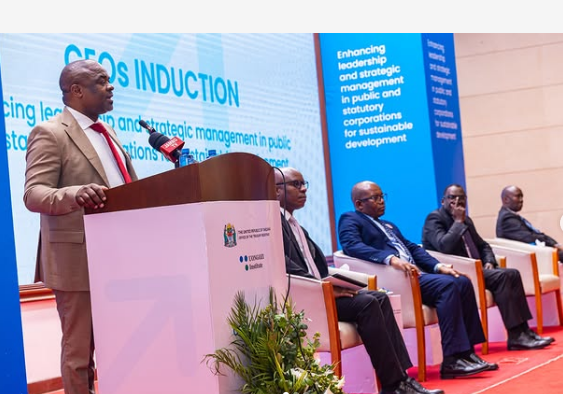
TANZANIA: IN the quiet town of Kibaha, the iconic Mwalimu Nyerere Leadership School stood as the setting for a four-day Induction Programme marked by reflection, learning and renewed purpose.
Held from July 28 to 31, 2025, the programme went beyond routine orientation, it served as a strategic reset, aligning Tanzania’s top public leaders with the nation’s longterm development blueprint: Dira 2050.
Among the key reflections was a renewed sense of national responsibility.
For Dr James Andilile, Director General of the Energy and Water Utilities Regulatory Authority (EWURA), the experience was a reminder that every CEO must ask themselves a fundamental question: “How am I contributing to the implementation of Dira 2050 for the betterment of our institutions, our citizens and our country?”
He came away convinced that leadership goes beyond internal performance, it must be anchored in national progress.
Equally, he saw the importance of unwavering compliance with legal and regulatory frameworks as essential to building and maintaining institutional credibility.
This sense of duty to national goals was echoed by Dr Bill Kiwia, Director of the Higher Education Students’ Loans Board (HESLB).
He was particularly struck by the directive issued by President Samia Suluhu Hassan to increase public institutions’ financial contributions to the national budget from 3 to 10 per cent within five years.
For him, the sessions reinforced the urgency of boosting institutional efficiency and reducing dependence on government subsidies.
But efficiency alone wasn’t the full message, Dr Kiwia also left with a call to be transformative.
He reflected on the need to balance adherence to laws and regulations with innovation and creativity, thinking beyond traditional models in order to respond to a changing environment and economy.
Most importantly, he emphasised the strategic value of human capital, underscoring that public leaders must identify and nurture talent within their organisations to foster resilience and confidence.
Leadership in the public sector, the programme emphasised, is also deeply human.
For Mr Primus Kimario, the Director General of the Tanzania Coffee Board, the sessions were a reminder that technical knowledge is not enough.
He left with two strong convictions: First, that strategic networking can help address many of the challenges institutions face and second, that workplace culture, especially staff attitudes, can make or break performance.
“Even with the best skills and knowledge, if employees have poor attitudes, performance will still equal zero,” he reflected.
This human-centred perspective was also front of mind for Mr James Kaji, Director General of the National Identification Authority (NIDA).
His key takeaway centred on the importance of retaining skilled personnel and keeping them meaningfully engaged.
He noted that institutions perform better when staff feel valued and see themselves as integral to both the mission and future of the organisation.
“Continuous stakeholder engagement is just as essential as internal communication,” he observed.
The call for stronger people management strategies also resonated with Ms Dafrosa Kimbori, the Director of Marketing at the Tanzania Broadcasting Corporation (TBC), who spoke on behalf of the Director General.
The sessions highlighted a surprising but widespread oversight: While many institutions have strategies for operations, finance or technology, HR departments often lack one entirely.
She emphasised the importance of developing a dedicated HR strategy to guide workforce planning.
Just as importantly, the issue of mental health stood out to her.
She came away with a deeper understanding that employee mistakes should not automatically trigger punishment, leaders must first seek to understand underlying causes, including stress and emotional wellbeing.
“Mental health problems are real,” she said, urging fellow leaders to respond with empathy.
That theme of inclusion and staff development was also central to the reflections of Dr David Mnzava, Registrar of the Medical Council of Tanganyika.
He left the programme with a renewed appreciation for the power of inclusive decisionmaking.
“By involving junior staff in institutional decisions, leaders can foster a sense of ownership that leads to higher productivity,” he noted.
He also stressed the importance of continuous training to keep staff aligned with the organisation’s evolving strategy.
Looking ahead, many participants left Kibaha thinking deeply about sustainability and leadership succession.
For Ms Neli Msuya, the Executive Director for Water Development and Environmental Sanitation in Mwanza, two priorities stood out: Developing a comprehensive HR strategy and ensuring that future leaders are identified and prepared early.
For her, succession planning isn’t a luxury, it’s a necessity for long-term institutional stability.
That message was strongly reinforced during remarks by Chief Secretary Ambassador Dr Moses Kusiluka.
His words left a lasting impression on many in the room: “How would you feel if your institution fails after you retire?” he asked.
“If it collapses, then so did you.”
His challenge turned succession planning into a matter of legacy, one that requires deliberate, forward-looking action from today’s leaders.
The same urgency was echoed by the Treasury Registrar, Mr Nehemiah Mchechu, who announced that his office will soon issue a directive requiring all public CEOs to put formal succession plans in place.
For him, the equation is simple but powerful: “Leadership plus human capital equals development.”
He reminded participants that the responsibility for preparing future leaders doesn’t lie with the Ministry responsible for Public Service Management and Good Governance alone, it’s a shared mandate across the entire leadership landscape.
Mr Mchechu also emphasised the importance of optimising public investment, noting that while Tanzania has no shortage of resources, real impact depends on how effectively they are managed.
ALSO READ: Govt calls for supportive work environment in public institutions
By the close of the four-day programme, the CEOs returned to their institutions not just with knowledge, but with a sharper sense of direction.
From legal compliance and economic contribution to people-centred policies and long-term planning, the Induction Programme offered more than insights, it offered a challenge.
A challenge to lead with purpose, to build institutions that last and to see public leadership as a vehicle for national transformation.
The journey to Vision 2050 continues, and these leaders are walking it with renewed focus and commitment.