Former CJ warns against intolerance in public discourse
DAR ES SALAAM: IN today’s hyperconnected world, opinions travel faster than ever, along with the backlash they often attract. Across social media platforms, conversations that should foster understanding are increasingly turning into battlegrounds, where disagreement is met not with dialogue, but hostility.
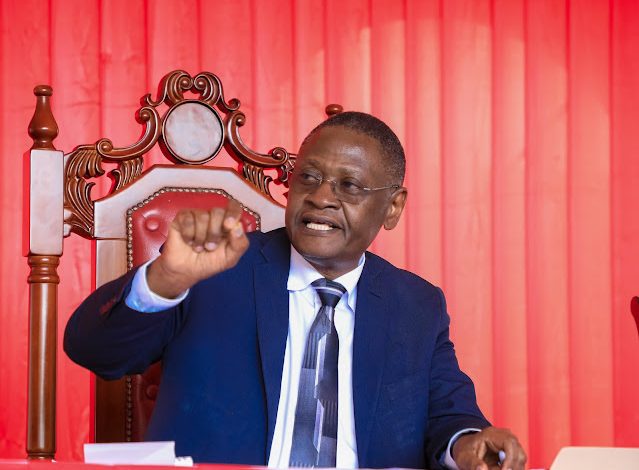
It is within this shifting landscape that former Chief Justice, Professor Ibrahim Juma, a member of the Commission of Inquiry into the October 29 incidents, delivered a message that speaks directly to Tanzania’s democratic future: A society that loses tolerance for differing views risks weakening its own foundations.
Speaking during a recent Commission media briefing with editors and journalists, Prof Juma raised concern over the growing intolerance of opposing opinions, particularly online, where dissenting voices are often met with harassment.
“A democratic society must allow a free exchange of ideas. Suppressing other people’s opinions is dangerous,” he said.
He revealed that members of the Commission have received hundreds of abusive calls since releasing their report, simply for presenting findings based on evidence, describing the reaction as a troubling warning sign. According to Prof Juma, when people begin to fear speaking openly, ideas are no longer judged on merit but on popularity.
“When fear replaces dialogue, societies gradually lose their ability to think critically,” he noted, adding that meaningful progress becomes difficult in such an environment.
He emphasised that the Commission’s work was grounded in a rigorous process, including extensive hearings, direct engagement with witnesses, careful review of documents and structured analysis. As a result, its conclusions may at times differ from public opinion, not out of bias, but due to access to broader and deeper evidence.
Rather than discouraging disagreement, Prof Juma called for what he described as a “marketplace of ideas,” where views are tested and refined through open discussion instead of being silenced through intimidation. He urged citizens to listen before responding, and to engage with differing views constructively rather than emotionally.
Beyond public discourse, Prof Juma underscored the importance of fairness and due process in the Commission’s work, noting that even where evidence points to certain individuals, conclusions must follow proper legal procedures to allow all parties a chance to respond. In an era of swift and often unforgiving online judgment, he said, such caution is essential.
ALSO READ: Mobile clinic to boost early cancer in Zanzibar
Turning to the report’s findings, Prof Juma said the Commission had identified individuals involved in planning, coordinating and financing the violence linked to the October 29 incident. However, he stressed that further legal steps are required before any action is taken.
He added that the report, now submitted to the President Samia Suluhu Hassan, could contribute to national reconciliation and ongoing constitutional reform discussions expected to run through 2028.
Prof Juma also highlighted the President’s legal authority over the report, including the power to take action, order compensation, or withhold sensitive sections to protect personal information and witness confidentiality. He further noted proposals to preserve evidence from the October 29 events at the National Museum, to help future generations learn from the country’s history.
As Tanzania reflects on the Commission’s findings, Prof Juma posed critical questions: Can society create space where ideas compete without hostility? Can it protect the right to speak even when views are uncomfortable? He concluded that the strength of a democracy lies not in how loudly people speak, but in how well they listen.
Retired Inspector General of Police (IGP) Said Mwema elaborated on how the Commission reached its findings, citing extensive and diverse sources of evidence. He said more than 63,000 people were engaged through interviews, written submissions and sworn affidavits, providing a broad-based understanding of the events.
Among those were individuals who expressed regret over their involvement, while others admitted to participating in planning or facilitating the violence.
According to Mwema, testimonies came from a wide cross-section of society, including businesspeople, bodaboda operators and food vendors, many of whom reported being recruited or incentivised with promises of financial rewards or future benefits.
When analysed collectively, he said, these accounts pointed to coordination and intent rather than isolated incidents. Mwema also cited supporting materials such as photographs and digital evidence, indicating that the events were not spontaneous but involved planning across multiple locations.
“The spread of incidents suggests a structured and deliberate process,” he noted.
Both commissioners warned against suppressing open discussion of such findings, emphasising that silencing debate undermines critical thinking and collective problem-solving. Instead, they called for evidence-based dialogue, grounded in reason rather than emotion.
The Commission has affirmed the authenticity and integrity of its report, stressing that its findings are grounded in scientific methodologies, extensive public participation and verifiable evidence collected over 153 days of intensive work.
Commission Chairperson, retired Chief Justice Mohamed Chande Othman said the commission operated under clear terms of reference, including identifying the causes of the violence, those responsible, its social and economic impact and proposing measures to prevent future unrest.
He said that the credibility of the report is anchored in the depth and diversity of evidence gathered. According to him, the commission relied heavily on sworn testimonies, both oral and written, which are admissible in court. Witnesses testified under oath, while others submitted sworn written statements, ensuring that the findings are based on legally sound processes. In addition to testimonies, the commission utilised digital tools to collect data.
A total of 4,891 online questionnaires were received and analysed, all designed in line with the commission’s terms of reference. Justice Chande said this approach enabled the commission to capture a broader range of perspectives from across the country. Public hearings and targeted engagements formed another key pillar of the inquiry.
The commission conducted sessions in 11 regions, engaging 21 special groups and reaching 3,565 participants. Furthermore, commissioners met face-to-face with 6,205 individuals, an effort Justice Chande described as unprecedented within such a limited timeframe.
“Ask yourselves, which commission in the world has met that number of people directly within 153 days? There is none,” he said, noting that the team interviewed an average of up to 40 witnesses per day.
He added that although the unrest involved breaches of peace, typically handled by law enforcement, the commission deliberately prioritised testimonies from victims rather than relying heavily on police accounts. This approach, he said, ensured that the voices of those most affected were central to the findings.
On accountability, Justice Chande said the commission supports holding those responsible to account but cautioned that such processes must be fair and strictly adhere to the law. He warned against scapegoating and unjust prosecutions.