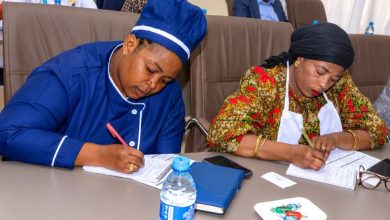
Karen, Beatrice rewriting the future of Malaria control

DAR ES SALAAM: IN the ongoing fight against malaria, lasting solutions are not built through a single breakthrough. They are built step by step, from early morning mosquito collections in rural districts to high-precision genomic and immunological research.
Within the Transmission Zero research programme, dedicated Tanzanian scientists are helping to do exactly that, representing critical pillars of nextgeneration malaria research: field science and laboratory innovation.
To understand the work of these pioneering scientists, it is helpful to look at the two scientific languages they use to decode the disease.
Genomics is the study of a mosquito’s entire genetic blueprint, allowing researchers to track how mosquito populations move, adapt, and develop resistance to insecticides.
Immunology, on the other hand, focuses on the internal biological defences of the mosquito; scientists study how the insect’s own immune system interacts with the malaria parasite. By combining these fields,
researchers can develop nextgeneration tools, such as genetically modified mosquitoes that are biologically incapable of passing the parasite to humans, essentially stopping the disease at its source. Karen Zablon, an entomologist and research scientist at the National Institute for Medical Research in Mwanza, leads field entomology and ecological data collection in regions including Ukerewe District.
Her work focuses on mosquito population structure, dispersal, and survival. By combining mark-release-recapture studies with high-resolution genomic analysis as part of her doctoral research, she generates evidence that informs biosafety evaluation and responsible trial site selection.
“Understanding how mosquito populations move and connect across regions is essential,” Karen explains. “Without that evidence, malaria control strategies risk being inefficient or unsustainable.” For Karen, seeing prevention efforts translate into realworld impact provides deep motivation.
ALSO READ: Why the MIF shapes Tanzania’s public entities
“When you hear families speak about improved health outcomes, it reminds you why the long hours in the field matter.” Field-based science, however, comes with unique challenges. “Leadership is often still associated with men,” she said.
“There are times when community members direct questions to male colleagues, even when you are leading the work. Navigating that requires confidence, cultural awareness, and strong people skills.” Fieldwork is physically demanding, she adds, but resilience and preparation are part of leading by example.
“I would encourage more young women to pursue science outside the laboratory. It is demanding but deeply fulfilling.” While Karen traverses the field, Beatrice Magani, a Molecular Biologist at the Ifakara Health Institute in Bagamoyo, operates at the molecular level.
With expertise in immunology and molecular biology, she investigates how mosquito immunity and microbiome composition influence their ability to transmit malaria parasites. Her research contributes to the development of mosquitoes designed to reduce transmission, with a strong emphasis on safety and rigorous risk assessment.
“Safety is key,” Beatrice says. “Any future application must be grounded in solid scientific evidence.” For her, the work is also personal. Growing up in a malaria-endemic region, she witnessed its impact firsthand.
“Malaria is not just statistics in a journal article. It affects families and communities we know. That reality shapes how seriously we take this responsibility.” She hopes more young women see advanced science as accessible.
“Science is a tool to solve the challenges around us. We need more young women in molecular biology and immunology so that African research continues to grow stronger.” The combined efforts of these researchers recently contributed to a study published in the journal Nature, demonstrating that globally recognised science is being conducted and led from Tanzania in real malaria transmission settings.
Transmission Zero brings together Tanzanian institutions and international partners to explore innovative and sustainable malaria control approaches, integrating field data, genomic evidence, laboratory research, and community engagement. As Tanzania advances its malaria elimination efforts, the work of these scientists reflects a broader shift.
The expertise shaping next-generation malaria control is increasingly rooted in African institutions and driven by Tanzanian scientists, from the field to the laboratory.