

Is artificial intelligence really important to African agriculture?
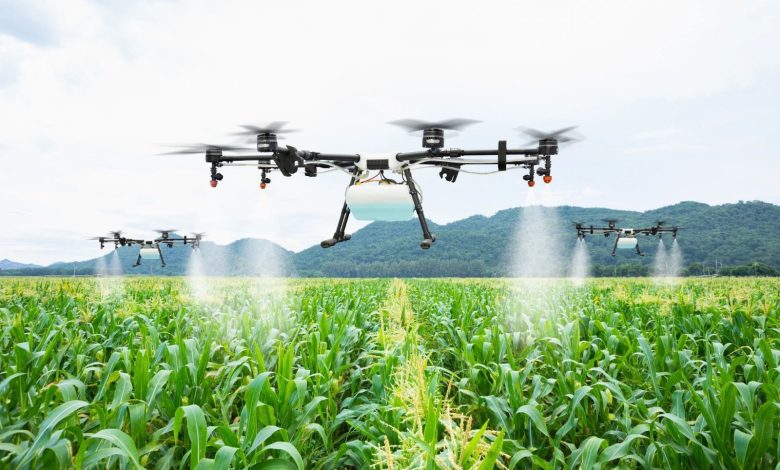
TANZANIA: THE world is currently awash with the advent of Artificial Intelligence (AI). AI is the ability of a machine or computer to perform tasks that normally or previously required human intelligence, such as learning from information, recognising patterns, reasoning, making predictions, generating content or making decisions.
To avoid confusion, it is imperative to note that AI is not really thinking like human beings. It is people who write “codes” or commands, teach the computer to accept them and the computer or machine learns to follow them before producing the intended output.
For instance, a person can write a command instructing a computer that when it detects a maize leaf, which is usually green, that has turned yellow, it should identify possible causes such as nitrogen deficiency or Maize Lethal Necrosis Disease (MLND). The system does not invent the result; rather, it compares the input with information and patterns it has been trained or programmed to recognise.
Like a bush fire, the debate around this subject is getting deeper and wider. Some even go as far as calling for regulation because they are concerned about AI’s potential overreach.
There are reasonable fears that, with its increased efficiency, AI could replace a significant portion of the workforce, contributing to the already burgeoning unemployment problem around the world. Farm managers may employ fewer farm workers and even fewer extension officers.
Unfortunately, I hear very few people mentioning the capacity of AI to generate jobs. Well, that will be a discussion for another day. The lingering question today is: Is artificial intelligence really important to African agriculture?
It goes without saying that AI or SI (Super Intelligence) as President Donald Trump referred to it in his speech at the United Nations General Assembly (UNGA) in New York last week, is increasingly becoming an important part of the world’s future.
Tanzania, as is the case with many African nations, faces a shortage of scientists, particularly in agriculture. Even when they are available, governments sometimes fail either to employ them or, when they do, to adequately compensate them.
This makes the gap between farmers and productivity wider as the days go by. In this regard, AI can help significantly with crop disease detection.
A farmer with a smartphone can simply photograph a leaf of, say, a pigeon pea plant and submit the image to an AI application, which can analyse it, identify a possible disease and provide scientific guidance.
Pests are a major menace to Africa’s agriculture. The Food and Agriculture Organisation (FAO) estimates that about 30 to 40 per cent of crop production in Africa can be lost to pests and diseases, significantly reducing agricultural production and threatening food security.
With an AI application capable of predicting outbreaks before they become severe, a farmer can be better positioned to address the problem before it gets out of hand.
AI can equally bridge the gap between meteorological agencies and agricultural advice. The work of weather forecasting has been adequately undertaken by meteorological agencies; nonetheless, farmers have often been left without the ability to translate forecasts into practical farming decisions.
AI can combine local weather, soil and historical crop data to recommend when to plant, irrigate or harvest. All this can happen instantly and at relatively little cost.
AI can also go a long way towards providing soil and fertiliser recommendations by estimating nutrient requirements rather than applying fertiliser uniformly.
It can support market intelligence by helping farmers decide where and when to sell their produce and identify unusual price movements. It can also strengthen agricultural extension services through AI advisers delivered via WhatsApp, SMS, voice calls or local-language interfaces.
After understanding the importance of AI in agriculture, the big question remains whether Africa can build its own AI systems or simply import solutions from outside.
There are some quarters that doubt this capability, arguing that if Africa missed out on the Industrial Revolution, it is impossible for the continent to feature in the AI race. Well, they could not be more wrong.
Building an African AI does not mean manufacturing every Graphics Processing Unit (GPU) or inventing a foundational model from scratch. Many of the people and countries that are famous today for developing computers, phones or cars did not start from scratch. They built on technologies that had already been invented by other people or countries.
The good thing is that we already have groundbreaking AI initiatives in this important sector. One of them is Kilimo AI, developed by Dr Neema Mduma, a computer scientist from the Nelson Mandela African Institute of Science and Technology (NMAIST) in Arusha, Tanzania.
Kilimo AI has the ability to identify diseases affecting a number of crops and provide recommendations.
All a farmer needs to do is take a picture of a plant, send it to the application and the AI can analyse the image and provide recommendations. This demonstrates that Africa does not necessarily have to wait for solutions to be developed elsewhere. It can build on existing technologies, adapt them to local agricultural conditions and develop AI systems that respond directly to the needs of African farmers.


Thank you for consistently providing insightful and valuable content. Your articles are informative, well-researched, and always up to date. I’ve learned so much from reading your posts and appreciate the effort you put into creating such high-quality material. Keep up the great work, and thank you for being such a reliable source of information.
Your website is a fantastic resource for anyone looking to expand their knowledge. The articles you post are not only informative but also well-written and engaging. I appreciate the time and effort you put into creating such valuable content, and I’m grateful to have discovered this amazing website. Thank you so much!