

Health shielding: Can Tanzania prevent a second disaster after the rains?
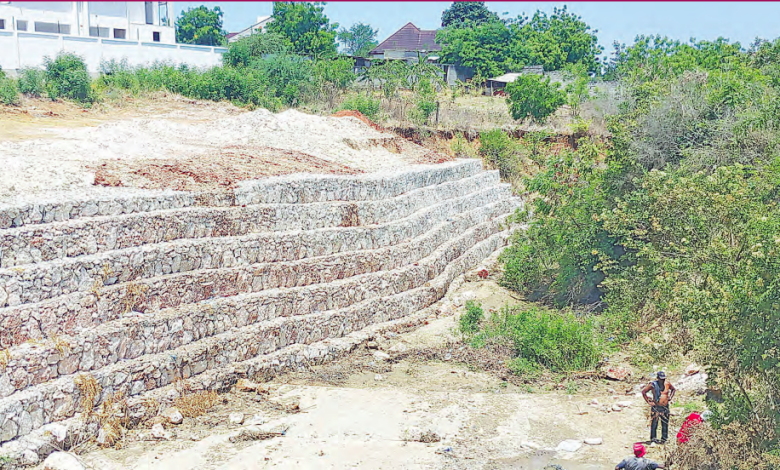
DAR ES SALAAM: AS Tanzania braces for potentially heavy Vuli rains between this year, the greatest threat may not end when floodwaters recede.
If immediate measures are not taken, contaminated drinking water, damaged sanitation systems and disrupted health services could trigger a second disaster.
With authorities calling for early action, the critical question is whether communities, water utilities and health facilities are adequately prepared to protect lives before the rains arrive.
The Tanzania Meteorological Authority (TMA) has forecast normal to above-normal Vuli rainfall for October to December 2026 in several areas, with the season expected to be strongly influenced by El Niño.
TMA says rainfall in the Lake Victoria basin is expected to begin from October and spread to other areas and could be particularly heavy in November.
The authority has also warned that rainfall outside the normal Vuli period could continue into January 2027. That forecast does not mean Tanzania is destined for disease outbreaks.
It does, however, provide something more valuable than certainty: time to prepare. The central question now is whether that time is being used effectively enough.
TMA has warned that excessive soil moisture and flooding could affect infrastructure and that rising water levels in rivers and reservoirs could put water infrastructure under pressure.
More importantly for public health, the authority has warned that contamination of water sources could contribute to outbreaks of disease.
It has advised stakeholders to use weather information in planning, strengthen infrastructure, harvest rainwater, improve early warning and control mosquito-breeding areas.
For Tanzania’s health system, therefore, preparedness should not start when patients begin arriving at health facilities. It should start while the skies are still relatively calm.
The objective is to prevent what could become a second disaster after heavy rains: a public health emergency caused not simply by flooding, but by the loss of safe water, sanitation and access to essential health services.
The experience of previous floods is already a warning. When floodwater enters settlements, it can carry human waste, animal waste, rubbish and other contaminants into shallow wells, rivers, springs and other water sources.
Where sewage systems are damaged or overwhelmed, the danger becomes greater.
When roads and bridges are cut off, the same flood that contaminates water can prevent health workers, medicines, water-treatment chemicals and repair teams from reaching affected communities.
This is why the preparedness message coming from the government increasingly cuts across ministries.
Speaking recently at the 2026 World Habitat Day celebrations in Dodoma, Minister for Lands, Housing and Human Settlements Development Dr Leonard Akwilapo urged urban authorities, institutions and the public to take precautionary measures against the possible impacts of El Niño rains.
“The experience of floods previously recorded in the country is a reminder of the importance of taking early action to protect lives, homes and infrastructure,” he said.
That message is particularly relevant to health.
ALSO READ: Vuli rains loom as TMA warns of dry spells
A flooded road can become a health-service problem; a blocked drainage channel can become a sanitation problem; a damaged sewage line can become a water-quality problem; and a contaminated water source can quickly become a community health problem.
Minister for Health Mohamed Mchengerwa, together with regional and disastermanagement authorities, has also called for early public awareness, infrastructure readiness and cross-sector preparedness.
There is evidence that health authorities are beginning to test that preparedness rather than waiting for an emergency.
In September, a team from the Ministry of Health, the Prime Minister’s OfficeRegional Administration and Local Government (PMORALG) and partners conducted an assessment in Kilolo District to examine the district’s readiness to coordinate health activities in the face of public-health threats and El Niño rainfall.
Officials said the exercise was intended to identify weaknesses in coordination, readiness and information flow before a crisis occurred.
In Mafinga, Iringa, the municipal council adopted nine resolutions aimed at strengthening preparedness for El Niño impacts and disease outbreaks.
The measures are intended to ensure that health workers and facilities can recognise threats, report them and act promptly when emergencies occur.
These steps matter because an outbreak is easier to prevent than to contain. Yet, preparedness must go beyond the health ministry.
The Ministry of Water and the country’s water authorities carry perhaps the most immediate responsibility for protecting one of the strongest barriers against waterborne disease: reliable access to safe water.
Minister for Water Jumaa Aweso has repeatedly directed water-sector executives and authorities across Tanzania to prepare for anticipated El Niño rains, with the aim of preventing infrastructure damage and interruptions in the supply of clean and safe water.
“Environmental and water bodies are tasked with reinforcing embankments and clearing drainage systems in high-risk zones,” Mr Aweso directed.
The instruction raises a practical question: are vulnerable water systems being identified and protected before the rainfall becomes intense?
Treatment plants, pumping stations, reservoirs, boreholes, pipelines and distribution networks should be inspected before heavy rainfall places them under additional pressure.
Watertreatment chemicals should be available in adequate quantities. Backup power should be tested where pumping or treatment depends on electricity.
Emergency repair teams should know which locations are most vulnerable, while alternative water sources should be identified for communities that could lose their normal supply.
The Lake Victoria basin provides a particularly important case because millions of people depend on its water resources.
The Tanzania Lake Victoria Basin Water Board is responsible for managing and protecting water resources in the Tanzanian part of the basin.
Its official information shows the scale of the area under its mandate, covering eight regions wholly or partly and a population estimated at about 16 million according to the 2022 Population and Housing Census.
The board has also been warning about environmental pressures that can affect water quality.
In September, Director Dr Renatus Shinhu stressed that pollution of water sources, erosion and environmental degradation threaten water quality and storage capacity in the Kagera basin.
In Mwanza, the board recently coordinated a cleaning exercise along the shores of Lake Victoria while encouraging residents to take precautions ahead of the rains and advising people living in dangerous areas to relocate.
Speaking from his Mwanza office, Dr Shinhu urged residents to protect water sources and avoid disposing of solid waste in them.
“Let us continue making our environment clean and avoid throwing solid wastes in our sources so that we don’t encounter negative impacts after rains especially in clean water,” he said.
It is a simple message, but its public-health implications are substantial. For residents such as Edna Joseph of Mwanza, the forecast has already changed behaviour.
“We have been maintaining cleanness in our environment especially after we received weather information on the possible El Nino rains from TMA,” she says.
Her response shows the value of early warnings when people understand what action to take.
But warnings must be followed by services. Communities cannot keep waterways clean if waste collection is inadequate, and households cannot protect drinking water if their only source is already exposed to flooding.
In Bahi District, Dodoma Region, Nyagoli Lyanga also sees safe water as a first line of health protection.
“Without clean and safe water, we will expose ourselves to hazardous health risks, therefore we need to take necessary precautions before the rains come,” he says.
Families should identify their safest available drinkingwater source before the rains intensify. Wells should be protected from surface runoff and floodwater where possible.
Drinking water should be stored in clean, covered containers, and households should avoid dipping dirty cups, hands or other objects into stored water. Where public-health authorities advise boiling water, households should follow that guidance.
Approved household water-treatment products can also be used according to instructions and public-health advice.
Water-storage containers should be cleaned regularly, and rainwater collected for drinking should be appropriately handled and treated.
These measures are especially important after flooding, when water that normally appears clear may still be contaminated.
Chlorination is another important protective measure, but it is not a substitute for protecting water sources.
Water utilities need to maintain appropriate disinfection processes and monitor water quality throughout the supply chain.
Treatment plants must be able to continue operating, while damaged pipelines and other faults should be repaired rapidly.
If contamination is suspected, residents need clear instructions from authorities about whether to boil, treat or avoid the water.
Communication must be fast enough to prevent rumours and unsafe alternatives from filling the information gap.
When floods cut roads or damage infrastructure, water tankers, storage tanks and other emergency systems may become the difference between maintaining safe supplies and forcing families to seek water from unsafe sources.
Authorities should therefore identify flood-prone communities, schools, evacuation centres and health facilities that would need priority support.
Emergency stocks of treatment chemicals, containers, fuel, pumps and repair materials should be positioned before access becomes difficult.
“A hospital cannot provide safe care without water. Doctors and nurses need it for handwashing, cleaning, sanitation, food preparation, patient care and infection prevention.
A health centre that loses water during a flood can become vulnerable precisely when more patients need treatment,’’ says Dr Alfred Cheto who owns a health facility in Dodoma region.
He adds that facilities in flood-prone areas should therefore check their water tanks, sanitation systems, drainage, backup power and alternative water arrangements before the rains intensify.
“Health authorities should also identify facilities that could become inaccessible if roads or bridges are flooded and establish alternative arrangements for delivering medicines, personnel and emergency supplies,’’ he adds.
Experts further say that infrastructure agencies are also part of health preparedness.
Tanzania Roads Agency (TANROADS) Mwanza Regional Manager Engineer Mabibe Vedastus says the anticipated rainfall requires collective responsibility.
“The expected rains are likely to affect all of us, therefore, we need to protect all drainage channels through which water flows,” he says.
Keeping drainage channels clear is not simply an engineering concern. It is a health intervention, he says.
In the country’s capital, the Dodoma Urban Water Supply and Sanitation Authority (DUWASA) has placed part of that responsibility in the hands of residents by asking them to report problems quickly.
“Report immediately if you notice a leaking cleanwater pipe or a blocked sewage manhole in your area,” DUWASA Managing Director Engineer Aron Joseph says. That appeal could prove crucial during heavy rainfall.
A leaking water pipe should not be treated as an ordinary neighbourhood inconvenience when contamination is possible.
Likewise, a blocked sewage manhole can become an urgent public-health concern when rainfall is expected to be heavy.
The public reporting system will work best if residents know where to report problems and authorities respond quickly. Early information can allow engineers to fix a small fault before it becomes a major service disruption.
The country needs health, water, land, infrastructure, environment and disaster-management authorities to work from the same risk picture.
District authorities should know which communities are most exposed, which water sources are vulnerable, which health facilities could be isolated and where emergency supplies are available.
And citizens should know exactly what to do when they see a blocked drain, damaged pipe, overflowing sewage system or contaminated water source. A key point to note is that El Niño itself cannot be prevented.
Heavy rain cannot be switched off. But the chain of events that turns rainfall into disease and health-service disruption can be interrupted.
It can be interrupted by protecting water sources, clearing drainage systems, securing sanitation facilities, maintaining chlorination, preparing emergency water supplies, safeguarding health facilities and listening to communities.
This piece has a good balance between simplicity and detail. The information is easy to absorb, but there are still enough interesting points to keep the reader engaged. My website includes a related article that may be worth reading next.
I thought the article was useful because it explains the topic in a way that feels relevant to ordinary readers. The discussion remains clear and focused throughout. I have a connected subject on my website that offers some additional information.