

Fish farming opens new economic opportunities as govt expands support for Lake Victoria fishing communities
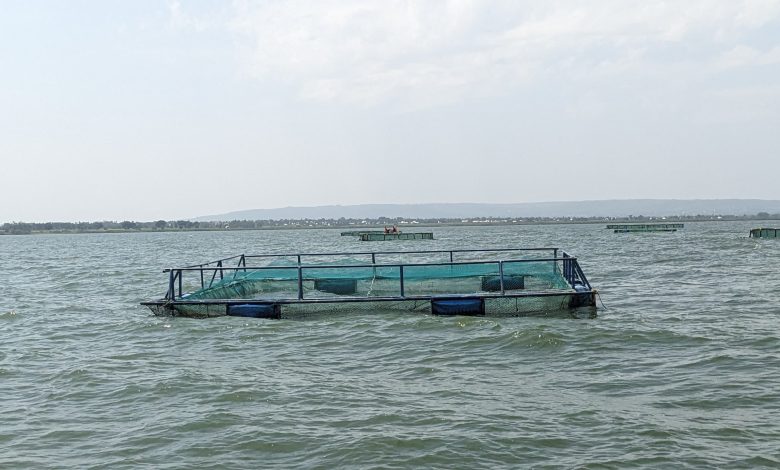
MWANZA: A question raised during the recently concluded parliamentary sessions about what the government is doing to empower fishing communities has brought renewed attention to the growing economic opportunities in Tanzania’s fishing industry, particularly cage fish farming around Lake Victoria.
The question was posed by Nyamagana Constituency Member of Parliament John Nzilanyingi, prompting the Daily News to seek views from various stakeholders, including the Fisheries Education and Training Agency (FETA), Nyegezi Campus, whose officials pointed to significant developments in the sector.
According to the campus, the growing popularity of cage fish farming is largely associated with its potential to provide reliable harvests, improve household incomes and respond to increasing demand for fish.
Changing dietary preferences, including recommendations by health experts for older people to consume more white meat than red meat, have also contributed to the expanding market.
Population growth is another factor behind the rising demand.
FETA Nyegezi Campus Director Jimmy Masumbuko said Tanzania’s population had increased from approximately nine million people in the 1960s to more than 60 million, creating greater demand for food, including fish.
One indication of the industry’s expansion is the increasing demand for fingerlings from cage fish operators in Lake Victoria.
To respond to this demand, FETA has increased its monthly production capacity from 70,000 to two million fingerlings. However, the demand continues to exceed available supplies.
Masumbuko said the institution was working towards increasing production to at least 10 million fingerlings monthly in the coming days. He attributed the pressure partly to declining stocks of indigenous fish in Lake Victoria, which he said were affected by several factors, including illegal fishing practices.
The expansion of cage fish farming has also been supported by government interventions targeting youth economic empowerment. Masumbuko cited the recently disbursed 200bn/- allocated for youth empowerment programmes nationwide, including 9bn/- made available to young people in the Lake Zone through the Build a Better Tomorrow (BBT) programme.
In Mwanza, 80 beneficiaries entered farming activities in March this year and are expecting their first harvest in November. Collectively, they operate 80 fish cages, each stocked with at least 11,280 fingerlings. Their projected production is 240 tonnes, equivalent to approximately 3,000 kilogrammes per cage.
According to Masumbuko, the market outlook remains encouraging because demand for fish in the region has not yet been fully satisfied. This provides farmers with an opportunity to sell their produce without facing significant market-related concerns.
Beyond commercial production, cage fish farming may also contribute to the natural replenishment of fish stocks. Masumbuko explained that the areas beneath the cages could provide relatively safe breeding grounds because fishing activities are prohibited within those locations.
He added that naturally occurring fish beneath the cages could also benefit from feeds supplied to farmed fish. Some of the feed passes through the cage nets, providing additional food for fish in the surrounding water. Such conditions, he explained, could support their growth and breeding.
Government financing through local authorities has provided another source of support. Under the 10 per cent council loan arrangement, approximately 2.5bn/- was disbursed to about 25 groups comprising 126 members in Mwanza City Council, covering the period from 2024 to this year.
Mwanza Regional Senior Fishing Officer Titus Kilo said other beneficiaries included the Youth Fishing Group in Ukerewe District, which received 27m/- in 2025/26, and Ukerewe Business Venture Group, which received 25m/- in 2026/27.
In Buchosa District Council, two cooperative societies received a combined 40m/- during the 2025/26 financial year.
Kilo described these as examples of government-supported groups in the region, noting that while many beneficiaries were making progress, some had experienced difficulties, particularly because of negligence in managing their projects.
He also recalled a separate 7.9bn/- support package provided by President Samia Suluhu Hassan in January 2024, alongside 333 fish cages and 26 fibre boats intended to strengthen fishing activities.
Despite these interventions, stakeholders acknowledge that the sector continues to face challenges that could undermine its potential, particularly for small-scale operators.
Kilo identified shortages of fingerlings and the availability of substandard supplies among the constraints affecting production. Farmers require healthy fingerlings to achieve satisfactory harvests, but limited supplies have made procurement increasingly expensive.
The concerns were echoed by Pius Mtema, secretary of Kisoko Fish Farm in Luchele Ward, Nyamagana District. He said cage fish farming could contribute significantly to employment creation and economic growth if the challenges facing farmers were addressed.
One of the major difficulties is the high cost and inadequate supply of fish feeds. Most farmers depend on imported products, which are expensive and sometimes unavailable, making it difficult for small-scale operators to maintain consistent production.
Kilo said that when commercial feeds became unavailable, some farmers resorted to collecting whatever edible materials they could find to feed their fish temporarily.
Such practices can affect fish growth, resulting in stunted fish and lower-quality harvests. Small-scale farmers are particularly vulnerable because they often lack the financial capacity to compete with larger investors.
He explained that the quality of harvested fish largely depends on the health of the fingerlings, while their growth and survival are closely linked to the quality of feeds provided.
A fingerling should ideally weigh at least 0.8 grammes and cost about 150/-. However, shortages have pushed the purchasing price to approximately 250/-, increasing the initial investment required by farmers.
The cost of constructing cages presents another obstacle. Materials such as nets and High-Density Polyethylene (HDPE) pipes are also imported, adding to the financial burden on small-scale operators.
Responding to Nzilanyingi’s parliamentary question, Deputy Minister for Livestock and Fisheries Ng’wasi Kamani said the government was extending loans to individuals and groups involved in fishing and fish trading, including beneficiaries in Mwanza City Council.
She explained that these groups played important roles across the fishing value chain, particularly in collecting, transporting and selling fish. Supporting such activities helps create employment, increase incomes and improve the availability of fish to consumers.
Kamani said the Ministry, working with the President’s Office responsible for Youth Development, the Prime Minister’s Office through Regional Administration and Local Government Authorities, and the Tanzania Agricultural Development Bank, was implementing youth economic empowerment programmes through affordable loans to individuals, groups and companies.
During the first phase, 917 fishing-related projects worth 5.89bn/- received support in different parts of the country. Of these, eight projects in Mwanza City Council benefited from 74m/-.
She added that the processing of 6,875 applications under the second phase was ongoing, including 79 applications submitted from Mwanza City Council.
The growing participation of young people, increasing fingerling production and government financing demonstrate the expanding role of cage fish farming in the country’s fishing economy.
However, sustaining that growth will depend on addressing the cost and availability of essential inputs, improving access to quality fingerlings and strengthening the management of supported projects.
For fishing communities around Lake Victoria, the sector’s long-term contribution to employment and household incomes will therefore depend not only on expanding access to capital but also on making fish farming affordable and sustainable for small-scale producers.


best online pokies united states casino, uk casino uk and online what’s a vig in gambling market share
uk, or online casino new usa