Inquiry Report: How State institutions responded to national emergency

DAR ES SALAAM: THE violence that erupted during and after Tanzania’s October 2025 General Election placed the country under one of the most severe national emergencies in its recent history.
Beyond the political and security challenges, the unrest created a major humanitarian crisis that required an immediate and coordinated response from state institutions across multiple sectors.
According to the report of the Presidential Commission of Inquiry into the violence and breakdown of public order, public institutions, particularly the health sector, security agencies and technical experts, played a critical role in responding to the crisis and protecting lives during one of the country’s most difficult periods.
One of the report’s central findings was that the ability of government institutions to function during the emergency was largely made possible by years of investment in key public sectors.
As the violence spread across different parts of the country, hospitals, health centres, doctors, nurses and emergency personnel found themselves operating under enormous pressure while treating large numbers of injured people requiring urgent medical attention.
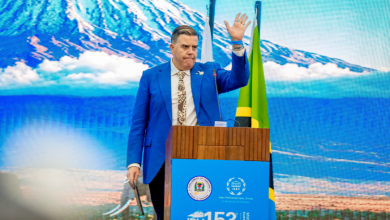
While presenting the commission’s findings, former Chief Justice Mohamed Chande Othman acknowledged the significant contribution made by the health sector during the crisis.
“The substantial investment the government has made in improving the health sector proved to be of great assistance during the emergency that occurred,” he said.
His remarks highlighted how long-term public investment in healthcare infrastructure, personnel and emergency preparedness became critically important once the country entered a period of crisis.
In many countries, the ability of healthcare systems to manage emergencies depends heavily on preparations and institutional capacity established long before disasters occur.
According to the report, staff working in public hospitals, health centres, faith-based medical institutions and private healthcare facilities operated under extremely difficult conditions in order to treat the injured.
Some healthcare workers reportedly remained on duty for more than 72 consecutive hours while responding to emergency cases arriving from different regions of the country.
Speaking about the commitment shown by medical personnel, Justice Chande said: “Workers in health centres and hospitals performed extraordinary work under extremely difficult conditions, with some remaining on duty for more than 72 consecutive hours caring for the injured.”
The statement reflected the level of dedication displayed by healthcare workers during a period marked by fear, uncertainty and public anxiety.
While much of the country struggled with tension and instability, doctors, nurses and emergency workers continued operating under intense pressure in order to save lives.
The report also highlighted the cooperation between public and private medical institutions during the emergency response.
The commission worked closely with hospitals, regional medical officers, health experts and other healthcare institutions in order to document the humanitarian impact of the unrest.
According to the findings, a total of 2,390 injured individuals received treatment in public and private healthcare facilities as a result of the violence.
The figure illustrated the enormous burden placed on the country’s healthcare system within a relatively short period of time. Beyond the health sector, security institutions also played a central role in responding to the crisis.
The report stated that security personnel faced extremely difficult operational conditions because of the scale and geographical spread of the unrest across multiple regions of the country.
In testimony presented before the commission, some security officers described confronting a situation far beyond what had initially been anticipated because violent incidents erupted almost simultaneously in numerous locations.
“We prepared for demonstrations, but what occurred was widespread violence and dispersion,” some officers told the commission.
The testimony reflected the operational difficulties faced by security agencies as they attempted to restore order while responding to rapidly unfolding events across different areas.
Despite those challenges, the institutions remained at the forefront of efforts to protect civilians and restore stability.
ALSO READ: Tanzania inquiry chair calls for ‘fair accountability’ over election violence
The commission also underscored the important contribution made by technical experts from different fields who assisted in investigating the violence and understanding its broader consequences.
According to the report, the inquiry worked with forensic investigators, audio and video specialists, genetic experts, image analysts, psychologists, sociologists and economic experts.
Acknowledging that support, Justice Chande said: “We also extend our gratitude to experts from various fields who assisted the commission in understanding specialised issues.”
His remarks demonstrated that responding to a crisis of such scale required broad institutional cooperation and technical expertise from multiple sectors of government and society.
The report further revealed that authorities also took steps to address the psychological impact experienced by many victims of the unrest.
According to the findings, the commission identified 710 individuals in need of psychological support and referred them to relevant ministries and institutions for assistance.
That intervention reflected growing recognition that the consequences of political violence extend beyond physical injuries and property destruction.
Crises of this nature can also leave deep psychological and emotional trauma affecting individuals, families and communities long after the violence has ended.
From a broader development perspective, the experience demonstrated the importance of continued investment in healthcare systems, emergency response structures, communications infrastructure and national security institutions. Countries with strong institutions are generally better equipped to manage crises and reduce harm to citizens during periods of instability.
For Tanzania, the events surrounding the 2025 election became an important lesson about the value of institutional preparedness during times of national emergency.
Investments in hospitals, healthcare personnel, communication systems and inter-agency coordination helped the country respond to one of the most difficult episodes in its recent history.
The commission’s report delivered a broader message about national resilience that a country’s strength during times of crisis depends heavily on the ability of its institutions to work together.
From doctors working through the night to save lives, to scientific experts conducting forensic investigations, to security personnel attempting to restore order, the response illustrated the importance of institutional cooperation and national solidarity in confronting major national challenges.