A Diplomat’s long goodbye in Seoul, and a legacy that will endure
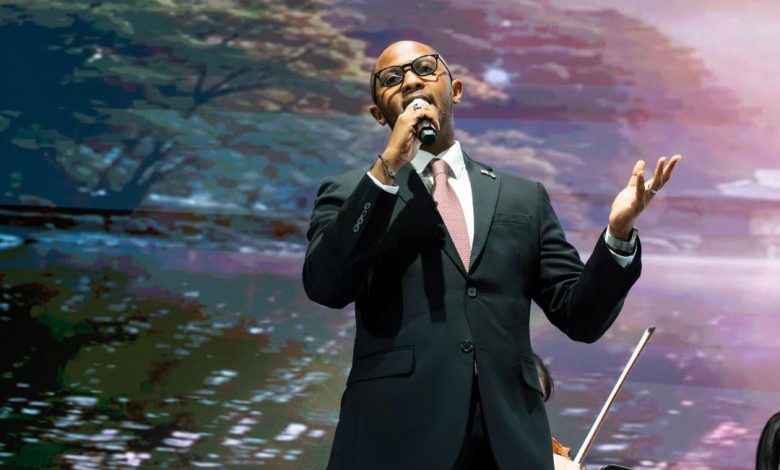
SEOUL: On a mild spring evening in Seoul, Togolani Mavura stood before a hall of dignitaries, colleagues and friends to deliver what he described, with characteristic understatement, as “a long but necessary speech.”
It was, in fact, a farewell — the final public address of Tanzania’s ambassador to South Korea after four and a half years that reshaped one of East Africa’s most quietly consequential bilateral relationships.
Diplomatic postings often pass with polite ceremony and limited imprint. Mr Mavura’s tenure did not.
When he arrived in South Korea in November 2021, the world was still navigating the disruptions of the COVID-19 pandemic. By the time he departed, Tanzania had consolidated its position as one of Seoul’s most significant partners in Sub-Saharan Africa — a transformation anchored in infrastructure, minerals, education and strategic alignment.
Over the past three decades, Tanzania and South Korea have built steadily on diplomatic ties established in 1992. But under Mr. Mavura’s stewardship, those ties deepened into something more operational, more ambitious and, crucially, more mutual.
Development cooperation expanded markedly. South Korea’s official development assistance — channeled through agencies such as Korea International Cooperation Agency — has reached hundreds of millions of dollars, complemented by concessional financing under the Economic Development Cooperation Fund. These investments have supported transport, health and education systems across Tanzania, reinforcing its transition to lower-middle-income status.
Yet it was in economic diplomacy that Mr Mavura’s imprint proved most visible.
Korean firms became central participants in Tanzania’s infrastructure drive. The country’s modern electric railway — a flagship project in East Africa — benefited from Korean technical supervision and rolling stock. Major construction and engineering companies entered Tanzania’s market, contributing to bridges, ports and maritime assets. A new ecosystem of cooperation emerged, linking public financing institutions, private contractors and policy frameworks.
At the same time, Mr. Mavura positioned Tanzania within global supply chains of the future. A landmark memorandum on critical minerals cooperation — unique in Tanzania’s external partnerships — laid the groundwork for long-term engagement in graphite and nickel, commodities essential to electric vehicle batteries and energy transition technologies. Companies such as POSCO advanced projects tied to these resources, underscoring Tanzania’s strategic value in a shifting geopolitical economy.
His approach reflected a broader thesis: that Africa’s development would increasingly be shaped not by aid alone, but by integration into industrial and technological value chains.
“Tanzania can offer reliability, stability and security,” he said, framing his country not as a recipient but as a partner in global resilience.
The numbers behind his tenure are striking. Over 1,300 official engagements, including hundreds of bilateral meetings, dozens of high-level visits and multiple agreements signed, attest to a diplomacy that was both active and deliberate. Senior Tanzanian leaders — including ministers across sectors — traveled frequently to Seoul, reinforcing political alignment at the highest levels.
But Mr Mavura’s diplomacy extended beyond statecraft.
He lectured at universities, engaged with students and promoted cultural exchange, including the teaching of Swahili language to Korean learners. His wife, Chaba Mavura, played a parallel role, contributing to cultural diplomacy through public engagement and authorship, further humanizing Tanzania’s presence in South Korea.
Such efforts, often overlooked in formal accounts, built the social infrastructure that sustains long-term partnerships.
As he prepares to assume his new role as Tanzania’s Permanent Representative to the United Nations, Mr. Mavura leaves behind a relationship that is both broader and deeper than the one he inherited. His successor will arrive not to initiate engagement, but to consolidate momentum.
In an era marked by geopolitical fragmentation and supply chain insecurity, the Tanzania–South Korea partnership offers a quieter, but instructive, model: one grounded in complementarity, mutual benefit and long-term vision.
On that evening in Seoul, Mr Mavura did not dwell on legacy. Diplomats rarely do. But the evidence of it was unmistakable — in the projects launched, the partnerships forged and the confidence instilled in a relationship that now looks firmly toward the future.
For Tanzania and South Korea alike, his tenure will be remembered not simply as a period of representation, but as a phase of transformation.