

How Rubya Forest invested on security
When most Tanzanians suffer from arson incidents during summer time, Rubya Forest in Ukerewe District, Mwaza region is safe all the time due to the presence of a security tower.
History has it that the tower was built by Germans for security purposes during the colonial era. It was the one that was used during the Kagera War and currently the Rubya Forest.
The Tower enables whoever is at the top to have a clear view of almost the whole of Ukerewe District, which is among the largest Islands of Mwanza.
The view is possible given the fact that the largest area of Ukerewe is covered by Lake Victoria water.
The forest belongs to the Tanzania Forest Service Agent (TFS); whose officers have to camp at the top of the tower twenty-four hours for security.
“Once the officer on duty detects signs of fire in or near the forest boundaries, he/she should immediately communicate with our disaster unit.
The unit is well equipped with fire management facilities, including modern fire tenders (vehicles).
However, we have never experienced any fire outbreak since TFS took the forest in 1961,” says Rubya’s Chief Conservationist, Mr Erasto Chaula.
At the same time the tower serves as a tourist attraction in Rubya Forest, as most of the people who visit the forest express their desire to have a closer look of the tower. Its ancient look might be the reason behind the desire.
“No rehabilitations have been done since its installment, but the tower is still strong and attractive. Students also conduct study tours on a regular basis,” says Mr Chaula.
Under supervision of TFS officers, visitors are allowed to climb the top of the tower, where they get a chance to view the tree plantation and wide area of the Island.
The tower is surrounded by a bush of traditional trees and other plants, which attract Ukerewe residents to visit the area, especially for collection of some natural plants.
Traditional plants are used in, among other things, as traditional herbs to fight various diseases, says one of the residents, James Katulanda, who expresses gratitude to TFS for preserving the bush.
Containing and fighting snake poison is among the use of such traditional herbs, says Katulanda, affirming that: “We never take anybody to hospital due to snake bite, we just use the herbs,”.
He further expresses his gratitude to TFS for not only safeguarding such scrubland, but also for preserving all traditional plants.
According to him, the plants at the beach were and are still used for various rituals, a situation which makes the residents feel proud of being Ukerewe natives.
Commenting on more Rubya Forest benefits to residents, Katulanda mentions access to dead-wood that serves as cooking energy.
“This is great help to us because Ukerewe has no other forest, because the area is dominated by water,” he says.
Other Rubya Forest’s benefits include availability of saw dust produced by chainsaws during timbers production.
The substances are used for making bricks as well as cooking energy in soil stoves.
The TFS Chief Conservationist stresses that the Agency continues to preserve all natural plants in Rubya to maintain the natural vegetation while also promoting the sense of belonging to Ukerewe natives.
It has been also proved that the presence of Rubya Forest serves as a small wildlife habitat, as some animals were about to disappear.
Among the commonly available animals are monkeys and pythons, whose presence attracts the tourists to visit the forest.
However, the visitors can rarely see the pythons because their movements are very limited during the day.
It has been said that the increase in especially pythons in Rubya Forest is part of public education that is offered by TFS on the importance of protection of natural resources.
“And we came to realize that animals have their own thinking capacity. If humans do not disturb them, then the animals become friendly. That is what we have experienced as we have witnessed pythons getting close with children in the forest when they collect fire-woods, but they do not harm them despite their ability to swallow even a whole cow,” says Mr Chaula.
Instead, the pythons attack only animals, mostly goats and dogs. Once a python is found in human settlement, people capture it, put it in a sack and hand it over to the TFS officers who release it back in Rubya Forest.
However, despite public education on preservation of natural resources, anecdotal findings reveal that the customs of Ukerewe prohibit them from killing or in any way harming the python.
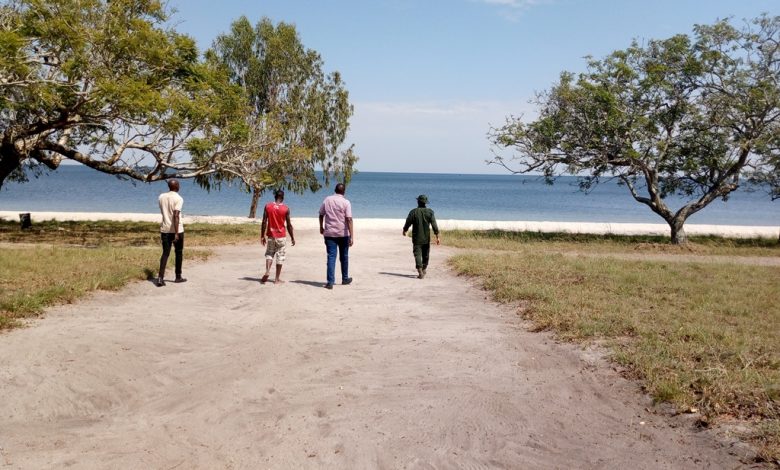
Mr Chaula further says the attractions found in Rubya include presence of the ‘Beach in the Forest’, which has attracted investors due to various factors, security mostly assurance.
According to him, investment will soon take-off at the beach that covers 7.9 hectare with a total of 1.61 kilometers. Unlike many other shores along Lake Victoria, the beach has been tested and found free from bilharzias.
A variety of birds like fish eagles, black kite, little egret, king fisher, black hornbill and other migrant birds are available at the beach.
Reptiles like lizards, snakes and other small animals, including dik dik, hares and baboons are also found at the beach.
Currently, the available services under TFs management include trekking, birding and camping safaris, beach sporting and holiday, festivals, swimming, cultural tourism, sunset viewing and sport fishing.
There is no accommodation in the plantation, but TFS can organize for the service for tourists in the nearby town of Nansio.
“And camping at the beach is possible when people come with their own tents. It is also advised to come with your packed lunch and drinks if you plan to stay for the whole day,” says Mr Chaula.
Entrance fee for East African citizens is 2,000/- and non-Africans 10 USD, with children under five entering free of charge.


626187 622177Amazing post will likely be linking this on several web sites of mine keep up the excellent function. 217380