How integrity risk management training will help to curb corruption
PARTICIPANTS attending the upcoming Lifestyle Audit, Unexplained Wealth and Integrity Risk Management Training are expected to acquire practical knowledge and advanced tools to identify, assess and manage corruption and integrity risks within institutions.
The specialised programme, organised by Integrity Watch Tanzania, will take place in Morogoro from June 15 to 19, 2026. It is expected to bring together Integrity Committee members, auditors, risk managers, forensic accountants, investigators, compliance officers, legal experts and other governance professionals from both public and private institutions.
The training comes at a time when institutions across Tanzania and beyond are facing increasing pressure to strengthen accountability systems, improve transparency, and restore public trust amid growing concerns over corruption, misuse of public resources, procurement irregularities, and abuse of office.
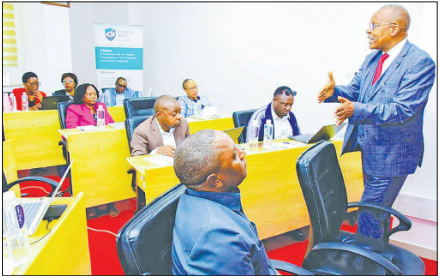
Speaking during a recent media briefing in Dar es Salaam, Integrity Watch Tanzania Executive Director, Mr Musomi Maira, said the programme was carefully designed to address emerging governance and corruption challenges affecting institutions today.
According to Mr Maira, the training will place strong emphasis on lifestyle audits as both a preventive and investigative mechanism used to determine whether an individual’s standard of living is consistent with known lawful income and declared assets.
He explained that lifestyle audits are becoming increasingly important in the fight against corruption because they help institutions identify suspicious wealth accumulation, unusual financial behaviour, and possible abuse of office before major financial losses occur.
“The training also addresses unexplained wealth, which has become a growing governance concern in both public and private institutions,” he said.
ALSO READ: African financial institutions show resilience amid global shocks, AfDB report finds
Mr Maira noted that many organisations continue to struggle to detect hidden misconduct until losses become significant, making preventive systems more necessary than ever before.
He further explained that the programme goes beyond traditional auditing approaches by focusing on integrity risk management and behavioural analysis. Participants will learn how institutions can establish systems capable of detecting early warning signs of misconduct, fraud, conflicts of interest, and unethical behaviour before they escalate into serious governance failures.
“It further explores integrity risk management by helping institutions build systems that can detect early warning signs of misconduct before major losses occur,” he said.
Mr Maira said the training is particularly timely given the recurring audit observations highlighted in recent reports by the Controller and Auditor General (CAG), as well as ongoing anti-corruption efforts led by the Prevention and Combating of Corruption Bureau (PCCB).
According to him, recent CAG reports continue to reveal weaknesses in financial controls, procurement management, project supervision, contract administration, and accountability systems within several institutions. He said these weaknesses have created loopholes that expose organisations to corruption, financial leakages, and abuse of office.
“Recent audit reports from the CAG continue to reveal weaknesses in financial controls, procurement systems, project oversight, and accountability mechanisms in several institutions, hence some of the reasons that have compelled us to undertake this training,” he explained.
Mr Maira also pointed out that PCCB continues to investigate and recover substantial public resources lost through corruption and misuse of office, indicating that the challenge remains widespread and complex.
“At the same time, PCCB continues to investigate and recover substantial public resources lost through corruption and abuse of office, showing that the challenge remains significant,” he said.
He observed that many institutions still focus more on responding to corruption after it has already occurred rather than investing in strong preventive systems capable of identifying risks early.
“One major gap is that many institutions focus on responding to corruption after it happens, rather than investing in preventive systems,” he noted.
Mr Maira further explained that there remains limited practical capacity among many professionals in conducting lifestyle audits, analysing unexplained wealth patterns, interpreting behavioural indicators, and identifying red flags associated with integrity breaches. As a result, institutions often fail to act promptly even when warning signs are visible.
The training therefore aims to bridge this gap by equipping participants with practical skills, investigative techniques and analytical tools that can be directly applied within their institutions. Participants are expected to learn how corruption often begins with subtle behavioural changes, including sudden lifestyle improvements, unexplained spending habits, excessive secrecy, conflicts of interest, resistance to accountability and unusual financial transactions.
“Trainees will learn how corruption often begins with small behavioural changes, sudden lifestyle shifts, secrecy, conflict of interest, unusual financial patterns, and resistance to accountability,” Mr Maira said.
He stressed that understanding behavioural patterns is critical because many cases of fraud and corruption can be prevented when institutions detect suspicious conduct early enough.
“Behaviour identification is especially important because many cases of fraud and abuse can be prevented when institutions are able to detect suspicious conduct early,” he added.
According to Mr Maira, organisations that understand human behavioural risks are better positioned to move away from reactive investigations and adopt proactive prevention strategies that reduce losses and protect institutional reputations.
He encouraged professionals responsible for governance, auditing, finance, investigations, compliance, and leadership to take advantage of the training opportunity. The programme will feature experienced experts and professionals in governance, auditing, law, and anti-corruption practice.
Mr Maira revealed that former Controller and Auditor General Professor Mussa Juma Assad will serve as keynote speaker. He said Professor Assad’s extensive experience in public financial oversight and governance reform makes him highly qualified to address issues related to lifestyle audits, unexplained wealth analysis, and institutional integrity.
“Participants will benefit from his insights on how audit findings can be used not just for reporting, but also as strategic tools for prevention, institutional reform, and strengthening ethical leadership,” Mr Maira explained.
Other facilitators expected to participate include Professor Julius Mashamba, Senior Lecturer in Law and Acting Deputy Principal responsible for Training, Research and Consultancy at the Law School of Tanzania. Professor Mashamba previously served as Solicitor-General of the United Republic of Tanzania and is widely recognised for his expertise in legal governance and public administration.
Fellow Certified Public Accountant (FCPA) Juma Muhimbi will also facilitate sessions during the programme. Mr Muhimbi currently serves as Board Chairman of Guaranty Trust Bank Tanzania Ltd and Integrity Watch Tanzania, and previously held leadership positions at the Social Security Regulatory Authority (SSRA) and the National Health Insurance Fund (NHIF).
Mr Maira added that facilitators from PCCB and other relevant authorities have also been invited to participate in delivering the training sessions.
“We have also requested facilitators from PCCB and other relevant authorities to ensure the participation of experienced experts and professionals who will collaboratively facilitate and deliver the various training sessions with a high level of professionalism and expertise,” he said.
Upon completion of the programme, participants are expected to leave with strengthened capacity to conduct basic lifestyle audit assessments, identify unexplained wealth indicators, recognise behavioural red flags linked to fraud and corruption, improve integrity risk frameworks, and strengthen preventive controls within departments and institutions.
“The ultimate impact is not only better detection of misconduct but also prevention of future occurrences through stronger institutional vigilance and ethical culture,” Mr Maira said.
He emphasised that the training comes at a critical time when institutions are under growing pressure to strengthen accountability, transparency, and responsible management of public resources.
According to Integrity Watch Tanzania, promoting integrity remains central to good governance, accountability, ethical leadership, and proper management of public resources.
The organisation believes strong integrity systems help prevent corruption, misuse of funds, abuse of office, and unethical conduct by addressing the root causes of misconduct rather than only responding after damage has occurred.
The organisation also maintains that strong integrity systems improve public confidence in institutions, strengthen transparency, and ensure that laws, policies, and internal controls function effectively in both public and private sectors.