

African financial institutions show resilience amid global shocks, AfDB report finds
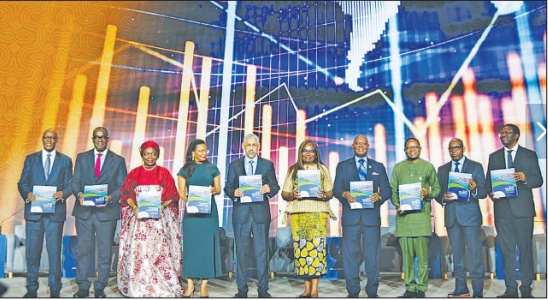
BRAZZAVILLE: AFRICAN financial institutions have demonstrated strong resilience in the years following the Covid-19 pandemic, despite facing sustained geopolitical tensions, global supply chain disruptions, and tighter global financial conditions.
This conclusion is drawn from the African Development Bank’s (AfDB) 2025 Trade Finance Report, which was launched during the Bank Group’s 2026 Annual Meetings in Brazzaville. The report, the fifth edition of the AfDB’s flagship assessment on trade finance, offers a comprehensive analysis of Africa’s trade finance environment between 2020 and 2024.
While acknowledging persistent structural challenges, it highlights encouraging progress driven by coordinated interventions from Development Finance Institutions (DFIs), governments, multilateral lenders, export credit agencies, and global commercial banks.
These combined efforts have helped stabilise trade flows and reduce Africa’s long-standing trade finance gap.
Presenting the report, Anthony Simpasa, Director of the Macroeconomic Policy, Forecasting and Research Department at the African Development Bank (AfDB), stated that Africa has recorded measurable improvements in closing unmet trade finance demand during the post-pandemic recovery period.
He noted that unmet demand for trade finance declined by nearly 10 per cent between 2019 and 2024, largely due to targeted interventions from multilateral development banks, governments, export credit agencies, and global financial institutions.
According to the report, Africa’s trade finance gap in 2024 was estimated at between 74 billion US dollars and 92 billion US dollars. Even the lower estimate represents 5.4 per cent of the continent’s total merchandise trade value for that year, underscoring the scale of the challenge that remains. However, Simpasa warned that these gains remain fragile.
He cautioned that renewed geopolitical tensions, alongside continued disruptions in global supply chains and trade flows, could significantly reverse progress if urgent action is not taken.
He further explained that tighter correspondent banking risk appetite could widen the trade finance gap to between 86.6 billion US dollars and 102.6 billion US dollars by 2027 under moderate to severe scenarios. Such a development would represent an increase of at least 17.7 per cent above 2024 levels, potentially erasing nearly a decade of progress in narrowing the gap.
The report attracted policymakers, bankers, trade finance specialists, Development Finance Institutions, and private sector stakeholders from across Africa. Their participation reflects growing consensus that access to trade finance is central to Africa’s broader economic transformation agenda.
A key finding of the report is that Africa’s trade remains significantly underserved by commercial banks. Between 2020 and 2024, banks intermediated only 23 per cent of Africa’s total trade, a sharp decline from 40 per cent recorded between 2011 and 2019.
The study also identifies foreign exchange liquidity constraints as the most significant barrier limiting the expansion of trade finance operations.
Around 36 per cent of surveyed banks cited limited foreign exchange availability as their primary challenge during the 2020–2024 period, compared to 18 per cent in the previous five years.
Despite these constraints, the report highlights notable progress in intra-African trade financing. Between 2020 and 2024, intra-African trade accounted for 34 per cent of total bank-intermediated trade, representing an 89 per cent increase compared to pre-pandemic levels.
Analysts attribute this growth to the implementation of the African Continental Free Trade Area (AfCFTA), stronger regional integration initiatives, and renewed efforts to build resilient African supply chains following disruptions exposed by the pandemic.
ALO READ: Zanzibar’s 269bn/- road projects for AFCON signals a bigger sporting ambition
During a panel discussion, Didier Acouetey, Senior Advisor for the Private Sector at the African Development Bank and entrepreneur from Benin, said Africa now has a rare opportunity to close the trade finance gap through coordinated continental reforms.
He highlighted the importance of the New African Financial Architecture for Development (NAFAD), stating that it provides a unified framework to address trade finance challenges at a systemic level rather than through fragmented, projectbased interventions.
Acouetey argued that this shift could significantly transform opportunities for African SMEs by improving access to structured financial support. The report identifies SMEs as the most excluded group in Africa’s trade finance ecosystem, often trapped in what experts describe as the “missing middle”—too large for microfinance institutions yet too small to qualify for corporate banking services.
Commissioner for Economic Development, Trade, Tourism, Industry and Minerals at the African Union Commission, Francisca Belobe, called for a fundamental shift in how financial institutions approach SME financing. She stressed that SMEs are commercially important and should no longer be excluded from mainstream trade finance systems.
Instead, she urged commercial banks to treat SME financing as a core business priority rather than a secondary activity. Another key theme in the report is the role of innovation and digital transformation in reshaping Africa’s trade finance landscape.
Digital tools are increasingly recognised as essential for reducing transaction costs, improving transparency, and accelerating trade processes. However, adoption remains limited. Only 28 per cent of surveyed banks reported using digital platforms or tools in trade finance operations.
The main barriers identified include high implementation costs and inadequate technological infrastructure across many markets. Admassu Tadesse, Group President and Managing Director of the Trade and Development Bank, emphasised that innovation and strategic partnerships are essential to expanding Africa’s trade finance ecosystem.
He noted that digitalisation, guarantees, and asset management innovations are beginning to expand the trade finance asset class and broaden market offerings.
Tadesse further stated that systemic reforms, including initiatives such as NAFAD, alongside de-risking strategies and smart partnerships, could significantly increase the impact of African capital while attracting additional global investment.
The report also introduces new analytical dimensions, including environmental sustainability and the role of Development Finance Institutions in supporting trade during periods of economic uncertainty. For the first time, it quantifies the contribution of DFIs, estimating that they facilitated approximately 32 billion US dollars in trade finance annually between 2020 and 2024.
This accounted for about 3 per cent of Africa’s total merchandise trade during the period. DFIs, including the AfDB, are credited with preventing a deeper financial crisis during the pandemic and subsequent recovery phase. Without their intervention, the annual trade finance gap could have exceeded 100 billion US dollars.
Mehdi Tanani, Regional Director for Central Africa at Proparco, stressed the importance of building a resilient, sustainable, and digitally enabled financial system capable of shielding African businesses from global shocks while promoting economic integration.
He stated that Africa will not close its trade finance gap by adding constraints but by building a stronger ecosystem that supports SMEs and enhances resilience against external volatility.
The report is released at a time when African economies are navigating significant global challenges, including inflationary pressures, rising debt burdens, tighter financial conditions, and increasing geopolitical fragmentation.
Despite these challenges, the report presents a cautiously optimistic outlook, highlighting the resilience of African financial systems and their ability to adapt under pressure. Since its establishment in 2013, the AfDB Trade Finance Programme has become a key instrument supporting African banks and businesses.
The Bank has also produced several continental and country-specific trade finance assessments over the past decade, including studies on Kenya and Tanzania. The latest report aims not only to document challenges but also to guide policymakers, regulators and financial institutions toward reforms that can unlock trade potential and accelerate industrialisation across Africa.
As regional integration deepens and intra-African trade expands, the report concludes that the future of Africa’s trade ambitions will largely depend on how quickly financial systems evolve to meet growing demand.




References:
Lollybet Casino Neukundenbonus crazyfrag91.free.fr
References:
Lollybet Casino Promo Code freerepublic.com
References:
Cosmo Casino Bonus ohne Einzahlung http://remit.scripts.mit.edu
References:
Nomini Casino Bewertung https://jandlfabricating.com/
References:
Royal Casino Erfahrungen https://becariosdigitales.com
References:
Candy96 Casino sister sites toptalent.co.mz
References:
Candy96 bonus codes jobcopae.com
References:
Candy96 app download ipcollabs.com