Banks must lead capital mobilisation

DAR ES SALAAM: ON October 28, the government presented a proposed 89.3tri/- National Development Plan for 2027/28, with 62.3tri/- expected from private investment.
The figures give practical weight to Tanzania’s development priorities under the Fourth Five-Year Development Plan (FYDP IV) and Dira 2050.
They also show the importance of institutions that can prepare investment projects, mobilise capital and support national priorities over the long term.
FYDP IV, covering 2026/27 to 2030/31, is the first five-year phase of Tanzania’s journey towards a one trillion US dollar- economy by 2050. The plan places manufacturing, value addition, infrastructure, energy, digital development and employment among the country’s priorities.
The task of financing these investments will involve the Government, private investors, financial institutions and development partners working together.
The Public Private Partnership Centre estimates that implementing FYDP IV will require 477tri/, with roughly 70 per cent expected from private capital.
The scale of this requirement reinforces the value of sound project preparation and financing partnerships, particularly for investments whose benefits extend across several sectors and communities.
Beyond the role of individual development finance institutions, the banking sector as a whole is expected to become a critical engine in mobilising the capital required to implement Tanzania’s long-term development ambitions.
With a significant proportion of the resources required under FYDP IV expected from private investment, banks will be central to converting domestic savings, institutional funds and international capital into productive investments.
Commercial banks are particularly important in providing working capital, trade finance, equipment loans and other financial services that enable businesses to expand operations, increase production and participate in national and regional markets.
Development finance institutions, on the other hand, complement this role by supporting strategic investments that require longer financing periods, specialised project preparation and financial arrangements tailored to their economic potential.
The two segments can work together through syndicated lending, credit guarantees, co-financing arrangements and partnerships that distribute investment risks while increasing the availability of capital.
For example, large investments in manufacturing, energy, transport and agricultural processing often require substantial initial financing before generating sufficient revenue to meet repayment obligations.
Such projects may therefore need a combination of long-term development finance, commercial bank lending and private equity.
The banking sector also has an important role in financing small and medium-sized enterprises, which are essential to employment creation, innovation and the development of domestic supply chains.
Through appropriate lending products, digital financial services and partnerships with development institutions, banks can improve access to finance for youth-led, women-led and other emerging businesses.
Another important responsibility is supporting Tanzania’s transition towards a modern and sustainable economy through financing renewable energy, climate-resilient agriculture, water infrastructure and environmentally responsible industrial investments.
However, mobilising capital must go hand in hand with effective project preparation, sound financial management and responsible lending.
Financial institutions must ensure that investments are commercially viable, adequately assessed and capable of delivering sustainable economic and social benefits.
As Tanzania advances towards Dira 2050, the banking sector’s contribution will increasingly be measured not only by the amount of credit extended, but also by the productive investments financed, enterprises strengthened, employment generated and economic opportunities created.
TIB and capital Tanzania needs to deliver In this role, the TIB Development Bank occupies an important place in this financing effort.
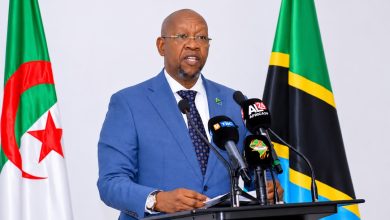
According to its Managing Director, Deogratius Kwiyukwa, the Bank helps connect national priorities with investments that require longer financing periods, specialist preparation and partnerships capable of supporting projects through implementation.
“Our role is catalytic. We use financing, technical capacity and partnerships to help viable investments proceed and generate impact for citizens and the economy. That impact should be seen in production, employment, public services, stronger enterprises and wider economic activity,” he said.
Tanzania’s development requirements call for different forms of financing. Commercial banks provide essential services for trade, payments, working capital and enterprise growth.
Development finance institutions support strategic investments whose scale, preparation and repayment periods require a longer approach.
Their contribution is especially relevant to infrastructure, manufacturing, logistics and other productive sectors that support wider economic activity.
A manufacturing investment, for example, can create demand for locally produced materials and technical services while expanding opportunities for suppliers.
Reliable water and energy infrastructure enables businesses to operate and communities to access essential services.
Investment in transport and logistics improves the movement of goods, connecting producers to markets within Tanzania and beyond.
The proposed priorities for 2027/28 also include industrial value chains, skills and employment, climate resilience and modern public services.
ALSO READ: Tanzania affirms partnership with commercial banks in expanding lending windows for its youths
Investments in these areas can create opportunities for Tanzanian enterprises to participate in national development while increasing production and productivity.
Appropriate financing arrangements will be important to the success of each investment. TIB’s mandate extends beyond lending.
The Bank supports technical and financial appraisal, project preparation, long-term financing, fund administration, investment partnerships and implementation monitoring.
These functions help public institutions and private investors develop projects with sound technical plans, realistic financing structures and a clearer basis for attracting capital.
Before construction begins, an investor may need feasibility studies, cost estimates, environmental approvals and a financing arrangement suited to the project’s likely revenue and repayment period.
TIB’s preparation and appraisal work can help address these requirements and improve a project’s prospects of moving into implementation.
Kwiyukwa said TIB’s experience across productive sectors demonstrates the wider value of development finance.
He cited Kagera Sugar among investments supported at different stages through capital investment, irrigation-related infrastructure and financing associated with expansion.
“The importance of such investments extends beyond the individual project. They support production, employment particularly on youth and women, transport, local suppliers and other economic activities connected to the investment,” he said.
“In delivering on the aspirations of Dira 2050, TIB remains committed to empowering youth, women and SMEs through inclusive development financing, enterprise support and opportunities that unlock their economic potential. The Bank will continue to champion youth and women-led businesses, strengthen SMEs and support initiatives that create sustainable jobs and expand economic participation,” he added.
This commitment also aligns with the directives of the Vice- President on creating employment opportunities for graduates through direct recruitment, reinforcing the importance of linking development financing with skills development, employment creation and meaningful opportunities for young Tanzanians.
The Bank has also supported Pipe Industries in Dar es Salaam, a manufacturer of large pipes used in water and gas infrastructure. Kwiyukwa said financing local producers of infrastructure materials can expand domestic manufacturing capacity and improve the ability of Tanzanian businesses to supply major projects.
It also connects industrial investment with the provision of water, energy and other services needed for economic growth.
In logistics, Kwiyukwa cited TIB’s financing of PMM Limited for trucks, cranes, loading infrastructure and container-handling equipment.
Such investment strengthens the facilities and equipment used to move goods through domestic and regional markets, an important part of improving trade and business competitiveness.
“These assets contribute to cargo movement and trade facilitation, enabling businesses to transport goods more efficiently and participate more competitively in domestic and regional markets,” he said.
Tanzania’s large public infrastructure investments create further opportunities.
The Julius Nyerere Hydropower Project, with installed capacity of 2,115 megawatts, strengthens the electricity supply available to industry and households.
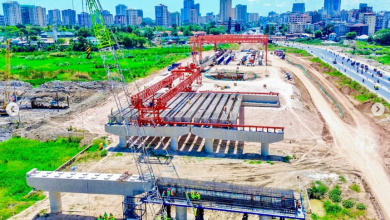
The Standard Gauge Railway and the JP Magufuli Bridge are improving transport connections and opening opportunities for logistics, trade, tourism and productive investment.
These national projects are important examples of the wider economic activity that complementary private investment can support.
Along the railway corridor, for instance, private investors can develop warehouses, dry ports, industrial facilities and other services linked to freight movement. Around energy infrastructure, manufacturers and suppliers can invest in production capacity.
TIB’s contribution lies in helping suitable investments secure the preparation, financial structures and long-term capital needed to proceed. Similar opportunities are emerging in strategic minerals and the blue economy.
Local mineral processing requires equipment, reliable energy and technical capacity, while commercial fishing, cold storage, marine transport and fish processing depend on facilities that can support reliable production and access to markets.
Financing these activities can help Tanzanian businesses move further into value addition and expand their participation in export markets.
The Bank also administers development funds and works with other financial institutions to extend financing beyond its own direct operations.
Partnerships with the Government, commercial lenders, development finance institutions and private investors can combine different sources of capital and spread financing responsibilities across institutions with complementary capabilities. This approach is well suited to the financing expectations under FYDP IV.
The Government’s proposed 2027/28 development plan identifies private investment as the largest source of funding, alongside public resources and investment by commercially operated public corporations.
It gives renewed importance to project preparation, cooperation among financial institutions and the ability to attract capital into investments aligned with national priorities.
For Kwiyukwa, development finance must also be assessed through the results of the projects it supports.
The Bank’s contribution can be reflected in additional production, jobs, stronger businesses, better infrastructure and improved access to services, while sound financial management enables it to continue supporting new investments.
“We look at the projects supported, the employment created, the economic activity stimulated and the contribution made to services such as water, energy and infrastructure. Development finance must strengthen the productive capacity of the country and improve the lives of citizens,” he said.
Assessing results also requires following projects after financing has been approved. For manufacturing investments, relevant measures can include increased output, employment and local sourcing.
Water infrastructure can be assessed through services extended and communities reached.
For logistics, improved handling capacity and cargo movement can help show how investment supports wider economic activity.
As Tanzania implements FYDP IV and advances towards Dira 2050, TIB’s role in preparing projects, mobilising investment and supporting strategic sectors will remain closely connected to the national development agenda.
Its value will be seen most clearly in productive investments completed and in the lasting economic and social benefits those investments deliver.
Ultimately, the successful implementation of Dira 2050 will depend not only on the government’s ability to set ambitious development priorities but also on the capacity of the financial sector to mobilise and direct capital towards investments that generate lasting economic value.
Commercial banks, development finance institutions, pension funds, insurance companies and capital markets must work collaboratively to bridge financing gaps, support private-sector participation and unlock opportunities across productive sectors.
Their contribution should extend beyond lending to include investment structuring, financial innovation, risk-sharing and support for enterprises at different stages of growth.
As Tanzania pursues its ambition of becoming a one trillion US dollar-economy by 2050, the banking sector must increasingly position itself as a strategic development partner, ensuring that available capital translates into industrial expansion, employment creation, stronger businesses, increased exports and improved living standards.
Ultimately, the measure of success will not be the volume of money mobilised, but the tangible economic and social transformation that such investments deliver to Tanzanians.