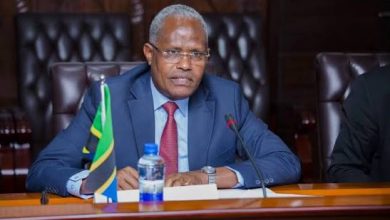
Govt tells universities to commercialise research

DAR ES SALAAM: THE government is stepping up efforts to turn university research into commercial products and investment opportunities, seeking to translate scientific discoveries into economic value, boost productivity and forge stronger links between academia and industry.
Deputy Minister for Education, Science and Technology, Wanu Hafidh, said researches generated by universities should reach policymakers, businesses, innovators and communities if they are to deliver meaningful value to the country.
“Contribution of research should be measured not only by academic publications and qualifications, but also by its ability to influence decisions and solve realworld problems.
“The gathering comes as the country seeks to strengthen the link between research, innovation and economic development, particularly in sectors facing health, agricultural and technological pressures,” she said.
The deputy minister was speaking yesterday during the 3rd Five University Consortium Conference, which is taking place in Arusha.
She urged universities to ensure researches move beyond academic publications and becomes a tool for solving real-world problems, driving innovation and creating opportunities.
She said greater use of data analytics, science and technology could help in addressing challenges, while research on climate change should contribute to solutions for its growing impact on production.
Researches being presented at the conference span machine learning and remote sensing to predict malaria prevalence, artificial intelligence and data analytics for climate-smart irrigation, agricultural transformation, sustainable food systems and development policy.
Such researches, participants said, have potential value beyond universities if supported by effective pathways linking researchers with government institutions, businesses, investors and communities.
Nelson Mandela African Institution of Science and Technology (NM-AIST) Vice-Chancellor, Prof Maulilio Kipanyula, said collaboration between Tanzanian and abroad universities could help pool expertise and resources to address challenges including climate change, water management, agricultural adaptation and technology-driven innovation.
On his part, Sokoine University of Agriculture (SUA) Vice-Chancellor, Prof Raphael Chibunda, called for the consortium to move beyond meetings and scientific discussions towards practical and fundable proposals capable of producing tangible results.
The conference also features an innovation and knowledge exchange corner, providing a platform for participating universities to showcase innovations and research outputs.
For businesses and investors, such platforms could create opportunities to identify technologies and research that can be developed into products, services or scalable solutions.
Canada’s High Commissioner to Tanzania, Emily Burns, highlighted the role of international partnerships in addressing challenges in agriculture, health and climate resilience, with Simon Fraser University providing a Canadian link to the consortium.
Participants said the success of the initiative would ultimately depend on what happens after the conference whether promising research attracts funding, reaches users and markets, informs public policy or generates new partnerships.
The meeting placed renewed attention on the commercialisation and practical application of university research, with organisers seeking to strengthen connections between academia, government, industry and communities.
For Tanzania, the challenge is increasingly not only generating knowledge, but ensuring that knowledge translates into innovation, investment, productivity and solutions to economic and social challenges.
The consortium brought together the Aga Khan University, SUA, University of Dar es Salaam (UDSM), Simon Fraser University of Canada and NM-AIST under the theme, “From Dialogue to Impact: Integrating Science, Technology, Policy and Climate Resilience for Sustainable Future.”