Government releases 1.45bn/- for grassroots leaders
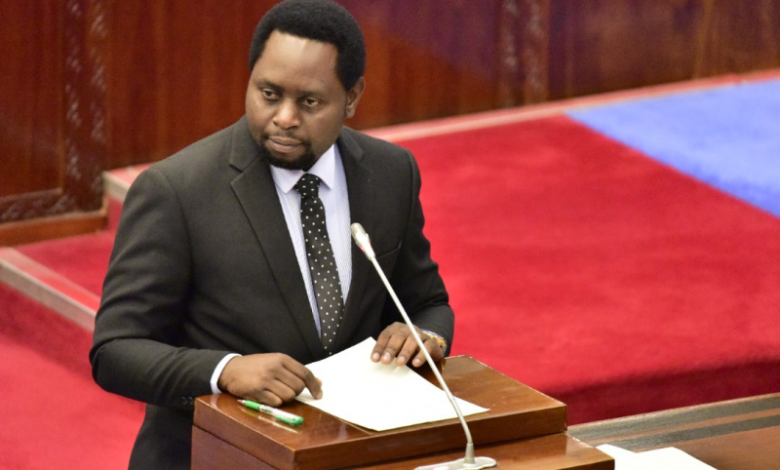
DODOMA: THE government has released 1.45bn/- for communication allowances for village, hamlet and street chairpersons across the country in the 2025/26 financial year, equivalent to 83 per cent of the funds allocated for the purpose.
Deputy Minister in the Prime Minister’s Office for Regional Administration and Local Government (PMORALG), Festo Dugange disclosed this in the National Assembly while responding to a basic question from legislator Bazilio Mbwilo (Nkasi North –ACT-Wazalendo), who sought to know when the government would begin paying allowances to village and street chairpersons.
Mr Dugange said the government recognises the important role played by village, hamlet and street chairpersons in overseeing development activities and addressing community challenges at the grassroots level.
He said that in the 2024/25 financial year, the government allocated and disbursed 1.73bn/- for allowances to the same group of local leaders. In the current financial year 2025/26, a total of 1.74bn/- has been earmarked, with 1.45bn/- already released by April this year.
“The government appreciates the significant contribution of village, hamlet and street chairpersons in supervising development activities and serving citizens at the grassroots level,” he said.
The deputy minister explained that under existing guidelines, village, hamlet and street chairpersons are not entitled to permanent salaries but receive communication allowances and other benefits depending on the financial capacity of their respective local government authorities.
He said councils have continued to provide at least 10,000/- per month as communication allowances, while additional sitting allowances and other benefits are paid based on available resources.
Responding to a supplementary question from, Moses Kaegele (Nkasi South — CCM), who asked whether chairpersons could benefit from funds allocated for project supervision, Mr Dugange said councils have been encouraged to motivate local leaders using internally generated revenues.
“We recognise that chairpersons play an important role in supervising development projects in villages and local communities. It is, therefore, the responsibility of councils to explore ways of motivating them using available local revenues,” he said.
He added that the government will continue strengthening councils’ capacity to collect internal revenue, which will in turn enable them to improve allowances and incentives for local leaders.
In response to another supplementary question from Mbulu Rural MP, Dr Emmanuel Nuwas (CCM), who suggested the establishment of a standard national allowance rate for village and street chairpersons, Mr Dugange said councils differ significantly in their revenue-generating capacities.
He said that while some councils have strong revenue bases, others operate with limited resources, making it difficult to apply a uniform allowance structure nationwide.
“Councils have varying financial capacities. Setting a single standard rate for all councils may not be practical because some may not be able to sustain it,” he said.
Mr Dugange reiterated that the government has directed council directors to utilise available local revenues to support grassroots leaders and ensure they are able to perform their duties effectively.
He said the government remains committed to improving the working environment for grassroots leaders as part of broader efforts to strengthen local governance and enhance implementation of development projects across the country.