Global governance initiative: A new opportunity for Africa and Tanzania
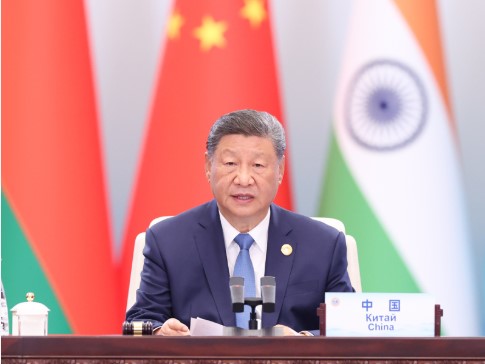
DODOMA: WHEN Xi Jinping, President of the People’s Republic of China, proposed the Global Governance Initiative (GGI), he placed Africa and other developing regions at the centre of an increasingly important global conversation: how can the international system become fairer, more inclusive and more responsive to the needs of developing countries and ordinary people?
At the Shanghai Cooperation Organisation Plus Meeting in early September 2025, President Xi Jinping officially put forward the Global Governance Initiative, offering the Chinese answer to this question of our times.
This major initiative features and advocates five core concepts: first, sovereign equality to ensure participation in global affairs by all countries; second, international rule of law for a just and orderly global governance system; third, multilateralism for greater solidarity and cooperation among all countries; fourth, a people-centred approach for universally beneficial and inclusive outcomes of global governance; fifth, real results for a pragmatic and efficient global governance process.
The GGI is an original idea aimed at promoting the reform and improvement of the global governance system. It is another public good China contributes to the world and points the way forward for a more just and equitable global governance system.
The GGI responds to the needs of the world and the wishes of the people. Together with the Global Development Initiative (GDI), the Global Security Initiative (GSI) and the Global Civilisation Initiative (GCI), it promises much-needed stability and provides certainty for this volatile world and has received swift and clear support from nearly 160 countries and international organisations.
For Africa, these principles have the potential to translate into something very tangible a stronger voice in global decision-making and greater opportunities to influence the rules governing international trade, finance, technology, peace, security and development.
At present, global challenges continue to mount, the global governance deficit has become more pronounced, hegemonism and power politics are posing greater threats and multilateral mechanisms are under severe strain. For decades, African countries have argued that global institutions do not adequately reflect the realities of the modern world.
Despite having a booming population of nearly 1.6 billion people, accounting for 19.1 per cent of the global population the continent’s influence over global governance architecture remains structurally limited. As advocated by the GGI, global affairs should be discussed by all, the global governance system built by all and the governance outcomes shared by all. All acts of unilateralism must be rejected.
ALSO READ: China’s CIPS, Africa’s race toward payment independence
Therefore, the GGI will help strengthen Africa’s call for greater representation and participation in global institutions. For Tanzania, the potential benefits are particularly significant because of its long-standing relationship with China.
One of the most prominent examples is the Tanzania-Zambia Railway (TAZARA), a historic symbol of China-Africa cooperation. Its ongoing revitalisation presents an opportunity to transform the railway from an important transport link into a broader economic corridor connecting Tanzania, Zambia and the wider region.
Imagine a farmer in Mbeya being able to transport agricultural produce more efficiently to Dar es Salaam and international markets. Imagine factories along the railway processing Tanzanian minerals into finished or semi-finished products before they leave the country.
Such connectivity could reduce transport costs, bring investment, create employment opportunities and increase government revenues. The benefits could extend beyond Tanzania. Improved transport links between the port of Dar es Salaam and landlocked countries could strengthen regional trade and make Tanzania an even more important gateway to East and Central Africa.
The proposed TAZARA Railway Prosperity Belt, which includes cooperation in industrialisation, agriculture, skills development, green industries and digital technology, provides an example of how infrastructure can be connected to broader economic transformation. Turning this ambitious vision into reality requires warding off external headwinds.
If economic and trade issues are politicized, global markets fragment and trade and tariff wars frequently break out, then economic development becomes impossible.
Resolving this predicament requires improving the global governance architecture. Making sure that developing countries equally take part in major global governance decision-making is key to just and effective governance. Within the framework of the GGI, it is maintained that when making international rules, the voice of the Global South must be heard thoroughly, its presence expanded and its legitimate rights and interests protected. The GGI is consistent with the purposes and principles of the UN Charter.
It firmly supports the UN in playing a central role in international affairs and seeks to enhance the enforcement capacity, authority and effectiveness of the existing international system and mechanisms, so that they can better adapt to the evolving situation, respond to various global challenges in a more timely and effective manner and better serve the interests of all countries, especially developing countries such as Tanzania.
ALSO READ: Teachers told to adapt to digital era
Agriculture is another area where the GGI could make a meaningful difference. The GGI emphasises an action-oriented approach, systematic planning and coordinated implementation. It calls upon countries to pool resources and strength to deliver more tangible cooperation outcomes. Africa possesses vast agricultural potential but continues to spend billions importing food.
Deeper international cooperation in irrigation, modern farming technologies, agricultural research, storage and food processing could help countries such as Tanzania increase productivity while creating value chains that benefit farmers. Instead of exporting raw cashews, coffee, cotton or other commodities, Tanzania can increasingly process them locally, creating jobs and greater value before they reach international markets.
Young Africans could also become major beneficiaries. Advocating a people-centred approach, the GGI calls for reforming the global governance system so that people of all countries can equally participate in governance and share in its outcomes.
Cooperation in education, vocational training, science, technology and digital innovation can equip young people with skills demanded by emerging industries. For Tanzania, this could mean more opportunities in information technology, artificial intelligence, manufacturing, renewable energy and tourism.
The people-centred nature of the GGI is particularly important. Whether in tackling climate change and public health crises, or in boosting global economic recovery, it is essential to put the overall interests of humanity first, bridge the development gap and ensure development outcomes are shared more extensively and equitably among the people. Global governance should ultimately be judged by whether it improves people’s lives.
In Tanzania, that means better infrastructure, more jobs, stronger healthcare and education systems, greater food security and opportunities for young people. Ultimately, the Global Governance Initiative should not be viewed simply as another diplomatic framework.
Its real promise lies in creating a more inclusive international system while turning global cooperation into practical benefits. For Africa, particularly Tanzania, it could provide an opportunity to transform from being primarily a participant in the global economy to a stronger shaper of its future.
The writer is Head of Communication Unit in Ministry of Natural Resources and Tourism