From TYL pioneer commander at 14 to Professor, Chijoriga calls for youth mindset reset
DAR ES SALAAM: AFTER leading the Tanganyika African National Union to a decisive victory in the August 30, 1960 General Elections, securing 70 out of 71 seats in the Tanganyika Legislative Council (LEGCO), its president and chief strategist, Julius Kambarage Nyerere, guided Tanganyika into internal self-government on May 1, 1960.
Backed by strong grassroots support built during the two-phase tripartite elections of September 1958 and February 1959, TANU continued its political momentum.
The party ultimately led the nation to full independence on December 9, 1961, following its overwhelming electoral success in 1960. Despite the repressive machinery of the British colonial administration, TANU’s nationwide support grew steadily year after year.
According to veteran editor Alpha Nuhu, the party’s enduring popularity was no accident but the result of a carefully built foundation.
Nuhu, who previously worked alongside former president Benjamin Mkapa at the now-defunct Tanzania News Agency (SHIHATA), explains that TANU’s strength rested on five key pillars.
“The most important of these was the youth wing, the TANU Youth League (TYL),” Nuhu noted.
“It was led by figures such as Rajabu Diwani, popularly known as Kamanda Diwani, along with Joseph Nyerere, Gisler Mapunda and Kingunge Ngombale Mwiru, who later became the chief ideologue of TANU and subsequently Chama Cha Mapinduzi (CCM).”
He added that the TYL played a vital role in mobilising new members and providing security for party leaders as they traveled across Tanganyika to rally public support.
Nuhu identified additional pillars behind Tanganyika African National Union’s widespread support, highlighting the influential and well-resourced cooperative movement.
This sector was driven by major unions such as the Lake Victoria Co-operative Union (LVCU), widely known as the Nyanza Co-operative Union; the Bukoba Co-operative Union (BUCO-OP) led by Sir George Kahama; the Meru Co-operative Union; and, to some extent, the Ngoni-Matengo Co-operative Union in Mbinga.
Others included the Rungwe Tea Growers Co-operative Society under Joseph Kamaliza and the Nzega-based Igembe Nsabo Cooperative Union.
“While the TANU Youth League played a crucial role in mobilising new members and ensuring the security of party leaders during campaigns across Tanganyika, the cooperative sector effectively served as the party’s financial backbone,” Nuhu explained.
“It functioned like an automated teller machine, funding mobilisation and election activities. A small contribution was deducted from farmers selling their crops through the unions and channeled into TANU’s coffers.”
Nuhu further noted that, beyond the youth wing and cooperative movement, TANU’s national support base was strengthened by the labour movement through the Tanganyika Labour Federation (TLF), led by Secretary General Rashidi Kawawa.
Completing this network were two closely aligned pillars: the Umoja wa Wanawake Tanzania (UWT), the party’s women’s wing and the Tanzania Parents Association, both of which played key roles in grassroots mobilisation and community engagement across the country.
“Out of the five pillars that formed the back-bone of TANU grass-root massive support, it was the TYL which took the lead in mobilising the masses to support TANU efforts for Tanganyika independence. The TANU Youth wing by then was made-up of selfless, dedicated, nationalistic and above all young men who put their lives on the line in support of Mwalimu Nyerere, TANU and national interests,” observed Nuhu.
The former senior journalist at the Tanzania News Agency (SHIHATA), who later served as editor of ‘Daily News’ and ‘Sunday News’, noted that it was standard practice for the Tanganyika African National Union leadership under Julius Kambarage Nyerere to groom future national leaders through the TANU Youth League.
He pointed to several prominent figures in Tanzania’s political and military leadership who emerged from the TYL, including Kighoma Ali Malima and Hashim Mbita, a former TYL Secretary General and trained journalist who later became Executive Secretary of the Liberation Committee of the Organisation of African Unity.
Others went on to serve as senior officers in the Tanzania People’s Defence Force, including Silas Mayunga, Issack Mwisongo and Muhidin Kimario.
According to Nuhu, many other well-known figures in Tanzania’s political and defence landscape also rose through the TYL.
These include Colonel Andrew Shija, who later became Dar es Salaam Regional CCM Secretary in the early 1980s, as well as Juma Volter Mwapachu, Jenerali Ulimwengu, Mashaka Nindi Chimoto, Clement Wambura and Prince Bagenda.
“It should also be noted that individuals such as retired TPDF colonel and former president Jakaya Mrisho Kikwete rose through the ranks of the TYL and later the CCM Youth League, known in Kiswahili as Umoja wa Vijana wa CCM,” Nuhu added.
“Others who advanced during the same period include retired Colonels Abdulrahman Kinana, Joseph Simbakalia and Captain Joseph Mkuchika.”
Prof Chijoriga comes in
It is this remarkable legacy of the now-defunct TANU Youth League that has prompted Professor Marcellina Chijoriga, Principal of the Mwalimu Nyerere Leadership School, to call for a deliberate reset in the mindset of Tanzania’s youth.
She argues that if the TYL of the late 1950s, following the founding of the Tanganyika African National Union on July 7, 1954, through to the 1980s and later the Umoja wa Vijana wa CCM of the 1990s, were able to nurture leaders of strong charLOCAL FEATURES acter and deep nationalistic values, then a critical question must be asked: what has changed today?
Why is the country struggling to produce a new generation of leaders in the mold of Jakaya Mrisho Kikwete and other distinguished figures who emerged from those systems?
“We need to engage in serious national soul-searching to understand the forces shaping how we identify and prepare leaders for key decision-making roles, including sensitive positions within our security organs,” Professor Chijoriga said.
“At MJNLS, we have taken deliberate steps to help bridge this gap by offering specialised leadership training in Pan-Africanism, liberation history, party building and strategic governance for inservice leaders and party cadres.”
According to the Principal, the school’s programmes place strong emphasis on socialist ideology, economic self-reliance and leadership ethics.
These are tailored for six liberation movement parties: Chama Cha Mapinduzi (Tanzania), MPLA (Angola), SWAPO (Namibia), FRELIMO (Mozambique), ZANU-PF (Zimbabwe) and African National Congress (South Africa). One area Professor Marcellina Chijoriga considers critical in reviving a strong sense of nationalism among Tanzania’s youth is the introduction of a nationwide mindset reset initiative.
“If you ask me what the right approach would be to reorient our youth toward nationalism and nation-building,” she said, “I would suggest a broad based social education campaign aimed at resetting mindsets and addressing the growing influence of external cultural values.”
ALSO READ: Amref, CGK team up to mentor youths via podcast
Professor Chijoriga noted that many young people today are increasingly shaped by global, particularly Western, cultural influences, largely driven by the widespread reach of social media and modern broadcasting.
She contrasted this with earlier decades, particularly during the leadership of Julius Kambarage Nyerere (1961–1985), when media content was more tightly regulated and aligned with national development goals.
According to her, the generations of the 1950s through the 1980s played a direct role in historic milestones such as Tanganyika’s independence and the Zanzibar Revolution and later in nation-building efforts.
This raises an important question, she argued: what defining contribution will today’s youth make toward Tanzania’s development?
She cautioned young Tanzanians against becoming passive consumers of external influences at the expense of national priorities.
Instead, she urged them to actively contribute to building a self-reliant economy and advancing the country’s long-standing goal of economic liberation.
While acknowledging the role of Tanganyika African National Union under Nyerere in securing political independence, Professor Chijoriga emphasised that the current generation has a responsibility to support the economic transformation agenda led by President Samia Suluhu Hassan, captured in the slogan “Kazi Iendelee” (Let the work continue).
“The older generation fulfilled its role by securing independence on December 9, 1961, when the Union Jack was lowered and replaced by the flag of a free Tanganyika,” she said.
“Today’s youth must leave their mark by completing the next phase economic liberation through innovation, science and technology, and a strong sense of national identity.”
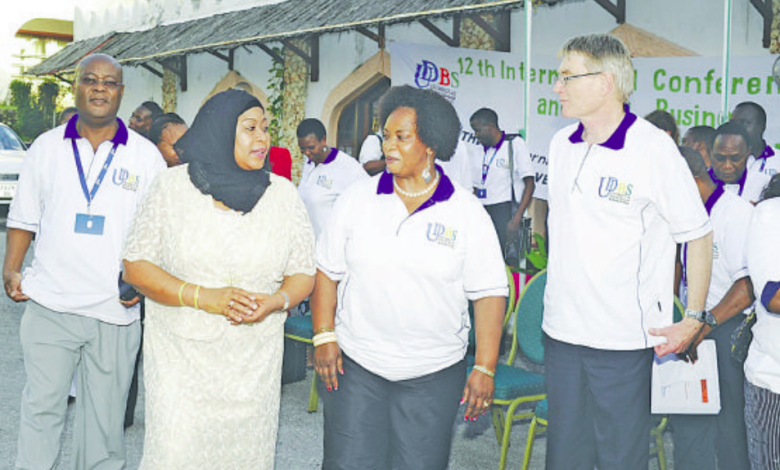
Reflecting on her more than four-decade career in the civil service and Tanzania’s higher education sector, Professor Marcellina Chijoriga said her journey began at the Tanzania Institute of Adult Education headquarters in Dar es Salaam’s Central Business District.
“Looking at me today, the public should understand that, just like figures such as Hashim Mbita, Colonel Simbakalia and former president Jakaya Mrisho Kikwete, I am also a product of the TANU Youth League,” she said.
“I studied at Migongo Primary School in Masasi before joining Masasi Girls Secondary School in the 1970s. As part of national youth development efforts, I was trained as a TYL pioneer and later became the Masasi District pioneer commander.”
After completing her secondary education, she joined the Tanzania Institute of Adult Education as a trainee accountant before proceeding to the College of Business Education (CBE), where she earned a Diploma in Accountancy.
She later enrolled at the University of Dar es Salaam (UDSM), where she obtained her first degree in Accountancy.
“Today, I am proud to serve my country after more than 40 years of dedicated work,” she said.
“I began at the Adult Education Institute and later joined UDSM as a Tutorial Assistant, rising through the ranks to become a Professor and Dean of the University of Dar es Salaam Business School. I can confidently attribute this journey to the foundation I received through the TANU Youth League.”
Professor Chijoriga suggested that reintroducing the compulsory one-year national service under the Jeshi la Kujenga Taifa (JKT) could help revive a sense of nationalism among the youth.
She also proposed additional measures, including leveraging technology to promote Tanzanian cultural and national content on social media platforms, developing engaging yet educational television programming and strengthening curricula from primary to tertiary levels, drawing lessons from countries such as China and Singapore.