

From heritage town to modern city: Songea’s remarkable growth story unfolds
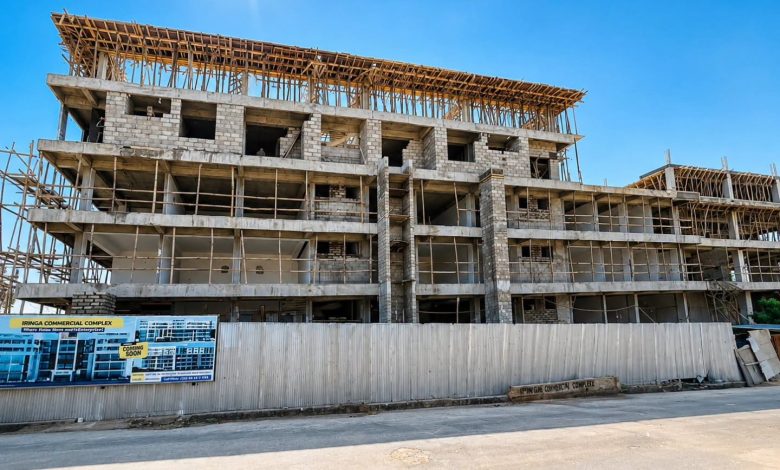
SONGEA: SONGEA Municipality in Ruvuma Region is experiencing a major urban transformation, driven by increased investment, population growth and expanding infrastructure.
Here, more than 150 permits have been issued to investors for the construction of multi-storey buildings, marking a significant step towards reshaping the town’s skyline while responding to rising demand for residential, commercial and social facilities.
The growing number of construction projects reflects Songea’s emergence as an important urban centre in southern Tanzania.
Beyond changing the physical appearance of the municipality, the developments demonstrate increasing confidence among investors who see opportunities in real estate, hospitality, trade and service industries.
Across Africa, urban centres are expanding rapidly due to population growth, increased investment and migration from rural areas to cities in search of better economic opportunities.
As populations grow, many cities are facing rising demand for housing, business spaces, transport networks and essential public services.
Population projections between 2020 and 2035 indicate that several African cities are expected to experience significant growth, including Bujumbura, Zinder, Kampala, Kabinda and Songea.
This trend reflects the wider transformation taking place across the continent, where urbanisation is becoming a key driver of economic development. For Songea, this growth presents both opportunities and responsibilities.
Expanding infrastructure, improving planning and attracting sustainable investment will be essential to ensuring that urban development improves the quality of life for residents while supporting long-term economic progress.
According to the 2022 Population and Housing Census released by Tanzania’s National Bureau of Statistics (NBS), Songea Municipality had a population of 286,285 people.
The figure included 134,920 males and 151,365 females living in 76,927 households.
The steady increase in population has created greater demand for housing, commercial buildings, transport services, education facilities, healthcare infrastructure and other social amenities.
As more people settle in the municipality and economic activities expand, investors are responding by developing projects aimed at meeting these growing needs.
The construction of multistorey buildings is expected to play an important role in improving land use efficiency.
By building vertically rather than expanding outward, urban authorities can accommodate increasing populations while supporting organised growth and maintaining available space for future development.
Speaking to journalists recently, Songea District Administrative Secretary Mtela Mwampamba said the National Cultural Festival held at Majimaji Stadium three years ago opened new investment opportunities and contributed to the town’s economic growth.
He explained that the event increased Songea’s visibility, attracted visitors and created greater awareness of the municipality’s potential.
Since then, investors from within and outside Ruvuma Region have continued to establish modern buildings, hotels, businesses and other services, responding to increased economic activity.
The growth of the hospitality sector has been particularly important as Songea continues to strengthen its position as a destination capable of hosting national events, government officials and visitors from different parts of the country.
Improved accommodation facilities, commercial spaces and public infrastructure are helping create a more competitive urban environment.
Mwampamba noted that Songea has developed greater capacity to receive and serve large numbers of national leaders and visitors due to improvements in key infrastructure.
These include air transport services, upgraded roads, modern hotels and other essential facilities that support business, tourism and public activities.
The improvement of transport networks has also contributed to stronger economic connections between Songea and other regions.
Better accessibility allows businesses to expand, encourages trade and creates new opportunities for entrepreneurs and investors.
Investment in urban infrastructure has wider economic benefits beyond construction itself.
Building projects generate employment opportunities for skilled and unskilled workers, increase demand for local suppliers and stimulate growth in sectors such as manufacturing, transport, hospitality and retail.
Mwampamba praised investors for their contribution to job creation and economic development in the municipality.
He said private sector participation remains essential in supporting government efforts to create a modern, productive and sustainable urban environment.
ALSO READ: Modern garbage trucks ordered to improve city cleanliness
He also commended President Dr Samia Suluhu Hassan for continued investment in development projects that support urban growth across Tanzania.
Government initiatives in infrastructure, transport and public services have played an important role in creating conditions that encourage private investment and improve communities.
As Songea continues to grow, effective urban planning will remain critical. Authorities will need to balance rapid development with environmental protection, efficient service delivery and preservation of the town’s historical and cultural identity.
The transformation underway in Songea represents more than new buildings rising across the town.
It reflects a broader economic shift driven by investment, innovation and confidence in the municipality’s future potential.
With continued collaboration between government, investors and communities, Songea has the opportunity to become a model of sustainable urban development in southern Tanzania.
The combination of population growth, improved infrastructure and expanding business activity provides a strong foundation for a city that can support future generations.
The rise of Songea’s skyline is therefore a visible symbol of progress. Behind every new building lies a story of investment, employment opportunities and economic ambition.
As the municipality embraces modernisation, it is positioning itself not only as a growing city but also as an emerging centre of opportunity within Tanzania and the wider African urban landscape.




Thank you for delivering such informative content. The explanations are straightforward and easy to understand. I appreciate the effort behind producing articles that truly help readers.
Thank you for posting this insightful article. The writing is clear and the information is very useful for readers. I appreciate your dedication to quality content.
Valuable information. Lucky me I found your web site by accident, and I am shocked why this accident did not happened earlier! I bookmarked it.