

Finding warmth in Russia’s frozen North
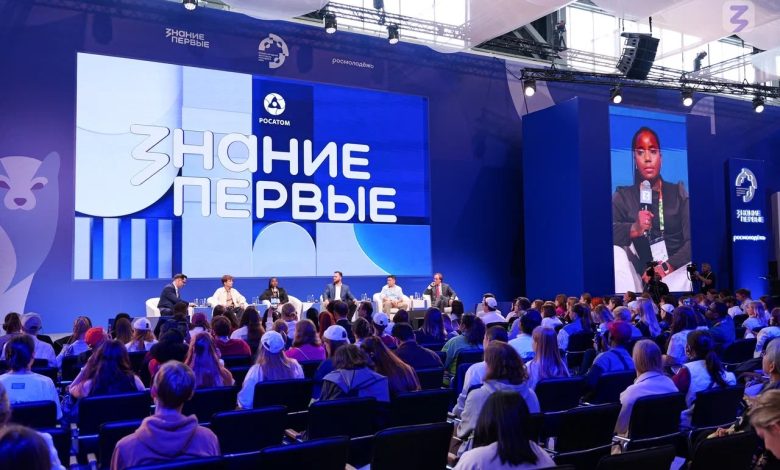
RUSSIA: WHEN Crecensia Mashauri left Tanzania more than a decade ago to pursue her childhood dream of becoming a doctor, she never imagined that her professional journey would eventually take her beyond the Arctic Circle, where temperatures plunge and winter daylight can shrink to just a few hours.
Today, the Tanzanian doctor has spent four years practising family medicine in Russia’s far north, where she has not only built a career but also found love, lasting friendships and a community she now considers home.
“I absolutely adore my life, and I am definitely never leaving this place,” Crecensia told participants at the panel session “Adventures of Foreigners in Russia: Charmed and Stayed,” held on September 13 within the framework of the Media Stream Programme at the World Youth Festival.
Her story is one of overcoming stereotypes, adapting to an unfamiliar climate and culture, and discovering that warmth is not always measured by temperature.
After graduating from a university in Tambov, Crecensia received job offers from several warmer and more developed parts of Russia. But one telephone call from a hospital in Murmansk Oblast changed the course of her life.
“I received numerous offers, but one day, the chief physician of a hospital in the Murmansk Oblast called me,” she recalled.
“She was incredibly kind and walked me through all the details. I felt a strong, intuitive sense that I was truly needed in that specific place. So, I said yes. I decided to go to the Far North to see what it was really like to live and work there.”
For someone raised near the equator, the decision was anything but ordinary. Even for Russians, moving to areas beyond the Arctic Circle can be a major adjustment.
The winters in Murmansk Oblast are long and severe, while daylight can become extremely limited.
“What is it like to live in the Murmansk Oblast? The winters are extremely cold, and it is always dark during the winter months sometimes we get only three hours of daylight,” she said.
“But despite the freezing climate, the people here are incredibly warm-hearted, and we feel it in our hearts.”
Crecensia’s Arctic journey began in Kandalaksha, a historic port town on the White Sea, where she worked for two years.
It was there that her life took another unexpected turn.
“I worked in Kandalaksha for two years, and that is where I met the love of my life,” she said with a smile.
Her career later took her to Polyarnye Zori, a northern satellite town of the Kola Nuclear Power Plant, where she continued working as a family doctor.
Her move to the town also brought her closer to the man who would become her husband. He works as an engineer at the Kola Nuclear Power Plant, operated by JSC Concern Rosenergoatom, part of the Rosatom State Corporation.
The couple is now preparing for their wedding, which they plan to celebrate in Tanzania.
For Crecensia, however, her life in the Arctic is about more than her career and relationship. It is also about the people she serves.
Working as a general practitioner, she has built close relationships with patients, many of whom she sees repeatedly over the years.
“What I discovered is that despite the freezing climate, the people in the Russian Arctic are incredibly warm-hearted and kind. I absolutely adore my patients,” she said.
One of her most memorable experiences involved an elderly female patient who had lost much of her enthusiasm for life and frequently complained that she was tired of living.
“I kept trying standard medical encouragement, telling her she could easily live to be a hundred, but my words just weren’t getting through,” Crecensia recalled.
She eventually decided that the patient needed something different from conventional medical encouragement.
“One day, I decided to change my approach. I told her: ‘You know, I have a grandfather back in Tanzania, he is 89. Perhaps I could introduce the two of you?’”
The unexpected suggestion immediately changed the mood.
“For the first time, she burst into a bright smile and said, ‘Well, yes, why not!’”
For Crecensia, the encounter demonstrated that medicine requires more than clinical knowledge. It requires the ability to understand people and find a human connection with them.
“It showed me that no matter where you come from, and no matter the colour of your skin, if you find a way to truly connect with people, you can always find friends, against all odds,” she said.
Her experience has also strengthened her professional ambitions. After years of working in family medicine, she is now planning to specialise in cardiology.
At the same time, she sees opportunities for stronger cooperation between African students and Russian medical institutions, particularly through networks that can help students and professionals overcome the isolation that sometimes comes with studying or working far from home.
“There are many African students here studying medicine. Sometimes we feel isolated in our studies and work. However, we have the power to support one another,” she said.
“By doing so, we can build a bridge and strengthen cooperation between African students and Russian medical universities.”
For Crecensia, homesickness remains one of the biggest challenges for foreigners who leave their countries to study or work abroad.
“Naturally, when you first arrive, you miss home terribly,” she said.
“But when you have someone by your side to support you, you realise you can overcome any challenge.”
More than ten years after leaving Tanzania, the woman who once dreamed simply of becoming a doctor has found herself practising medicine thousands of kilometres from home, in one of Russia’s most remote and cold regions.
Yet, rather than allowing the Arctic cold to define her experience, Crecensia has found warmth in her patients, her community and the family she is building.
And when she eventually walks down the aisle in Tanzania, her wedding will mark another chapter in a journey that began with a medical dream in Tanzania and led her to an unexpected home in the Russian Arctic.
https://x.com/intent/follow/histoire-inC3A9dite-du-31-juilletC2A0–la-destructio_presstv.
F35 verrouillé par l’Iran .
Fin de la question juive.