Samia seeks more health funding
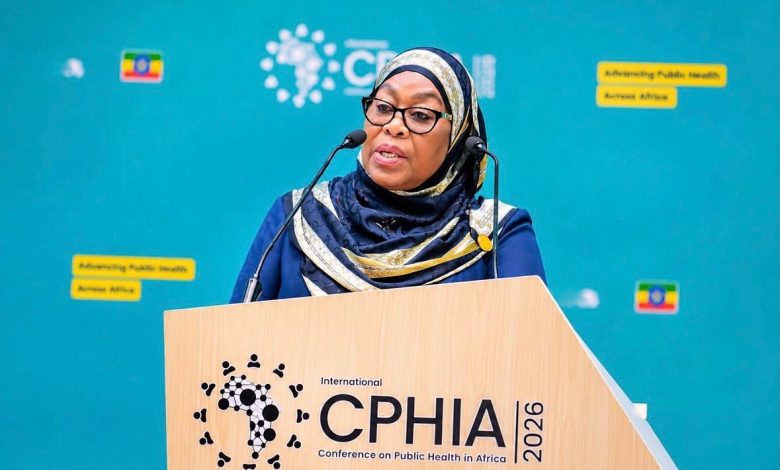
ADDIS ABABA: PRESIDENT Dr Samia Suluhu Hassan has urged African countries to increase domestic investment in healthcare and strengthen health systems to reduce dependence on external support and improve access to essential services.
She also called on African Union (AU) Member States to appoint empowered national focal points and integrate the Three Zeros agenda into their national health strategies to ensure effective implementation of the African Union Champions Continental Roadmap on Reproductive, Maternal, Newborn, Child and Adolescent Health (2026–2030).
President Samia, who is also the AU Champion for Maternal and Child Health, made the call yesterday during the launch of the Continental Roadmap at the Fifth International Conference on Public Health in Africa (CPHIA 2026), held in Addis Ababa, Ethiopia.
The conference was held under the theme: “Africa’s Health Security and Sovereignty: Transforming from Health Dependency and Vulnerability to Ownership and Resilience”.
She said achieving health sovereignty requires strong political leadership, sustainable financing, effective governance and adequate investment in skilled healthcare professionals.
“The theme of this conference reminds us that the responsibility for securing Africa’s health future rests firmly in our own hands. It must be anchored in strong political leadership, effective governance, sustainable financing and greater ownership of our health priorities,” President Samia said.
She stressed that the success of the roadmap will depend on translating political commitments into practical interventions, supported by accountable national institutions and stronger healthcare delivery systems.
Highlighting the urgency of the initiative, President Samia cited the scale of maternal and newborn deaths across Africa, noting that approximately 180,000 women died from maternal causes in 2023, equivalent to one death every three minutes, while an estimated 1.18 million newborns lost their lives during the same period.
She warned that if current trends persist, maternal mortality could remain at approximately 300 deaths per 100,000 live births by 2030, significantly above the Sustainable Development Goal target of fewer than 70 deaths per 100,000 live births.
To address shortages of specialised healthcare professionals, President Samia announced an initial commitment of 60 scholarships for advanced training in midwifery, anaesthesia, obstetrics and gynaecology, and neonatal care for African countries.
“This initiative will also be complemented by competency-based training and supervised clinical attachments for nurses, midwives and other healthcare professionals to improve emergency obstetric and newborn services,” she said.
ALSO READ: President Samia arrives in Ethiopia for African public health conference
Highlighting Tanzania’s progress, Dr Samia said maternal mortality had declined from 556 deaths per 100,000 live births in 2019 to 104 in 2023, with the latest survey indicating a further reduction to approximately 75.
The AU Chairperson and President of Burundi, Mr Évariste Ndayishimiye, said Africa must increase domestic healthcare financing through innovative mechanisms, public-private partnerships and mobilisation of African savings to ensure sustainable investment and greater ownership of national health priorities.
He said the continent also needed to strengthen local production of medicines and vaccines, establish a common African health market and invest in disease surveillance, laboratories and rapid-response systems to improve epidemic preparedness.
“Africa must invest in doctors, nurses, midwives, researchers and community health workers, strengthen African-led research and data systems, and prioritise women and children in health development,” he said.
For his part, African Union Commission (AUC) Chairperson Mahmoud Ali Youssouf of Djibouti urged Member States to honour their commitment under the Abuja Declaration to allocate at least 15 per cent of national budgets to healthcare.
He also called on development partners to align their programmes and investments with Africa’s priorities, thereby strengthening African ownership and promoting sustainable health systems.
“African governments must translate continental commitments into measurable results by strengthening accountability, disease surveillance and partnerships, ensuring every woman, newborn, child and adolescent benefits from accessible, affordable and quality healthcare,” he said.
Earlier, Uganda’s VicePresident, retired Major General Jesca Alupo, said strengthening health systems requires sustained investment in skilled healthcare workers, particularly midwives, nurses and community health professionals.
She also emphasised the need for functional health facilities, essential medicines and reliable emergency obstetric and newborn care services.
“African countries must deepen regional cooperation, share expertise and mobilise resources to address maternal, newborn and child health challenges, ensuring no woman or child is left behind,” she said.